

Georgia Ports’ $5B bet: Rewriting supply chain logistics
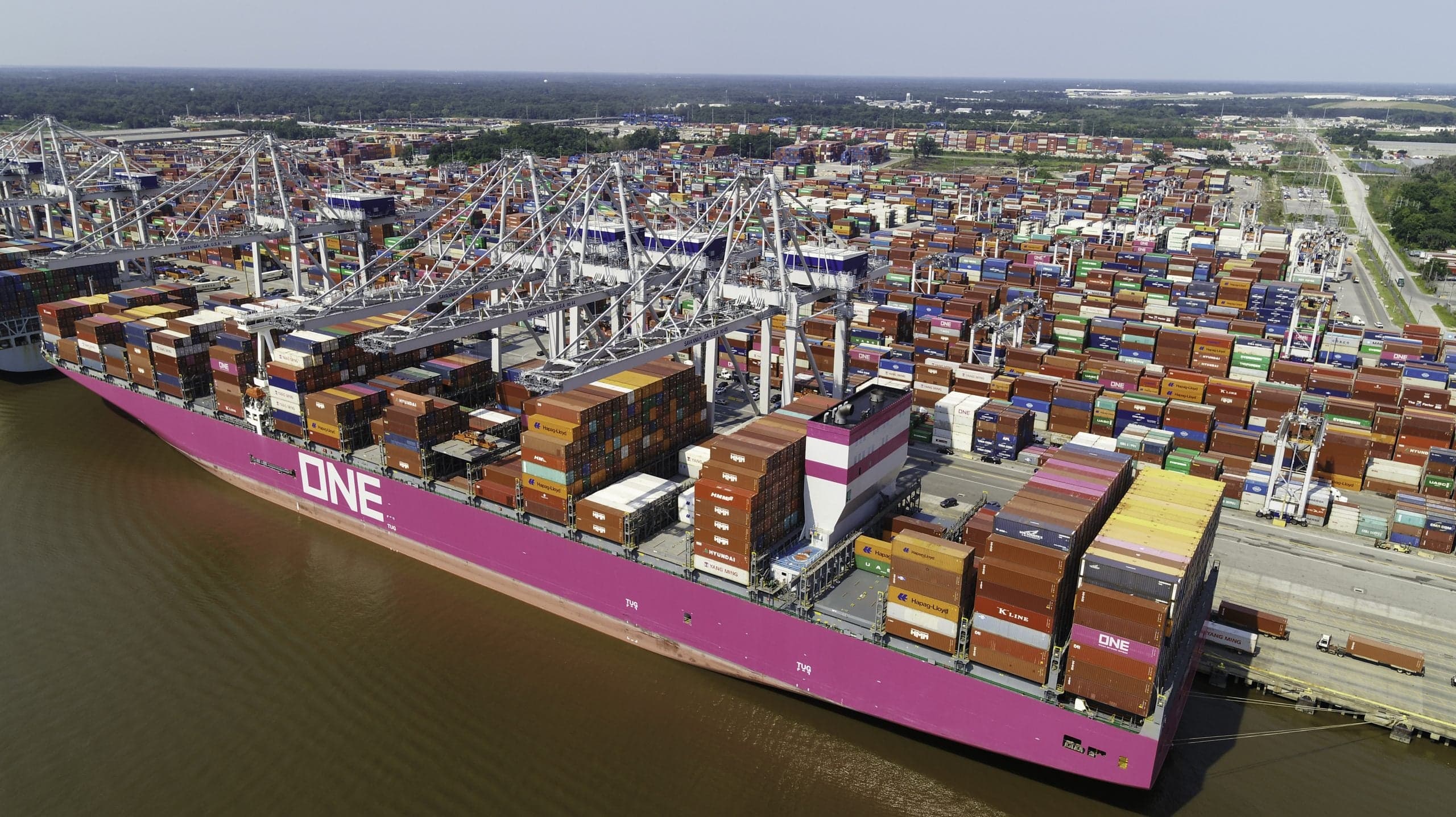
Georgia Ports Authority's $5B infrastructure investment positions Savannah as a cost-effective alternative to West Coast ports, saving shippers $1,000+ per container to key Southeast markets. Research shows more predictable transit times and reduced congestion exposure for cargo routing through Savannah.
Sellers shipping large volumes to Southeast fulfillment centers should evaluate routing through Savannah versus West Coast ports for potential cost savings and improved delivery predictability. This could impact your inbound shipping costs and inventory planning timelines.
East Coast port investments are reshaping logistics economics, giving sellers new options to reduce inbound costs while improving supply chain predictability during peak seasons.
Audit your inbound shipping routes to Amazon FBA centers in Atlanta, Memphis, and Nashville - switching from West Coast to Savannah could save $1,000+ per container.
Review your Q3/Q4 inventory planning to account for more predictable transit times if routing through Georgia ports.
Bottom Line
Georgia ports offer $1,000+ container savings for Southeast deliveries.
Source Lens
Industry Context
Useful background context, but lower-priority than direct platform, community, or operator intelligence.
Impact Level
medium
Georgia ports offer $1,000+ container savings for Southeast deliveries.
Key Stat / Trigger
$1,000+ per container savings routing through Savannah to Atlanta, Memphis, Nashville
Focus on the operational implication, not just the headline.
Full Coverage
Customers, business partners, and industry leaders gathered for the Georgia Ports Authority’s 57th annual Georgia International Trade Conference to address critical developments in maritime logistics and the evolving supply chain landscape.
The meeting came as global trade faces persistent uncertainty and cost pressures, and highlighted the state’s strategic positioning as a gateway of choice for importers and exporters seeking reliability and economic efficiency. “Innovation and port investments by the Georgia Ports Authority are helping to keep our state No.
1 for business while also positioning us as a true leader in global trade,” said Gov. Brian Kemp, in opening remarks at the event held in late April. “Our ports are an economic engine for the entire state, and we’ll continue to find ways to further their success and reach.” Supply chain predictability a competitive advantage window. googletag = window.
googletag || {cmd: []}; googletag. cmd. push(function() {googletag. defineSlot('/21776187881/FW-Responsive-Main_Content-Slot1', [[300, 100], [320, 50], [728, 90], [468, 60]], 'div-gpt-ad-1709668545404-0'). defineSizeMapping(gptSizeMaps. banner1). addService(googletag. pubads()); googletag. pubads(). enableSingleRequest(); googletag. pubads().
collapseEmptyDivs(); googletag. enableServices(); }); googletag. cmd. push(function() {googletag.
display('div-gpt-ad-1709668545404-0'); }); In an environment where global disruptions have repeatedly tested supply chain resilience, Georgia Ports President and Chief Executive Griff Lynch framed the authority’s strategy around two core customer demands: Predictability and cost savings.
“In today’s current global business environment, our customers require greater supply chain predictability and cost savings opportunities,” Lynch said.
“We have the capacity and connectivity to respond quickly to disruptions and market fluctuations around the world, enabling our customers to adjust supply chain speeds and routings to win and retain business.” The Port of Savannah has positioned itself to capture this redirected cargo by emphasizing its operational efficiency and multimodal connectivity.
Researchers at Georgia Tech’s Supply Chain and Logistics Institute found that routing cargo through the Port of Savannah saves shippers more than $1,000 per container when delivering to Atlanta, Memphis, and Nashville compared to West Coast gateways. Beyond pure cost savings, the research documented more predictable transit times through Savannah.
East Coast ports have spent billions of dollars over the past decade building up infrastructure to establish direct connections to global markets that used to rely on landbridge service from the West Coast. Chris Gaffney, managing director of the Supply Chain and Logistics Institute at Georgia Tech, elaborated on the findings.
“Our research shows that when shippers evaluate total landed cost and end-to-end reliability, routing cargo through Savannah provides a clear economic advantage compared with West Coast routes.
For Atlanta, Memphis and Nashville, routing cargo through Savannah reduces congestion exposure, saves shippers money and delivers more consistent, predictable transit performance.” window. googletag = window. googletag || {cmd: []}; googletag. cmd. push(function() {googletag.
defineSlot('/21776187881/fw-responsive-main_content-slot3', [[728, 90], [468, 60], [320, 50], [300, 100]], 'div-gpt-ad-1665767553440-0'). defineSizeMapping(gptSizeMaps. banner1). addService(googletag. pubads()); googletag. pubads(). enableSingleRequest(); googletag. pubads(). collapseEmptyDivs(); googletag. enableServices(); }); googletag. cmd.
push(function() {googletag. display('div-gpt-ad-1665767553440-0'); }); These findings carry significant implications for supply chain decision-making.
As shippers increasingly adopt total landed cost methodologies that account for transit variability and congestion risk, Savannah’s advantages extend beyond simple freight rate comparisons to encompass the broader operational and financial benefits of consistent, reliable service.
Operational velocity and multimodal connectivity Savannah’s operational statistics demonstrate the scale and efficiency that underpin its competitive claims. Currently, 80% of Savannah’s cargo moves inland by truck, while 20% travels by rail.
This modal split reflects both the port’s proximity to major Southeastern markets and the economics of transportation modes at varying distances. window. googletag = window. googletag || {cmd: []}; googletag. cmd. push(function() {googletag.
defineSlot('/21776187881/fw-responsive-main_content-slot4', [[300, 100], [320, 50], [728, 90], [468, 60]], 'div-gpt-ad-1709668086344-0'). defineSizeMapping(gptSizeMaps. banner1). addService(googletag. pubads()); googletag. pubads(). enableSingleRequest(); googletag. pubads(). collapseEmptyDivs(); googletag. enableServices(); }); googletag. cmd.
push(function() {googletag. display('div-gpt-ad-1709668086344-0'); }); With diesel fuel costs remaining a persistent conc
Original Source
This briefing is based on reporting from Freightwaves. Use the original post for full primary-source context.
Style
Audience