

FedEx’s MD-11 comeback to start with short cargo flight to Miami
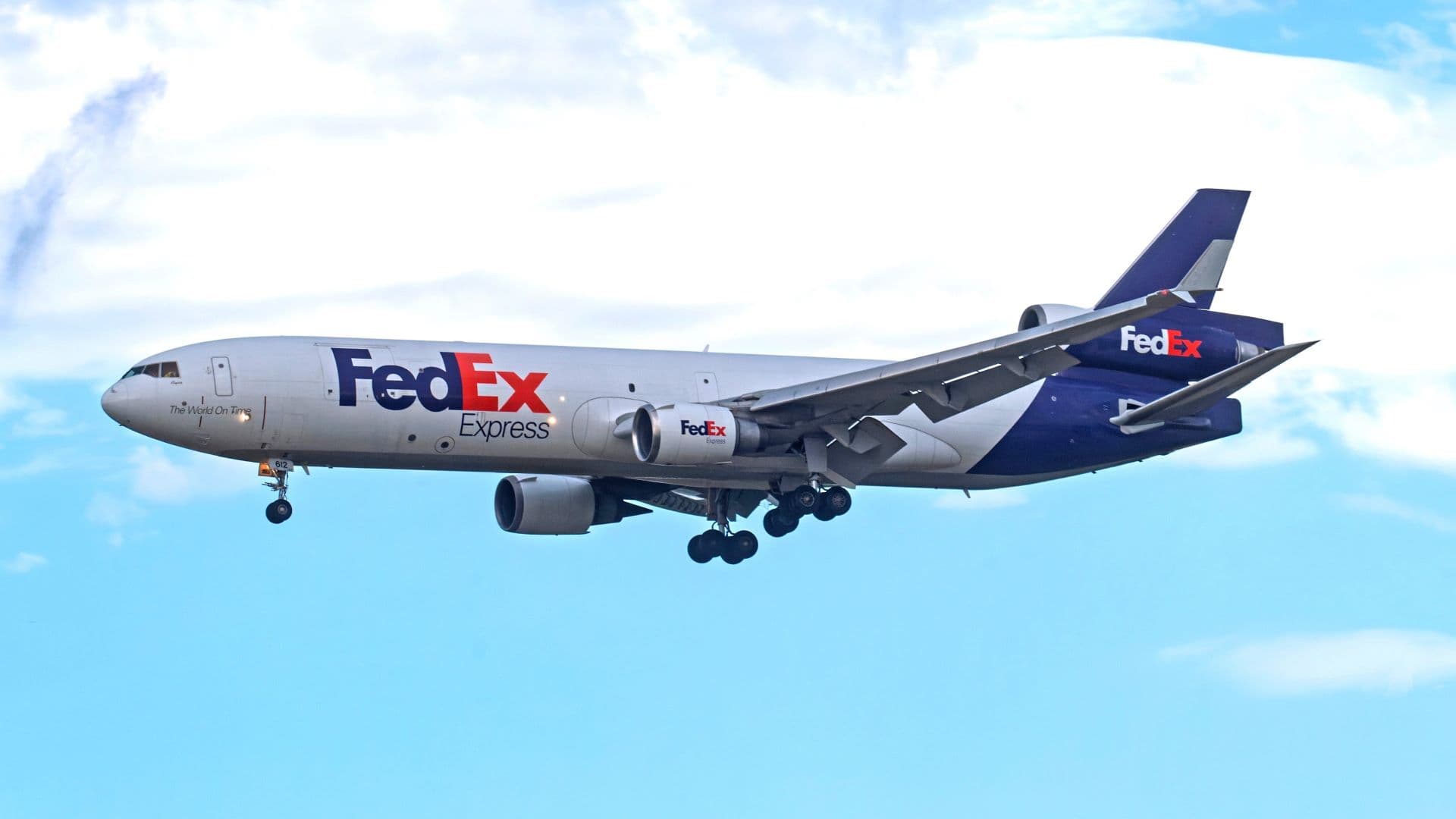
FedEx is reactivating its grounded MD-11 cargo fleet in late May 2026 after a 6-month ban following a fatal UPS crash in November 2025. The company will retrofit 29 aircraft with redesigned Boeing bearings at facilities in Indianapolis and Memphis.
Cargo capacity returning to the market could ease shipping rates and improve delivery speed options for sellers using FedEx services. Monitor your shipping analytics for rate changes and transit time improvements as these planes return to service.
Additional air cargo capacity could provide sellers more shipping options and potentially lower rates as FedEx competes more aggressively with UPS and Amazon's logistics network.
Check shipping rate trends in your seller dashboard - increased cargo capacity may drive down FedEx rates in Q3 2026.
Review backup shipping carriers now in case MD-11 reactivation faces delays or additional groundings.
Bottom Line
FedEx MD-11 return means more cargo capacity for sellers.
Source Lens
Industry Context
Useful background context, but lower-priority than direct platform, community, or operator intelligence.
Impact Level
low
FedEx MD-11 return means more cargo capacity for sellers.
Key Stat / Trigger
29 grounded MD-11 aircraft returning to service
Focus on the operational implication, not just the headline.
Full Coverage
will send technicians to 16 locations around the world to remove wing-mounted engine pylons from 29 grounded MD-11 freighter aircraft and ship them back to heavy maintenance facilities in Indianapolis and Memphis, Tennessee, where redesigned Boeing bearings will be installed to make the planes safe again for commercial service, executives said Wednesday.
The repair plan was presented during an afternoon town hall meeting in Memphis held to inform airline employees about Boeing’s engineering analysis and FedEx’s timeline for restarting MD-11 operations after a six-month flight ban stemming from the Nov. 4 crash of UPS Flight 2976 in Louisville, Kentucky.
FreightWaves was able to listen to the event after being provided unofficial access to a simultaneous livestream.
FedEx (NYSE: FDX) last week notified flight operations, maintenance and air safety personnel that it intended to gradually return MD-11s to commercial service, starting with two aircraft towards the end of May — pending Federal Aviation Administration approval of Boeing’s corrective action for the aircraft.
The company also said MD-11 pilots will be required to take a three-day training course to refresh their skills, according to internal memos. “Boeing has completed its analysis and submitted its means of compliance to the FAA for review.
This means of compliance provides the necessary path to restore the aircraft to an airworthy condition for safe and reliable operations,” said Justin Brownlee, senior vice president of airline planning and flight operations, during Wednesday’s presentation.
The FAA has been publicly silent about the status of the MD-11 inspections or next steps and has declined to respond to media queries about the matter.
Collaborating with Boeing on replacement part The engine and pylon separated from the wing of the UPS MD-11 as it lifted off from Louisville airport, igniting a fire and sending the plane into a closeby industrial park. Fourteen people died in the crash, including the three pilots.
A National Transportation Safety Board investigation is focusing on fatigue cracks in the pylon bulkhead’s aft lug nut, according to a preliminary report soon after the Flight 2976 accident. The lug and the metal ring housing the section’s roller bearings were fractured.
When the ball ring cracks, the ball elements naturally spread the halves of the forward and aft lugs. The aft lug is subject to high tension because it balances engine torque, weight and variations in engine thrust, acting as a force stabilizer.
Boeing warned MD-11 operators in 2011 about a broken engine attachment but never flagged the failure as critical to flight safety, the NTSB said in January. Boeing issued a service bulletin that identified four previous separations of a spherical bearing assembly that helps hold the engine to the MD-11’s wing.
The manufacturer said two sections of the assembly came loose on three different aircraft. The letter advised airlines to conduct visual inspections of the part at 72-month intervals. (Source: NTSB preliminary report on UPS Flight 2976 accident.)
FedEx’s standard operating procedure since 2008 has been to do some work and some level of inspection on the engine pylon at every “C Check,” a heavy airframe maintenance check conducted every two years. Where FedEx had early indications of wear it replaced the bearings, and in one case the lug, according to a town hall presenter.
Boeing’s service advisory added a detailed visual inspection to the aft lug and bearing every third “C Check.” FedEx officials say they have worked hand-in-hand with Boeing from the beginning to understand the extent of the metal fatigue issue and develop a fix that would allow the planes to reenter commercial service.
That’s noteworthy because FedEx has been the only operator to publicly express interest in flying the tri-engine MD-11 again. In fact, management has repeatedly cast the aircraft’s return to service in optimistic terms since late November, while UPS opted to retire its fleet and Western Global Airlines was silent.
FedEx had 29 MD-11s in service, including spares, when the FAA issued the no-fly order.
The integrated logistics giant last year extended the phased retirement of the MD-11 from 2028 until 2032, citing the need for more widebody capacity to meet rising demand as it made a strategic shift to capture more international non-parcel freight from logistics providers.
Despite its age, lower maintenance reliability and high fuel burn compared to modern twin-engine planes, the freighter remains highly desired because of its long range capability and high cargo capacity. Together, FedEx’s MD-11 fleet carried 3 million pounds of volume each day.
He acknowledged that the MD-11s have gradually been displaced on many international routes by more efficient Boeing 777 twin-engine aircraft, with the MD-11s becoming more of a “workhorse” for longer-range U. S. domestic runs “where we have high density, high population and high volume markets.”
Last October, about 18 of 25 active MD-11s were operating in the U. S. , with ad hoc flights to supplement the international fleet. “Besides the 777, we don’t have a unit of capacity that large. It’s actually what’s been difficult from a network planning and execution perspective to operate the system without them.
A (Boeing) 767 doesn’t fully move the same amount of capacity. So we’ve had to stitch the network together,” Brownlee explained.
The hiring of third-party airlift, pilot overtime, aircraft repositioning and other contingency plans to compensate for the lost MD-11 capacity cut FedEx’s by $175 million during the third quarter, which included peak shipping season. Technicians inspecting FedEx planes found no bearing or lug problems. Sixteen bearings have been removed so far.
In one case the beginning of separation in the bearing was noticed, but they caught it at an early stage — before there were any cracks. Within a week of the UPS accident, FedEx’s engineering team shared detailed maintenance records and inspection data with Boeing.
Since then, some members have spent the past four months at Boeing’s manufacturing site in Seattle, technical operations managers said during the presentation. The company has also shared data, lessons learned and best practices with the FAA and other operators of the MD-11.
In November, quality control and engineering teams developed an additional layer of testing using newly designed probes to conduct ultrasonic testing that can provide an even earlier indication of fatigue in the inner surfaces of the bearing and outer ring.
The critical safety analysis relied on the original certification data for the aircraft that McDonnell Douglas designed and that Boeing now owns, as well as updated modeling and analysis based on FedEx’s detailed fleet maintenance history. Boeing validated load tests on the bearings using a die penetrant inspection to confirm there were no cracks.
Eventually, Boeing engineers determined that if they could keep the bearing from fracturing the pylon assembly was safe.
They changed the design to remove a lubrication groove that created extra stress and made the outer edge of the ring thicker Although FedEx planes with 24,000 cycles — takeoffs and landings — had no visible safety issues, the company will now replace the bearing every 4,000 cycles as part of Boeing’s new repair procedure, with an inspection procedure performed every 450 cycles, said Josh Canfield, senior vice president of tech ops.
The process will involve an eddy current inspection, which uses electromagnetic induction to detect surface and near-surface flaws in conductive materials, and ultrasonic inspection “One thing about FedEx, there’s never any corners cut in the safety and inspection department. We go above and beyond,” said John Silvis, a quality control inspector.
FedEx’s maintenance and materials specialists were instrumental in developing the bearing fix and helping Boeing understand how to install them to ensure they would not degrade. The machine shop at FedEx’s Memphis superhub tested installation and removal of the bearing 30 times to determine the best method for installing the bearing without doing damage.
And the Indianapolis maintenance facility built a bearing removal tool, he added. Repair campaign The company’s 29 MD-11 freighters are spread across 16 locations, including Singapore, Tokyo, Honolulu and Anchorage, according to the presenters and flight tracking databases.
The aircraft are scattered because the FAA wouldn’t even issue ferry permits for the aircraft to return to home bases for inspection and repair, out of apparent concern about their safety, according to a FedEx pilot interviewed months ago without attribution to avoid potential employer retaliation. “We do not anticipate getting a ferry flight (permission).
Regardless of the low risk we see in ferrying the aircraft one cycle after doing inspections, we believe the best policy is to just go ahead and fix these aircraft in place,” said Leo Warmuth, vice president of aircraft engineering.
Maintenance personnel are conducting stationary engine runs at high power settings, fixing inoperative components and constantly monitoring the aircraft.
“The aircraft in these locations are being maintained in accordance with our aircraft parking and storage programs as outlined in our aircraft maintenance manual, and we’re preserving these assets with the same precision we use to fly them and maintain them when they’re active,” said Brownlee, the senior vice president of airline planning and flight operations.
FedEx will dispatch six teams of maintenance technicians to the sites over several months, Canfield said. They will lower the thrust reversers on the engines and put them on stands so they can remove the pylons and ship them to the Indianapolis and Memphis hubs, where the bearings will be replaced.
Two pylon sets for the aircraft scheduled to fly in May have already been sent to the maintenance hangars. Materials specialists have worked with vendors to make sure mechanics have the correct tools and parts needed to do the repairs.
And machinists are working to build the necessary tooling to support the repairs, following Boeing’s approved specifications, and practicing final bearing installations and the reinstallation of the pylon on the aircraft, Canfield explained.
“While we wait for the FAA’s review to be completed, we continue to prep and complete as much of the work as we can to be ready for a test flight and to return these aircraft back to service,” he told the audience. Ground and flight testing The final phase of FedEx’s MD-11 reintroduction plan is aircraft and flight crew testing.
Aviation safety teams will conduct the same routine ground checks and post-maintenance flight checks on the MD-11s that they do when planes exit heavy maintenance appointments, including checking the pneumatic, electrical, hydraulic and flight control systems.
Afterwards, they will take the planes in the air for a series of tests to include shutting down the motors in flight and doing engine air starts and go-around capability when aborting a landing. Once all the tests are completed, safety teams will sign off each aircraft and give them to flight operations, presenters said.
The crew training refresher course will include a focus on flight management system drills and procedures, use of full motion simulators, and practicing a range of scenarios, Mike Cruff, the managing director of flight operations, said.
“As of today, our maintenance team has completed repairs on two aircrafts, which have been pushed out of the hangar,” the flight ops chief added. “Boeing has submitted the repair procedure as means of compliance to the FAA, and that repair procedure is currently under review.
As we await the final review by the FAA, we’re preparing for two test flights, which will then be followed by the revenue flights targeting some routing in Memphis-Miami and Memphis-Newark (New Jersey).” The first flight of a resurrected MD-11 is scheduled for Miami, another official confirmed.
FedEx will meet with the FAA Aircraft Certification Office and Boeing on Thursday or Friday and could have an update after that, said Anne Bechtold, vice president of airline safety.
Brownlee said the goal is to get about 24 aircraft in operating condition for regular operations around the world and have the remainder of the fleet available to flex up capacity during the holiday peak season. “As we reintroduce the aircraft and they come online in larger quantities, during that ramp up, there will be a domestic focus.
And then, once we get back to full complement, there’ll still be some international routings on those just out of the necessity of our network,” Brownlee said. The company is still targeting the MD-11s for retirement in 2032 as replacement aircraft join the fleet, he added.
Although the MD-11 has a history of higher risk during landings, including a fatal FedEx accident in Tokyo in 2009, FedEx has been very successful in mitigating that risk through training “to the point that the MD-11 is actually our best performing aircraft in the landing phase,” said Bechtold.
Click here for more FreightWaves/American Shipper stories by Eric Kulisch. Write to Eric Kulisch at ekulisch@freightwaves. com.
RELATED STORIES: Kentucky congressman urges FAA to permanently shut down MD-11 aircraft FedEx prepares to reactivate grounded MD-11 fleet in May NTSB links fatigue cracks to fatal crash of UPS cargo jet The post FedEx’s MD-11 comeback to start with short cargo flight to Miami appeared first on FreightWaves.
Original Source
This briefing is based on reporting from Freightwaves. Use the original post for full primary-source context.
Style
Audience