

Aurora races toward scale with new driverless hardware
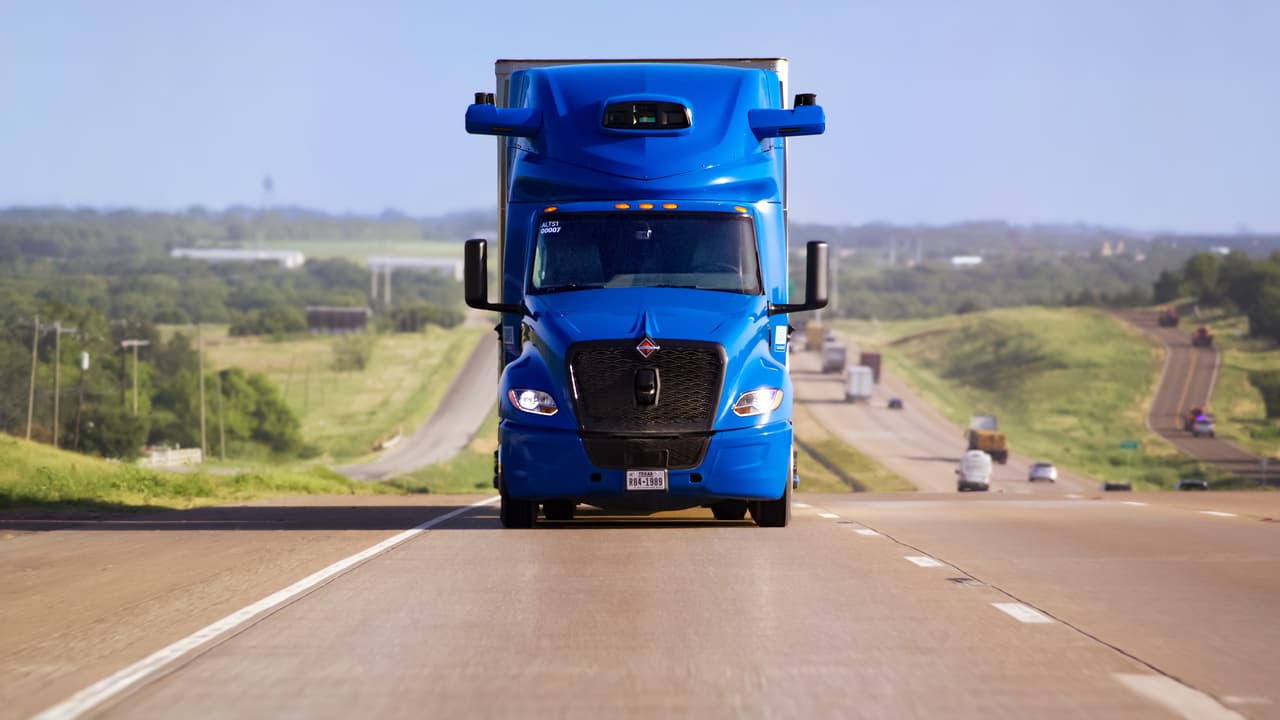
Autonomous trucking has historically had a manufacturing problem: proving a truck can drive itself is one hurdle; building enough of them to matter is another. Aurora Innovation (NASDAQ: AUR) says its second-generation hardware finally closes that gap. It is engineered for a 1-million-mile operating life and built for volume production rather than pilot-scale trials. The […] The post Aurora races toward scale with new driverless hardware appeared first on FreightWaves.
Source Lens
Industry Context
Useful background context, but lower-priority than direct platform, community, or operator intelligence.
Impact Level
medium
Use this briefing to decide whether your team needs an immediate workflow, policy, or reporting change.
Key Stat / Trigger
No single quantitative trigger surfaced in this report.
Focus on the operational implication, not just the headline.
Full Coverage
Autonomous trucking has historically had a manufacturing problem: proving a truck can drive itself is one hurdle; building enough of them to matter is another. Aurora Innovation (NASDAQ: AUR) says its second-generation hardware finally closes that gap.
It is engineered for a 1-million-mile operating life and built for volume production rather than pilot-scale trials. The Pittsburgh company launched the new platform Wednesday, deploying it across its commercial network of 10 driverless freight routes in the U. S. Sun Belt.
Unlike its first-generation trucks, the new fleet is built to run with no passive observer at all, the safeguard that has ridden along on the rest of Aurora’s driverless fleet since its public-road debut last year. The Last Asterisk Investors Wanted Erased Wall Street is treating the empty cab as the milestone that matters most.
“We believe AUR’s launch of fully driverless operations using its Gen2 hardware is a significant milestone toward commercial deployment of the technology at scale starting in 2027,” Ravi Shanker, equity analyst at Morgan Stanley, wrote in a research note.
“More importantly, the launch signals to both investors and customers that one of the last remaining asterisks around the technology no longer applies.”
Shanker said conversations with carriers, shippers, and investors, including those who already buy into the promise of autonomous trucking, kept surfacing the same benchmark: an empty cab, with no passive observer.
He described it as “the final significant milestone to proving that the technology is ready for commercialization, while removing a key crutch for the bear case.” The Race to Scale Autonomous Truck Production Deploying at scale means building trucks faster, and Aurora is leaning on a manufacturing partner to do it.
The new fleet is based on the International LT Series and runs on Aurora’s next-generation hardware, designed for a 1-million-mile operating life. Aurora closed its Safety Case, the company’s internal bar for operating without a person behind the wheel, for the new truck and hardware before launch.
“Last year’s driverless launch proved our technology could operate safely on public roads — our new platform now provides the foundation to deliver at scale,” said Chris Urmson, chief executive officer and co-founder of Aurora.
“Deploying our second-generation truck allows us to put hundreds of autonomous trucks on the road and ultimately into the hands of more customers.” Roush, the manufacturing partner integrating Aurora’s hardware and installing redundant systems at a dedicated production facility, has formalized an upfit process with Aurora.
Roush is targeting an annual production run-rate of 1,000 trucks by year-end. “By working with a world-class manufacturing partner like Roush, we can meet our customer demand and continue to make the movement of goods safer and more efficient across the country,” Urmson said.
The Aurora Driver has logged nearly 440,000 cumulative driverless miles as of the end of June, up from 370,000 in April, according to Morgan Stanley. Commercial momentum is building alongside the mileage, underscored by one customer’s recent plan to purchase 500 Aurora Driver-powered trucks.
OEM Partners Still Catching Up Not every partner has cleared Aurora’s new bar yet. Morgan Stanley notes that OEM partners, including PACCAR and Volvo, have not fully approved operations without a human observer, though the firm expects PACCAR to get there over time and Volvo to follow when it starts its own driverless rollout in the first quarter of 2027.
The second-generation hardware launch is also a bridge. Shanker described it as part of Aurora’s plan to upfit trucks to meet near-term demand before shifting to fully scalable, asset-light operations with Aumovio and its OEM partners. Aurora will livestream the debut of its second-generation trucks Thursday at 3:30 p. m. EDT.
Investors will get a fuller picture soon after: Aurora reports second-quarter earnings on July 29. Why it matters: By removing the human observer, Aurora’s second generation driverless trucks close the last major gap holding back autonomous truck commercialization.
Pairing the technology with a manufacturing partner shows the race for widespread commercialization is in full swing. The post Aurora races toward scale with new driverless hardware appeared first on FreightWaves.
Original Source
This briefing is based on reporting from Freightwaves. Use the original post for full primary-source context.
Style
Audience