Bot Auto commits to U.S.-based remote assistance operators
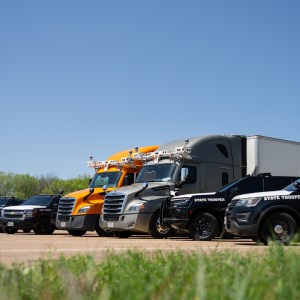
Bot Auto will staff its remote assistance operators exclusively with U.S. personnel, staking out ground a Senate investigation of robotaxi operators left wide open. The post Bot Auto commits to U.S.-based remote assistance operators appeared first on FreightWaves.
Source Lens
Industry Context
Useful background context, but lower-priority than direct platform, community, or operator intelligence.
Impact Level
medium
Use this briefing to decide whether your team needs an immediate workflow, policy, or reporting change.
Key Stat / Trigger
No single quantitative trigger surfaced in this report.
Focus on the operational implication, not just the headline.
Full Coverage
Bot Auto is keeping its remote assistants based exclusively in the U. S. , the Houston autonomous trucking company announced Thursday. These remote assistants sit between a driverless truck and whoever walks up to it but perform no part of the actual driving. The vehicle operates autonomously at all times.
Their function is communication and coordination: direct contact with first responders and law enforcement in the field, plus limited vehicle actions during an incident. “Remote assistants play a critical role in Bot Auto’s operations, providing a human layer of support and oversight for our autonomous fleet.
We’re building out America’s 21st-century supply chain. It needs to be extremely resilient, and that’s why it’s critical that these roles are always kept within the United States,” said Brian Moore, Bot Auto’s chief policy officer.
Bot Auto runs a Level 4 fleet out of Houston and sells transportation as a service, positioning itself inside what it calls the Texas trucking triangle. window. googletag = window. googletag || {cmd: []}; googletag. cmd. push(function() {googletag.
defineSlot('/21776187881/FW-Responsive-Main_Content-Slot1', [[300, 100], [320, 50], [728, 90], [468, 60]], 'div-gpt-ad-1709668545404-0'). defineSizeMapping(gptSizeMaps. banner1). addService(googletag. pubads()); googletag. pubads(). enableSingleRequest(); googletag. pubads(). collapseEmptyDivs(); googletag. enableServices(); }); googletag. cmd.
push(function() {googletag. display('div-gpt-ad-1709668545404-0'); }); What Remote Assistance Operators Do at the Roadside The work is already running in live operations. Remote assistants monitor operations from Bot Auto’s mission control today, confirming vehicle status and passing along cargo and routing information.
They can remotely actuate functions such as hazard lights. They can also facilitate a vehicle shutdown at an officer’s direction. That last capability is the one that matters during a traffic stop. With no one in the cab, the shutdown request has to go somewhere. Bot Auto’s answer is a person in the United States, not one offshore.
The Question the Senate Already Asked Where those people sit became a Washington issue in February. Waymo Chief Safety Officer Mauricio Peña told a Senate hearing that part of the company’s robotaxi support staff works overseas.
Waymo operates four remote assistance centers, two of them in the Philippines and the others in Arizona and Michigan, with roughly 70 agents on duty at any given time, Automotive World reported. The company says those agents supply contextual guidance and cannot control vehicle movement, and that the onboard system stays the real-time authority. Sen.
Ed Markey, D-Mass. , took that disclosure and turned it into an investigation. His office surveyed seven developers, including autonomous trucking company Aurora, and published the findings March 31. Waymo was the only one of the seven using overseas remote assistance operators, and the only one where a substantial share of that workforce does not hold a U.
S. driver’s license. Latency between vehicles and operators varied by company, with each setting its own threshold for what counts as a safety risk. Every company refused to say how often its operators intervene. Autonomous vehicle developers “have long boasted they can eliminate road fatalities caused by human error,” Markey said.
“Now it is time they are honest about their technology’s reliance on human help.” Bot Auto was not among the seven. It is getting ahead of that question as autonomous trucking companies gain more adoption. ‘Every Mission Has a Mission Control’ In an emergency, the response window is measured in seconds.
A first responder arriving at an incident involving an autonomous truck needs to reach an assistant instantly, communicate clearly and start a vehicle response. window. googletag = window. googletag || {cmd: []}; googletag. cmd. push(function() {googletag.
defineSlot('/21776187881/fw-responsive-main_content-slot3', [[728, 90], [468, 60], [320, 50], [300, 100]], 'div-gpt-ad-1665767553440-0'). defineSizeMapping(gptSizeMaps. banner1). addService(googletag. pubads()); googletag. pubads(). enableSingleRequest(); googletag. pubads(). collapseEmptyDivs(); googletag. enableServices(); }); googletag. cmd.
push(function() {googletag. display('div-gpt-ad-1665767553440-0'); }); “Every one of our vehicles has a mission, and every mission has a mission control,” said Bart Teeter, Bot Auto’s director of fleet and operational safety.
“Our remote assistants aren’t driving the truck, but they are the voice on the other end of the line when an officer needs one, and they can act on the vehicle directly when it matters. Committing to U. S. -based remote assistants is about making sure that when a first responder needs us, there is no delay, no miscommunication, and no gap in accountability.
We work hand-in-hand with law enforcement and emergency services, and this is a direct reflection of that responsibility.” Bot Auto has run ride-alongs and traini
Original Source
This briefing is based on reporting from Freightwaves. Use the original post for full primary-source context.
Style
Audience