Orlando trucking owner pleads guilty in $1M USPS freight auction fraud
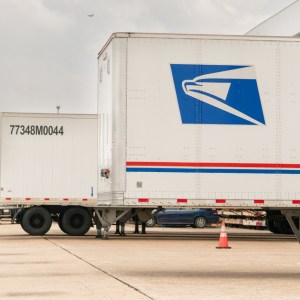
A federal plea agreement details how false delivery entries triggered more than $1 million in payments for USPS transportation work that never happened. The post Orlando trucking owner pleads guilty in $1M USPS freight auction fraud appeared first on FreightWaves.
Source Lens
Industry Context
Useful background context, but lower-priority than direct platform, community, or operator intelligence.
Impact Level
medium
Use this briefing to decide whether your team needs an immediate workflow, policy, or reporting change.
Key Stat / Trigger
No single quantitative trigger surfaced in this report.
Focus on the operational implication, not just the headline.
Full Coverage
An Orlando trucking and freight brokerage owner has pleaded guilty in a scheme that collected more than $1 million, federal prosecutors announced Friday. Khayyam Arif Oglu Farajov, 40, operated Talishco LLC in Orlando, Florida. His company participated in the USPS Freight Auction program for nationwide bulk-mail transportation.
Farajov enrolled Talishco in Freight Auction during May 2022. USPS launched the program in October 2021 to secure trucking capacity through competitive spot-market bidding. A 2024 federal audit identified 102 participating transportation suppliers during fiscal years 2022 and 2023.
Between June 2022 and January 2023, Farajov won hundreds of contracts while carrying out the fraudulent scheme. Hundreds of USPS contracts Farajov routinely failed to send trucks for the routes he secured. USPS employees contacted him when equipment did not arrive for scheduled pickups.
He offered excuses involving delayed drivers or claims that he had lost contact with them. Postal officials then reassigned the work to other carriers. Farajov later returned to Freight Auction and falsely marked those shipments delivered. Those entries triggered payments for transportation Talishco never performed.
Prosecutors calculated the resulting proceeds at more than $1 million. He then moved the money through accounts connected with shell companies under his control. window. googletag = window. googletag || {cmd: []}; googletag. cmd. push(function() {var gptSlot = googletag.
defineSlot('/21776187881/FW-Responsive-Main_Content-Slot1', [[300, 100], [320, 50], [728, 90], [468, 60]], 'div-gpt-ad-1709668545404-0'). defineSizeMapping(gptSizeMaps. banner1). addService(googletag. pubads()); googletag. pubads(). enableSingleRequest(); googletag. pubads(). collapseEmptyDivs(); googletag. enableServices(); setInterval(function() {if (!
document. hidden) {googletag. pubads(). refresh([gptSlot]); } }, 30000); }); googletag. cmd. push(function() {googletag. display('div-gpt-ad-1709668545404-0'); }); USPS requires proof of delivery before paying Freight Auction suppliers.
During the period under review, acceptable records included tracking scans, electronic messages and manual submissions through its Logistics Gateway. However, a 2024 federal audit found weaknesses in how the agency validated those records. Auditors identified 69,225 paid trips totaling approximately $197. 9 million without reliable proof-of-delivery support.
USPS disputed the audit’s $197. 9 million finding. The agency said it later found records supporting approximately $195 million in payments. USPS attributed the remaining $2. 9 million to improper proof-of-delivery sources. However, auditors maintained that USPS had not properly verified the records before issuing payments.
The review covered fiscal years 2022 and 2023, overlapping Farajov’s scheme. USPS changed its delivery verification procedures during that period. The agency eliminated manual confirmation codes and stopped accepting certain electronic messages as independent proof. The report does not connect those changes directly to Farajov or Talishco.
Farajov eventually consolidated the funds into two personal investment brokerage accounts. He invested the proceeds in the stock market for personal enrichment, according to DOJ. Federal investigators traced the money and seized both accounts. The USPS Office of Inspector General handled the investigation.
Federal charges followed A federal grand jury charged Farajov with five wire fraud counts and one money laundering count. DOJ announced the indictment on March 16, 2026. The filing detailed the Freight Auction activity and bogus delivery information. Prosecutors also sought forfeiture of the seized investment assets. Assistant U. S.
Attorney Richard Varadan prosecuted the case in the Middle District of Florida. Assistant U. S. Attorney Nicole Andrejko handled the forfeiture proceedings. Farajov later reached a plea agreement with federal prosecutors. That resolution came nearly seven months after DOJ announced the indictment.
Guilty plea confirms scheme Farajov pleaded guilty Friday to one wire fraud count and one money laundering count. He agreed to forfeit the seized brokerage accounts and pay another $993,979 in restitution. Each conviction carries a maximum federal prison sentence of 20 years. The court has not scheduled sentencing. window. googletag = window.
googletag || {cmd: []}; googletag. cmd. push(function() {var gptSlot = googletag. defineSlot('/21776187881/fw-responsive-main_content-slot3', [[728, 90], [468, 60], [320, 50], [300, 100]], 'div-gpt-ad-1665767553440-0'). defineSizeMapping(gptSizeMaps. banner1). addService(googletag. pubads()); googletag. pubads(). enableSingleRequest(); googletag. pubads().
collapseEmptyDivs(); googletag. enableServices(); setInterval(function() {if (! document. hidden) {googletag. pubads(). refresh([gptSlot]); } }, 30000); }); googletag. cmd. push(function() {googletag. display('div-gpt-ad-1665767553440-0'); }); Why it matters Digital freight plat
Original Source
This briefing is based on reporting from Freightwaves. Use the original post for full primary-source context.
Style
Audience