The Amazon Prime Effect Is forcing dispatchers into AI
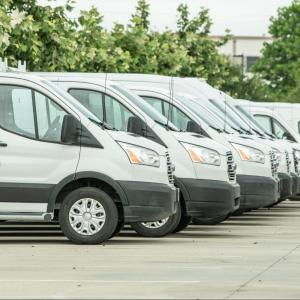
Last-mile delivery eats 40% of supply chain costs. FarEye's co-founder explains why Agentic AI, not just optimization software, is finally changed the math for dispatchers. The post The Amazon Prime Effect Is forcing dispatchers into AI appeared first on FreightWaves.
Source Lens
Industry Context
Useful background context, but lower-priority than direct platform, community, or operator intelligence.
Impact Level
medium
Use this briefing to decide whether your team needs an immediate workflow, policy, or reporting change.
Key Stat / Trigger
No single quantitative trigger surfaced in this report.
Focus on the operational implication, not just the headline.
Full Coverage
Free two-day shipping rewired what customers expect from delivery, and it blew a hole in last-mile budgets that retailers are still scrambling to patch. FarEye, an AI-Powered Delivery Management System (DMS), recently launched an agentic AI dispatcher called PILOT to plan, execute, and monitor final-mile deliveries with minimal human oversight.
Gaurav Srivastava, the company’s co-founder and chief product and technology officer, told FreightWaves two forces made the launch possible: relentless consumer demand for free, fast delivery, and the leap in AI capability that followed Large Language Models (LLMs) debut.
“The two big drivers of AI: first is what we call the Amazon Prime effect,” Srivastava said. “Every consumer wants things to be delivered free and fast, and that poses a big challenge for retailers and carriers across the world.” That demand lands hardest on the last mile, the final leg between a warehouse or store and a customer’s door.
It is also the most expensive. window. googletag = window. googletag || {cmd: []}; googletag. cmd. push(function() {googletag. defineSlot('/21776187881/FW-Responsive-Main_Content-Slot1', [[300, 100], [320, 50], [728, 90], [468, 60]], 'div-gpt-ad-1709668545404-0'). defineSizeMapping(gptSizeMaps. banner1). addService(googletag. pubads()); googletag. pubads().
enableSingleRequest(); googletag. pubads(). collapseEmptyDivs(); googletag. enableServices(); }); googletag. cmd. push(function() {googletag. display('div-gpt-ad-1709668545404-0'); }); The Amazon Prime Effect Meets a Cost Problem Last-mile delivery consumes 40% of total supply chain cost, Srivastava said, more than any other segment of the network.
It is also the most fragmented, with decision-making absorbed daily by a single, overworked role. “The dispatcher is the person sitting there locally in the city, managing your drivers, managing that chaos of a driver not showing up, a truck running into an accident, a shipment running late, a customer’s urgent call,” Srivastava said.
“All of that is absorbed by this one persona, that one human. His entire day goes by firefighting.” FarEye has worked with dispatchers for over 10 years, Srivastava said. Agentic AI opened a new possibility: an agent that works alongside the dispatcher instead of just handing them another screen to click through.
Inside FarEye’s Agentic AI Dispatcher PILOT covers what a dispatcher normally handles across a 10-hour shift: scrubbing order data, planning routes, sourcing carriers and drivers, handing off shipments, and monitoring the day as problems surface. It can run autonomously or with a human reviewing its calls.
“This agent can proactively plan, execute, and also monitor your last-mile operations,” Srivastava said. The system is built to be modular, and sits on top of the enterprise’s (FarEye or otherwise) existing route optimization, compliance, and track-and-trace tools, all integrated into one decision layer.
Working in a Human-In-The-Loop (HITL) model, it ensures the required human oversight while reserving human interception for critical exceptions. For carriers and shippers, that means fewer decisions routed through one overworked person’s judgment, and more routed through a system that never stops watching the board.
On the contrary, enabling the dispatcher to drive sharper decisions with up to five times higher productivity. Right Truck, Right Price, Right Time Srivastava pointed to Tractor Supply, which operates more than 2,400 stores nationwide and ships everything from a hammer to livestock feed, as an example of the orchestration problem AI is built to solve.
The retailer runs its own trucks but also leans on FedEx, UPS, and regional providers. window. googletag = window. googletag || {cmd: []}; googletag. cmd. push(function() {googletag. defineSlot('/21776187881/fw-responsive-main_content-slot3', [[728, 90], [468, 60], [320, 50], [300, 100]], 'div-gpt-ad-1665767553440-0'). defineSizeMapping(gptSizeMaps.
banner1). addService(googletag. pubads()); googletag. pubads(). enableSingleRequest(); googletag. pubads(). collapseEmptyDivs(); googletag. enableServices(); }); googletag. cmd. push(function() {googletag.
display('div-gpt-ad-1665767553440-0'); }); “There are days their trucks would sit idle at the store with just under 50% capacity while the store ships out products with FedEx and UPS,” Srivastava said. “And then there are days where their trucks aren’t able to fulfill all orders.” The agent decides, order by order, where capacity should go.
“Even if it’s very close to your store, you might still want to give it away to a FedEx or UPS because it’s more cost-effective,” Srivastava said. “Your cost of driving that big truck just to deliver one small hammer might not be a great use of your assets.” That decision runs on live, dynamic cost data, not a fixed rulebook.
“Should it be loaded on your truck? Should it be loaded on a small van? Should it be given to a FedEx or a Roadie or an Uber?” Srivastava said. “Or should it just be deferred to tomorrow becau
Original Source
This briefing is based on reporting from Freightwaves. Use the original post for full primary-source context.
Style
Audience