
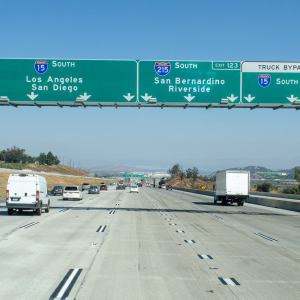
Teamsters suit tests California’s driverless truck rules
The Teamsters' lawsuit targets rules the California DMV began drafting in 2021. Permit applications keep moving while the challenge works its way through the courts. The post Teamsters suit tests California’s driverless truck rules appeared first on FreightWaves.
Source Lens
Industry Context
Useful background context, but lower-priority than direct platform, community, or operator intelligence.
Impact Level
medium
Use this briefing to decide whether your team needs an immediate workflow, policy, or reporting change.
Key Stat / Trigger
No single quantitative trigger surfaced in this report.
Focus on the operational implication, not just the headline.
Full Coverage
Outside of Texas, it’s California that has lately generated the most autonomous truck news, despite not hosting the trucks themselves. The primary reason lies in the state’s driverless truck rulemaking process. California until recently had not allowed autonomous truck testing, and has been drafting the rules since 2021.
That changed when the state released its long-awaited framework. It’s this framework that has drawn the attention of organized labor from the California Teamsters. The framework took effect April 28, and requires 1 million miles of testing before a driverless truck can haul freight commercially. The Teamsters responded, suing on Aug.
5, 2026, arguing the state moved too fast. The union’s lawsuit in Alameda County Superior Court does not attack the substance of the driverless truck rules. Instead, it attacks the process that produced them.
Teamsters California says the DMV routed the rules through an expedited track reserved for minor updates carrying less than $50 million in first-year costs or benefits. The agency thereby “circumvented laws requiring the agency to study and publicly disclose the economic impacts,” the union says.
Nothing in the filing stops the DMV from processing applications, and the permit queue has kept moving. Aurora Innovation and Kodiak AI hold drivered testing permits, and the agency’s roster of 28 permit holders includes Gatik and PlusAI. The near-term constraint on those companies is the calendar, not the courtroom.
PlusAI published its own readiness scorecard on Aug. 10, reporting 93. 4% safety case readiness, 99. 8% autonomous miles, and 85. 2% remote assistance-free trips. The developer is targeting 100% on the safety case and more than 90% on remote assistance-free trips before it takes drivers out of the seat commercially in 2027.
None of that happens in California first. PlusAI runs its commercial pilot in Texas with International Motors and Ryder on a daily 600-mile route along the I-35 corridor between Ryder locations in Laredo and Temple. Laredo was the busiest U. S. port for transborder freight in May 2026 at $35.
3 billion for the month, according to the Bureau of Transportation Statistics. The Million-Mile Gate in California’s Driverless Truck Rules “In 2021 when I was the chief counsel at FMCSA, I watched and engaged with California DMV officials in what was a very intentional and thoughtful process,” said Earl Adams Jr.
, vice president of public policy and regulatory affairs at PlusAI, in an interview with FreightWaves. “They decided they’re not going to move fast … consistent with the state’s approach to regulating any type of technology, any type of innovation, and they were going to do it their way.”
The result runs three permits deep: testing with a safety driver for 500,000 miles, 100,000 of which must occur in California, then driver-out testing once a company can show the state evidence of safe operation for an additional 500,000 driver-out miles before a commercial deployment application is even possible.
The same rulemaking lifted California’s prohibition on operating autonomous vehicles rated above 10,001 pounds, which is what opened heavy freight to the framework at all. “You can’t get any more intentional and focused than the way that California laid out its regulations,” Adams said.
‘We’re Going to Follow California’s Lead’ The Teamsters read the same record differently. The union points to vehicles up to 16 times heavier than the robotaxis the state already permits.
It argues the DMV never weighed the risk to motorists sharing lanes with trucks still in testing, and it cites polling that four in five California voters want a human safety operator aboard. It also disputes the agency’s finding that not a single job would be eliminated by autonomous heavy vehicles.
“It’s not a surprise that the Teamsters filed their lawsuit. Anytime you have a transformational technology, there’s going to be some resistance and that’s what we have here,” Adams said. “It’s going to take time for people and for others to get comfortable with the technology.”
PlusAI’s answer is to continue operating as usual and let California itself react to the litigation. PlusAI will be applying for a driver-in permit that starts the sequence, Adams said. “From our perspective, we’re going to follow California’s lead” Adams said.
“Lawsuits, all we can do is just watch it, monitor it, and then react and respond based upon what California, what the state does.” Texas Wrote the Template Texas reached a workable permit regime years earlier and with far less litigation. Senate Bill 2807 gave the Texas DMV authority over autonomous vehicle operations effective Sept.
1, 2025, final administrative rules landed Feb. 27, and the authorization requirement became enforceable May 28. Applicants must certify that the Department of Public Safety holds a plan spelling out how firefighters, police and medics should interact with the vehicle. Adams credits the fact that operators can read those
Original Source
This briefing is based on reporting from Freightwaves. Use the original post for full primary-source context.
Style
Audience