

More federal funding for Oregon container port — and it’s not in Portland
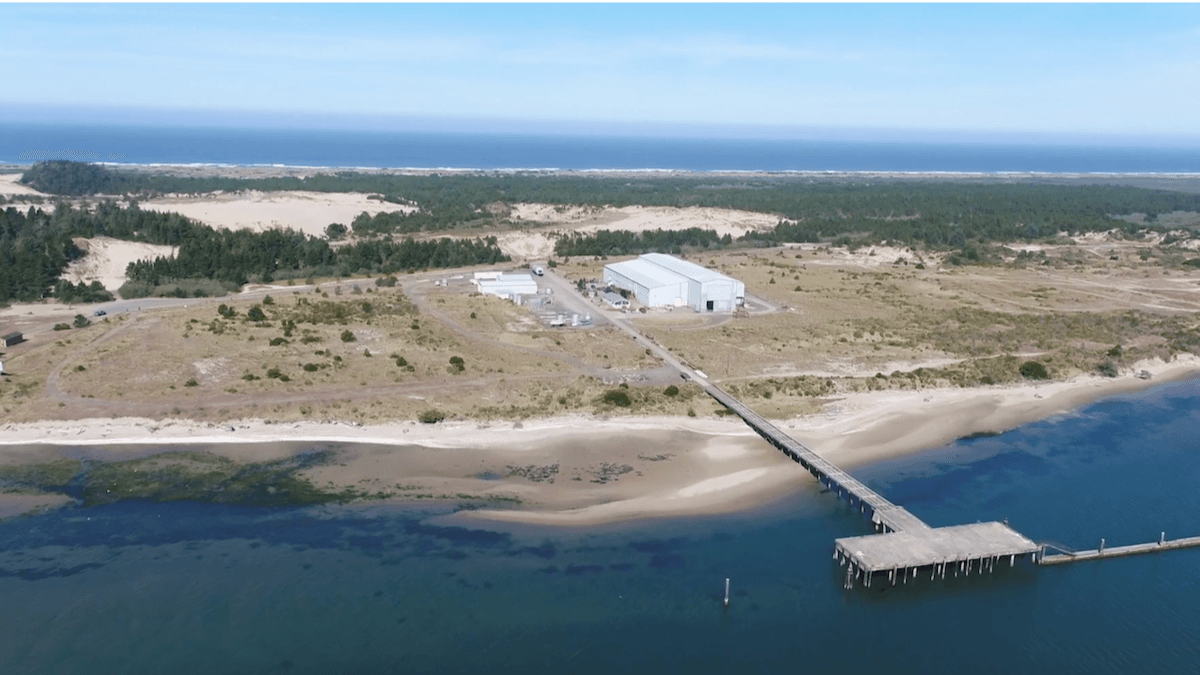
Oregon's Coos Bay port received $11.25 million federal grant for a new $2.3 billion container terminal project, competing with struggling Portland port. The Pacific Coast Intermodal Port project aims to create direct ship-to-rail connections to Midwest markets within 5 years.
A new West Coast port could reduce shipping costs and transit times for sellers importing from Asia, especially those targeting Midwest fulfillment centers. Monitor this development as it may offer alternative routing options to congested LA/Long Beach ports by 2031.
This represents infrastructure diversification away from California port dominance, potentially giving sellers more leverage in shipping negotiations and backup options during port congestion.
Track your current West Coast port fees and transit times to establish baseline metrics before new routing options become available in 2031.
Review your supply chain mapping to identify how Midwest rail connections from Oregon could impact your fulfillment center strategy.
Bottom Line
New Oregon port means potential shipping alternatives for West Coast imports.
Source Lens
Industry Context
Useful background context, but lower-priority than direct platform, community, or operator intelligence.
Impact Level
medium
New Oregon port means potential shipping alternatives for West Coast imports.
Key Stat / Trigger
$11.25 million federal grant for $2.3 billion port project
Focus on the operational implication, not just the headline.
Full Coverage
While Oregon’s lone container terminal has struggled to keep the doors open, the Maritime Administration has awarded a grant for a proposed box hub at a competing port. The Oregon International Port of Coos Bay announced that the Pacific Coast Intermodal Port (PCIP) project has been awarded an $11.
25 million grant through the Marad’s Port Infrastructure Development Program (PIDP).
Calling it a “significant milestone for a major Oregon freight initiative with national impact,” the port in a release said that the funding supports rail infrastructure improvements on the North Spit of Coos Bay, site of the future terminal 200 miles south of Portland, and strengthens connections to the Coos Bay Rail Line, “for one of Oregon’s most significant trade and economic development opportunities.”
Coos Bay (circled) is about 200 miles south of Portland. (Google Maps) The state recently committed $100 million to the $2. 3 billion project, following previous federal investments through INFRA and Consolidated Rail Infrastructure and Safety Improvements (CRISI) grant programs.
Permitting and environmental studies are underway on the project, which would take five years to complete. “This award sends a clear message that serious infrastructure in rural Oregon matters and that the South Coast has a real role to play in the state’s economic future,” said Kyle Stevens, president of the Port Commission, in a statement.
“It reflects ongoing public support for practical investments that create jobs, expand opportunities for producers, and strengthen infrastructure with growing national significance.” The PCIP is a proposed ship-to-rail container terminal designed to create a new freight gateway on the U. S.
West Coast, with connections directly to Midwest and other inland markets by rail. The import flow is also designed to increase access to empty containers for agriculture exporters and other shippers targeting global markets.
The port is in Oregon’s District 4, represented by Democrat Val Hoyle, who sits on the House Committee on Transportation and Infrastructure. Hoyle has said that the PCIP could create as many as 8,000 jobs throughout the supply chain. The project is also supported by Gov. Tina Kotek, and Sens. Ron Wyden and Jeff Merkley, also Democrats.
Opponents have questioned the projects’s cost and long-term viability, as well as its environmental impact. The Port of Portland’s Terminal 6 has struggled to sustain business as container traffic flows to major hubs in southern California as well as Vancouver and Prince Rupert in Canada.
“We continue to see strong long-term market potential in Coos Bay and confidence in the logistics advantages this location offers,” said Chad Meyer, president of NorthPoint Development, the project’s private-sector partner, in a statement. “As global trade patterns continue to evolve, resilient transportation infrastructure becomes increasingly important.
PCIP helps create the additional capacity, flexibility, and routing options needed for an ever-changing world.” Read more articles by Stuart Chirls here.
Original Source
This briefing is based on reporting from Freightwaves. Use the original post for full primary-source context.
Style
Audience