US semiconductor supply chain relies on vulnerable, hidden inputs
To guard against disruptions, the Semiconductor Industry Association called for closer government-industry collaboration to address targets for onshoring and stockpiling.
Source Lens
Industry Context
Useful background context, but lower-priority than direct platform, community, or operator intelligence.
Impact Level
medium
Use this briefing to decide whether your team needs an immediate workflow, policy, or reporting change.
Key Stat / Trigger
No single quantitative trigger surfaced in this report.
Focus on the operational implication, not just the headline.
Full Coverage
An article from Dive Brief US semiconductor supply chain relies on vulnerable, hidden inputs To guard against disruptions, the Semiconductor Industry Association called for closer government-industry collaboration to address targets for onshoring and stockpiling. Published Oct.
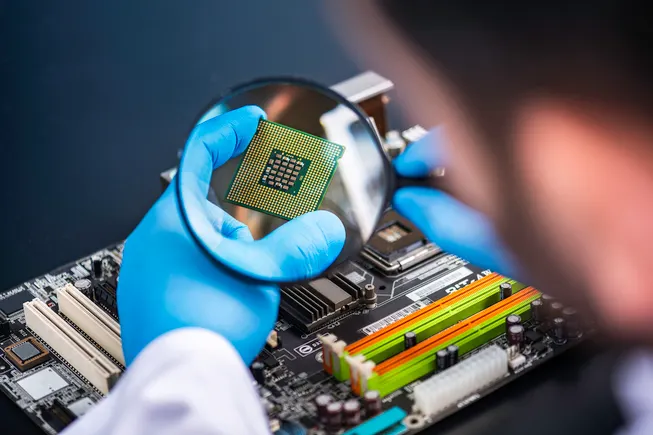
20, 2026 Jeff Kinney Editor Share Copy link Email / Print License Add us on Google A person wearing blue latex gloves holding a magnifying glass over a microchip. An October 2026 report by the Semiconductor Industry Association called on industry and government to help shore up the U. S. semiconductor supply chain, which SIA said faces a variety of threats.
Getty Images First published on Listen to the article 5 min This audio is auto-generated. Please let us know if you have feedback. Dive Brief: The equipment and materials needed to produce U. S.
semiconductors rely on “vulnerable inputs hidden deep in upstream global supply chains” that are at high risk of supply disruptions, according to a new report by the Semiconductor Industry Association.
Vulnerabilities include geopolitical unrest, dependance on unfriendly nations for vital materials and other issues that can cause disruptions almost anywhere, SIA said. To strengthen the U. S.
semiconductor supply chain, SIA called for expanded domestic production, protection of supply chains in allied nations that feed into the United States, reduced dependence on rare earths and critical minerals, and additional research and development support for next-generation semiconductor materials.
Dive Insight: Semiconductors are critical for a variety of U. S. industries, but producing them “takes months on end, several journeys around the globe, and a well-choreographed, multi-tiered supply chain of highly specialized materials and equipment,” the report said.
“It is the right formulations of these supply categories, delivered on time and in full, that are the critical ingredients for an industry on track to exceed $1. 5 [trillion] in global sales in 2026,” SIA said. Several companies have been investing heavily in the U. S. semiconductor supply chain, including Micron, GlobalFoundries, TSMC and Apple.
Industry also has been calling for the U. S. government to invest in more domestic capacity in all phases of the semiconductor supply chain, in part to compete with China in the race to develop cutting-edge chips needed for artificial intelligence and other key technologies. According to the report, investments in new U. S.
semiconductor manufacturing capacity face threats from a variety of “critical vulnerabilities in upstream supply chains.” A primary concern is the production of rare earths, which currently is dominated by “high-risk countries” like China and Russia. Other threats to the semiconductor supply chain are more hidden, the report said.
To evaluate supply chain dependencies, SIA developed a “vulnerability index” based on a number of factors such as geographic concentration of production, exposure to higher-risk countries, concentration of suppliers for a given input and ownership structures for key suppliers.
Using this framework, the report identified a list of 200 “Tier 1” equipment and materials inputs critical for both “front end” and “back end” semiconductor manufacturing processes. It also identified “sub-tier” inputs across 100 material and equipment categories. According to SIA, the U. S.
semiconductor industry relies on domestic suppliers and those headquartered in Europe or Japan for about 95% of Tier 1 equipment and materials. However, Tier 1 suppliers often rely on other networks of intermediate goods and raw material suppliers located overseas, all of which have their own set of vulnerabilities, including geopolitical disruptions.
The report concluded that about half of semiconductor supply categories it analyzed have “high” or “medium” vulnerability overall. “Given the complexity and multitiered nature of semiconductor supply chains, disruption risks compound as they move upstream,” the report said.
The report offered several strategies to mitigate these risks, including: Expand domestic supply and stockpiling: SIA noted that ramping up U. S. domestic manufacturing capacity to adequate levels could take a decade or longer for some parts of the semiconductor supply chain. However, U. S.
-based capacity to support domestic wafer and chip manufacturing can and should be built faster, the report said. Consider targeted incentives: Governments should consider targeted incentives for equipment and materials companies to invest in building domestic capacity for high-priority inputs, the report said.
For example, the federal government could work with state governments and industry to create special economic zones that encourage local suppliers to locate close to semiconductor manufacturing sites.
Cut unhelpful regulations: The report said that some regulatory restrictions limit semiconductor companies’ ability to stockpile critical raw materials, such as envi
Original Source
This briefing is based on reporting from Supply Chain Dive. Use the original post for full primary-source context.
Style
Audience