Why Air Cargo Rates Rose in 2026 and What Comes Next
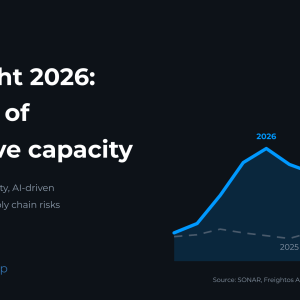
Rates, capacity, earnings and the supply chain risks shaping air cargo into 2027 A review of 2026 air cargo demand, rates and capacity, carrier and forwarder earnings, and how much slack the system has left, using SONAR data. EXECUTIVE SUMMARYAir cargo entered 2026 expecting lower rates and got rates roughly 30% higher instead. The February […] The post Why Air Cargo Rates Rose in 2026 and What Comes Next appeared first on FreightWaves.
Source Lens
Industry Context
Useful background context, but lower-priority than direct platform, community, or operator intelligence.
Impact Level
medium
Use this briefing to decide whether your team needs an immediate workflow, policy, or reporting change.
Key Stat / Trigger
No single quantitative trigger surfaced in this report.
Focus on the operational implication, not just the headline.
Full Coverage
Rates, capacity, earnings and the supply chain risks shaping air cargo into 2027 A review of 2026 air cargo demand, rates and capacity, carrier and forwarder earnings, and how much slack the system has left, using SONAR data. EXECUTIVE SUMMARYAir cargo entered 2026 expecting lower rates and got rates roughly 30% higher instead.
The February escalation of the Middle East conflict removed about 12% of global capacity overnight, jet fuel doubled, and AI hardware filled the planes that were left. The result is a market running with almost no slack, where a single disruption can halt flows with little warning, as the Nov. 13 FAA ground stop showed.
Key findings: SONAR’s Freightos Air Index (FAX. GLBL) averaged $3. 11/kg in October, up 36% year over year, and $3. 44/kg in November to date (+39%). U. S. outbound scheduled capacity (OACT. USA) ran about 4% to 8% below 2025 for nine straight months before turning positive in October, led by freighters (OACTF.
USA, +11% to +14%) rather than passenger bellies. Forwarders with AI and data center exposure posted sharp air profit gains, winning on rate more than volume. Ocean volumes to the U. S. are still growing, so air’s gains came from high-value freight rather than a broad shift off the water.
The risks heading into 2027 are fragility, fuel and demand concentration, not a lack of freight. Full access to this article is reserved for SONAR and Market Monitor customers. Keep reading with SONAR or Market Monitor →The post Why Air Cargo Rates Rose in 2026 and What Comes Next appeared first on FreightWaves.
Original Source
This briefing is based on reporting from Freightwaves. Use the original post for full primary-source context.
Style
Audience
Get fee and policy changes before they hit your margin
The free Daily Marketplace Brief flags fee and policy changes across Amazon, Walmart, TikTok Shop, eBay and Etsy, with the source document.