RXO, post-Montgomery, sees benefit in its insurance, vetting
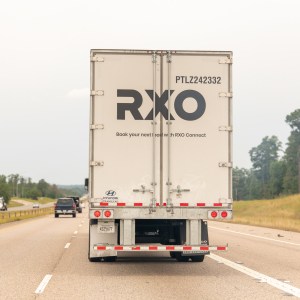
On the first earnings call since the Montgomery decision, RXO management focused on what it sees as a strength. The post RXO, post-Montgomery, sees benefit in its insurance, vetting appeared first on FreightWaves.
Source Lens
Industry Context
Useful background context, but lower-priority than direct platform, community, or operator intelligence.
Impact Level
medium
Use this briefing to decide whether your team needs an immediate workflow, policy, or reporting change.
Key Stat / Trigger
No single quantitative trigger surfaced in this report.
Focus on the operational implication, not just the headline.
Full Coverage
After discussing a second quarter financial performance that was mixed but predicting better times ahead, management of 3PL giant RXO spent a significant amount of time on its earnings call with analysts touting what it sees as a strength: its insurance coverage and how it vets carriers before letting them into its network.
With the brokerage industry dealing with the one-two punch of Montgomery vs. Caribe II and the recent C. H.
Robinson nuclear verdict that unlike others in the past came from a crash involving a carrier with a Satisfactory rating from the federal government, the ability of a 3PL to withstand a significant hit from litigation has risen quickly as a future challenge.
Given that, RXO (NYSE: RXO) CEO Drew Wilkerson and other members of the management team on the call circled back to insurance coverage several times, prodded by analyst questions. The message was consistent: RXO is in solid shape to face a new likely more litigious and possibly expensive environment.
It was the company’s first earnings report since the Montgomery case came down with a unanimous decision in May. Here’s the key rules CFO Jamie Harris, in his prepared remarks, said RXO’s vetting standards are “some of the strictest in the industry.”
Among them: carriers with a conditional rating from the Federal Motor Carrier Safety Administration (FMCSA) are not allowed in the RXO network, Harris said. (In a blog article from 2024, Kathy Close of J. J. Keller & Associates described a Conditional rating as meaning “inadequate safety management controls are in place.
You cannot ensure compliance with the safety fitness standard. You have deficient areas that FMCSA expects the carrier to resolve. However, you can continue to operate.”) Harris also said a carrier in the RXO network must have an active authority from FMCSA for at least 90 days “before they even have an opportunity to serve a customer.”
What it spends Harris during the call provided specifics on RXO’s coverage. He said the company’s annual insurance spend is between $15 million to $20 million, which Harris described as the base number to use in forecasting future expenditures.
“You’ve got to take that into account because we are in the top percentage in the amount of insurance power that we have,” Harris said.
“As we look forward to next year, I think we’ll have the exact same experience that we’ve had in prior years, which is our vetting process and our safety record is at the top of the list of things that insurance providers look for.” RXO has been in communication with its insurers, Harris said.
“We are confident our insurers will be even more focused on carrier vetting processes and controls as well as safety outcomes,” Harris said. “We believe that our best-in-class process and safety record will continue to be of significant benefit when we renew our policies at the end of the year.”
RXO’s view, according to Harris, is that there are a large number of brokers both large and small that are “underinsured.” They will be the ones hit with the largest increases as the new legal landscape for brokers post-Montgomery begins to show up in premium increases, he added.
How AI helps In recent earnings calls, RXO has tried to catch up to the relentless message that competitor C. H. Robinson (NASDAQ: CHRW) has driven home: AI is powering our future. C. H.
Robinson discloses headcount numbers in its quarterly earnings, which allows a comparison of revenue per employee that has for more than two years produced a widening ratio and more precise numerical proof of the impact of AI. RXO until more recently has been less aggressive in pushing that message.
But in the discussion about insurance and vetting, Jared Weisfeld, chief strategy officer at RXO, said AI tools were part of the company’s process. Weisfeld said RXO has developed a “proprietary AI-powered system that evaluates carrier reliability and history.” “This system includes real-time identity verification with the FMCSA,” Weisfeld said.
“We also aggregate real-time tracking from nearly all major ELD and visibility providers to eliminate blind spots. This proactive approach allows us to identify suspicious patterns long before they can impact our customers’ supply chains.”
Beyond the discussion of the combination of insurance and carrier vetting, other topics of discussion on the call included: The presentation released in connection with the analysts’ call gave further detail on several financial benchmarks that were not in the company’s initial earnings release. Truckload brokerage revenue was up 19% year-on-year.
The strength has continued: revenue per load was up more than 25% in July compared to the prior year. RXO had said in its initial release that truckload gross profit per load in the second quarter posted the largest sequential growth rate in four years.
That figure was revealed in the company’s presentation released in connection with the analysts’ call: 11%. No year-over-year growth rate was disclosed. Wilkerson
Original Source
This briefing is based on reporting from Freightwaves. Use the original post for full primary-source context.
Style
Audience