Autonomous truck beacon waiver moves closer to October renewal amid legal challenge
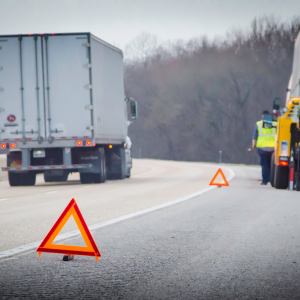
FMCSA's waiver allowing Aurora's autonomous trucks to use cab-mounted beacons instead of human-placed road triangles expires Oct. 9 and faces a 7th Circuit legal challenge seeking to block renewal. ~45 driverless trucks from Aurora, Kodiak, Waabi, and Stack AV currently operate under the waiver across Texas interstates.
Autonomous trucking regulation is years from meaningful freight network disruption; sellers should watch scale thresholds, not individual waivers.
This is a slow-moving regulatory fight with no near-term impact on freight rates or delivery timelines for marketplace sellers. Aurora projects 200+ Level 4 trucks by end of 2026, but current scale is too small to affect carrier capacity or last-mile costs.
Operational Impact
This story may require teams to revisit workflows, monitoring, or platform assumptions.
Bottom Line
Autonomous truck regulatory noise -- zero seller impact right now.
Source Lens
Industry Context
Useful background context, but lower-priority than direct platform, community, or operator intelligence.
Impact Level
medium
Autonomous truck regulatory noise -- zero seller impact right now.
Key Stat / Trigger
200+ Level 4 autonomous trucks projected by Aurora by end of 2026
Focus on the operational implication, not just the headline.
Full Coverage
The battle over a human placed or human-less warning beacon continues. The Federal Motor Carrier Safety Administration’s waiver letting autonomous trucks use cab-mounted warning beacons in place of reflective triangles or flares expires at 11:59 p. m. Oct. 9.
The waiver’s terms and conditions outline the next steps: absent a violation of those terms, a safety notification from a carrier or an FMCSA finding of a safety deficiency, “this waiver will be reissued.” The same clause appears in all four three-month waivers FMCSA has issued to Aurora since October 2025.
Each new waiver has taken effect the day after the last one expired. An Illinois cargo van operator is asking the 7th U. S. Circuit Court of Appeals to break that cycle of renewals. Kostas Giannoulias wants the court to stay the current waiver and bar any successor while his case proceeds. In a Sept.
21 response, Justice Department lawyers for FMCSA said the waiver “expires in less than 18 days” and argued he has not shown he would be harmed before then. The response does not mention the reissue clause. Giannoulias, who represents himself, pressed the point in a reply dated Sept. 22.
“The order’s promised reissuance also defeats FMCSA’s suggestion that only eighteen days matter,” he wrote. The court had not ruled on the motion as of Oct. 2. The waiver covers Aurora and any carrier operating Level 4 automated trucks that notifies FMCSA and certifies it will follow the terms.
FMCSA denied a five-year exemption sought by Aurora and Waymo in December 2024, and Aurora sued the agency in the D. C. Circuit in January 2025. When FMCSA granted the first waiver that October, Aurora called the beacons “a step forward for road safety” and said it would file a dismissal to close that challenge.
FMCSA published a new five-year exemption request from Aurora in April. The comment period closed May 15, and the request remains pending, according to the government’s response. In that request, as summarized by FMCSA, Aurora argued that beacons “eliminate the need for a human to exit the CMV onto the shoulder or traffic lane of a road.” In his Sept.
8 petition, Giannoulias argues the July waiver, the latest in the series, exceeds FMCSA’s statutory authority, is arbitrary and capricious, and should have gone through the exemption or pilot-program process, both of which require public notice and comment.
FMCSA argues limited exposure Counting Aurora and Kodiak, “there would only be approximately 45 self-driving trucks operating under the waiver,” the government’s response said, against more than 3,000 miles of interstate highway in Texas.
“Giannoulias’s chances of actually encountering a truck covered by the waiver are vanishingly small,” DOJ attorneys wrote. “The odds of his encountering such a truck when it was disabled are even smaller.” Three carriers besides Aurora have opted in: Kodiak Robotics, Waabi Logistics and Stack AV, which joined after the July waiver was issued.
According to the response, Kodiak had deployed 20 driverless trucks as of March 10, while Waabi and Stack AV had deployed none as of July 31. Aurora told FMCSA in its exemption request that it expects more than 200 Level 4 trucks by the end of 2026.
Giannoulias, who hauls spot-market freight in a 2024 Ram ProMaster 2500, said in a declaration that he made at least six trips in July and August involving Dallas, Houston, Austin, Laredo and El Paso. Several of those cities sit on Aurora’s driverless routes.
DOJ also argued he cannot sue under the Hobbs Act because he never took part in the waiver process, and that his Sept. 3 reconsideration request to FMCSA, still pending, leaves the waiver nonfinal as to him.
On the merits, it said nothing in the statute bars back-to-back waivers, citing two COVID-era FMCSA waivers that were each issued seven consecutive times.
It said the regulations describing waiver requests do not stop FMCSA from issuing one on its own, and it identified the unique event as “the operation of a CMV without a driver who can place warning devices on the roadway.”
The government cited the July waiver’s finding that differences in driver response to beacons and triangles at straight locations in Aurora’s study were “less than four-tenths of one percent.” It also said no crashes involving a beacon-activated truck have been reported since the waivers began.
“If the mere fact that Giannoulias occasionally takes his cargo van to Texas means that he faces irreparable harm, then literally anyone who occasionally drives in Texas does too,” the filing said. “To state that proposition is to refute it.”
Reply cites study limits and Aledo crash Giannoulias wrote that the 45-truck figure counts publicized driverless deployments, while the waiver covers Level 4 trucks whether or not a human is aboard. Aurora told FMCSA it had 109 Class 8 trucks, and the reply said most are equipped with the Aurora Driver and beacons. Aurora’s naturalistic study found a 44.
48% response rate to beacons and 44. 06% to tr
No action needed: 45 autonomous trucks across 3,000+ Texas highway miles creates no measurable disruption to your inbound or outbound freight lanes today.
Monitor Aurora's 2026 fleet expansion -- if Level 4 trucks hit 200+ units and expand beyond Texas, revisit FTL spot-rate assumptions for southern distribution lanes.
Original Source
This briefing is based on reporting from Freightwaves. Use the original post for full primary-source context.
Style
Audience