

International, PlusAI and Ryder launch autonomous trial on Texas lane
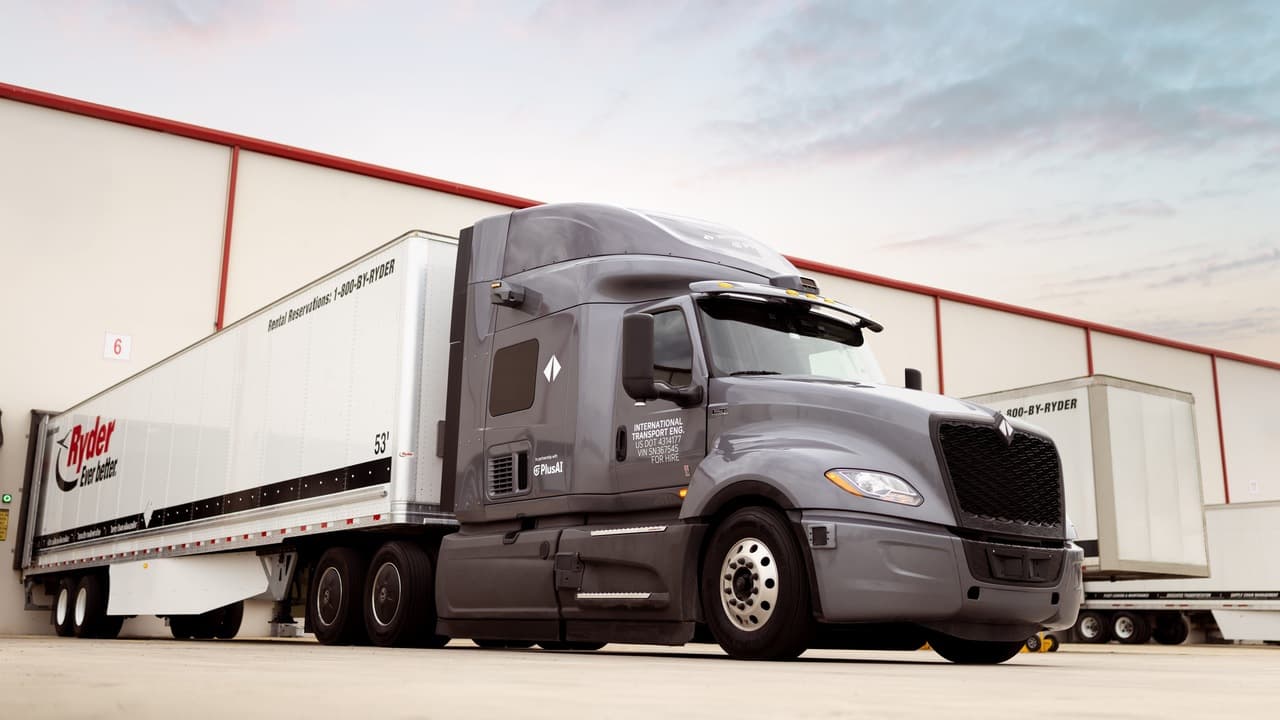
International, PlusAI and Ryder launched autonomous trucking trials on Texas freight routes, achieving 100% on-time delivery and 92% autonomous coverage. The trial uses real freight operations rather than test scenarios.
Autonomous trucking success signals faster, more reliable freight movement for marketplace sellers shipping large volumes. Monitor your shipping costs and delivery times over the next 12 months as this technology scales to major freight corridors.
This represents the logistics automation wave that will compress shipping costs and improve delivery reliability, giving sellers better margins and customer satisfaction scores.
Track your freight shipping costs in Seller Central or supplier portals -- autonomous trucking could reduce logistics expenses by 10-15% as it scales.
Review your inventory positioning strategy for high-volume SKUs that rely on long-haul trucking between distribution centers.
Bottom Line
Autonomous trucking trials mean lower shipping costs ahead for sellers.
Source Lens
Industry Context
Useful background context, but lower-priority than direct platform, community, or operator intelligence.
Impact Level
low
Autonomous trucking trials mean lower shipping costs ahead for sellers.
Key Stat / Trigger
100% on-time delivery and 92% autonomous coverage
Focus on the operational implication, not just the headline.
Full Coverage
International, PlusAI and Ryder have moved autonomous trucking from the test track to live freight operations, running real shipper cargo on the Temple-to-Laredo corridor — one of Texas’ more challenging routes and another clear signal that the technology is moving closer to commercial readiness.
The trial, which launched in November 2025, puts International LT series trucks powered by PlusAI’s SuperDrive 6. 0 virtual driver software into Ryder’s supply chain. Early results are solid: 100% on-time delivery and roughly 92% autonomous route coverage, even on a long-haul lane known for heavy construction and tight hours-of-service windows.
Why Temple-to-Laredo? Many autonomous developers have tested on the shorter Dallas-to-Houston run. This team deliberately chose a longer, more challenging lane. “All the feedback we were hearing from fleets like Ryder is that this is a very difficult lane,” said Amisha Vadalia, who leads commercialization at PlusAI. “There is a lot of construction.
It is quite long. In terms of staffing it can be difficult to get the right people with consistent hauls on that lane. It is a perfect demonstration of why autonomous technology is going to be beneficial for the industry.”
Seth deVlugt, who leads autonomous vehicle relationships at Ryder Ventures, stressed the trial’s real-world feel: “There is nothing manufactured at the beginning or the end. This is real freight that was there before, and it is moving with the same expectations as any other type of movement in a traditional sense.”
A true co-development play Unlike the old retrofit model, International and PlusAI built the system together from the chassis up. “We are really trying to co-develop an integrated concept,” said James Cooper, head of autonomous solutions at International.
“They are in the lead for the software for the virtual driver that is at the heart of the system, and we have a lot of collaboration on the hardware that then needs to support that. We are then responsible for industrializing that set of hardware and building an operational wrapper around the vehicle so that we can deliver the uptime and performance.”
The lane is also generating valuable data that is speeding up software development cycles. “With the International and PlusAI process, we are looking at a matter of weeks,” Vadalia noted. “Constantly the vehicles are out collecting more data.
All the data that we are collecting will feed back into our machine learning loop and then we are able to improve the software.” This comes as PlusAI recently released its SuperDrive 6. 0 update, bringing better construction-zone handling and nighttime capability — exactly what this corridor demands.
How the trial actually works International set up its own DOT-licensed for-hire sub-entity so it could keep full control of safety while professional safety drivers ride along. The trucks haul real Ryder freight on tight shipper schedules. “Today the vehicles are owned and operated by International,” Cooper explained.
“That allows us to put our trucks into our own registered company with our own safety drivers — complete control of the safety and operation around these vehicles.”
Key early results 100% on-time delivery across all runs 92% autonomous coverage on the route Sub-30-minute pre-trip inspections Stronger-than-expected fuel efficiency thanks to the AI’s smooth, consistent driving style “When you can show them statistics about the fuel efficiency of this truck, that is one of the ones that has turned heads,” Cooper said.
“When you take that and put it into a perfect cycle where you are maintaining consistent speed, you have smooth drive, less harsh braking, less fast acceleration — of course you are essentially having a perfectly trained driver when it comes to optimizing your fuel burn.”
What it means for fleets looking into autonomy Ryder entered the pilot with three clear goals: prove the tech works, check the economics, and figure out what extra support services will be needed at scale. “They passed. They met the expectations on the lane,” deVlugt confirmed. “We feel really good that we have gotten the feedback we needed on each front.”
The bigger picture for Ryder is how autonomy fits its “port-to-door” supply chain model. “If you imagine that port-to-door solution on one slide and you circle where autonomy in the short term will run, there is a Ryder service wrapped around every single portion of that,” deVlugt said.
Cooper added that fleets are more focused on reliability than pure cost-cutting right now. “Customers are not knocking on my door saying ‘I need to make transport cheaper.’ They want to make it predictable, safe and scalable.” Path to driver-out operations The trial has no end date — Ryder plans to stay in through future software drops.
International expects a fully certified redundant base vehicle platform by the end of 2027, the key enabler for removing safety drivers. “We are at this point where commercialization is very close,” Vadalia said
Original Source
This briefing is based on reporting from Freightwaves. Use the original post for full primary-source context.
Style
Audience