Nearshoring growth collides with tightening US-Mexico trucking capacity
Cross-border US-Mexico trucking capacity is shrinking due to B-1 visa driver enforcement, non-domiciled CDL crackdowns, and English-language requirements — even as nearshoring freight volumes grow. Southern California shippers are already seeing driver shortages and rate increases during fall 2026 peak season.
This is part of a broader margin compression trend — nearshoring promised cost savings, but regulatory enforcement and infrastructure gaps are eroding those advantages, forcing sellers to choose between higher logistics costs or longer lead times.
Sellers sourcing from Mexican manufacturers or routing goods through SoCal ports face longer lead times and higher freight costs heading into Q4 — this is a margin problem, not just a logistics inconvenience. Audit your Mexico-origin SKUs now and build 2-3 extra weeks of buffer stock before November.
Operational Impact
This story may require teams to revisit workflows, monitoring, or platform assumptions.
Bottom Line
Shrinking cross-border trucking supply means higher freight costs and delays for Mexico-sourced sellers.
Source Lens
Industry Context
Useful background context, but lower-priority than direct platform, community, or operator intelligence.
Impact Level
medium
Shrinking cross-border trucking supply means higher freight costs and delays for Mexico-sourced sellers.
Key Stat / Trigger
30-45 day payment delays forcing small fleets to reduce truck counts during peak season
Focus on the operational implication, not just the headline.
Full Coverage
SAN DIEGO — Nearshoring continues to drive freight between the U. S. and Mexico, but a shrinking pool of cross-border drivers, tougher customs enforcement and increasingly sophisticated cargo theft could make moving that freight more difficult and expensive, industry executives said Tuesday.
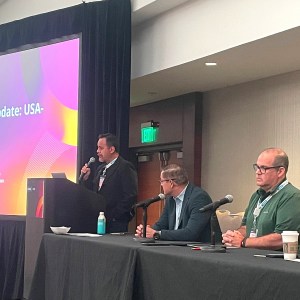
The challenges were discussed during “The Nearshoring Update: USA-Mexico Freight” at Trimble Insight 2026 in San Diego.
The panel featured Ben Enriquez of Transport Capacity Services; Carime Duck, a licensed customs broker and president of the San Diego Customs Broker Association; and Ricardo Malacara, sales director at cargo-security technology provider Overhaul.
Trimble Insight 2026 Conference was held Sunday through Tuesday, included 1,200 attendees and featured more than 200 information sessions and product demonstrations. Enriquez said nearshoring hasn’t disappeared despite tariffs and geopolitical uncertainty that have dominated headlines over the past year.
“The reality is that nearshoring, the ball was already rolling,” Enriquez said. “There were already manufacturing plants and expansions being done, and they continue to happen.” Enriquez pointed to continued growth in two-way U. S. -Mexico commerce as evidence of the integration between the countries’ manufacturing sectors.
He said many products, particularly automotive components, can cross the border multiple times during production. Companies are taking a more cautious approach because of uncertainty surrounding the United States-Mexico-Canada Agreement (USMCA), he said, but “nearshoring is a reality.”
Related: Trimble keeps freight business sale on the table while unveiling new AI tools Driver enforcement puts pressure on cross-border capacity At the same time that freight demand is growing, Enriquez said the supply of drivers capable of handling cross-border shipments is coming under pressure.
Enforcement involving Mexican B-1 visa drivers, non-domiciled commercial driver’s licenses and English-language requirements has changed the economics and operating models of cross-border trucking companies, he said. B-1 drivers generally can transport international freight into the U. S.
and return with international cargo but cannot engage in domestic point-to-point transportation, known as cabotage. Enriquez said stepped-up enforcement against drivers accused of improper domestic moves has removed drivers from the market.
Combined with restrictions affecting non-domiciled CDL holders, that is reducing the pool of drivers available to both cross-border and domestic carriers. Some Mexican trucking companies that established U. S. operations to provide door-to-door service are retreating to the traditional model of transferring trailers or freight to U. S.
carriers at the border because they can no longer find enough drivers, Enriquez said. “The market has changed in a lot of ways, and these issues are making it lose a lot of drivers,” he said.
Rising fuel expenses are putting additional pressure on small and midsize trucking companies, particularly those that must pay for fuel immediately but wait 30 to 45 days to receive payment from customers.
The result, Enriquez said, is that some fleets are reducing the number of trucks they operate because they lack either drivers or sufficient working capital. “We are seeing that the volume is increasing,” Enriquez said, even as cross-border trucking supply contracts.
Duck said the capacity crunch is already showing up in Southern California during the fall peak shipping season. Driver availability has become more difficult and trucking rates are increasing, she said, with fuel costs contributing to repeated price increases. Malacara said reduced capacity can also create security vulnerabilities.
“The lack of capacity on drivers and trucks that can do cross-border increases the operation, increases the dwell times, increases the handoffs, which in turn increases the risk,” he said.
Freight waiting for drivers can end up at transfer locations that may not be secure, while companies under pressure to find capacity can take risks when hiring unfamiliar carriers or drivers.
Companies expanding production in Mexico must increasingly treat trucking capacity, customs compliance and cargo security as part of their nearshoring strategy rather than downstream logistics issues, cross-border panelists said at Trimble Insight 2026.
(Photo: Jim Allen/FreightWaves) Nearshoring concentrates cargo-theft risk Nearshoring has also concentrated more freight on Mexico’s existing transportation infrastructure, particularly through the Bajío manufacturing region of central Mexico, Malacara said.
Road, rail, airport and port infrastructure haven’t expanded as quickly as manufacturing investment, resulting in greater volumes of valuable cargo traveling along many of the same corridors. “Concentrating freight, concentrating high-value moving goods in the same highway has increased the risk for all the shippers and all the cargo owners,” Malacara said.
Check your 3PL or freight forwarder's Mexico cross-border lane pricing now — if rates have risen 10%+ since August, lock in contracts before peak season tightens capacity further.
For Mexico-sourced inventory, increase reorder points by 15-20% for Q4 to offset rising dwell times and transfer handoffs that are adding theft and delay risk.
Original Source
This briefing is based on reporting from Freightwaves. Use the original post for full primary-source context.
Style
Audience