

Google Ads Tracking in 2026: The 5 Things Every Advertiser Needs to Get Right
Google Ads has become increasingly dependent on conversion data. Smart Bidding, audience targeting, and value-based optimisation all rely on one thing: accurate tracking. If you’re auditing a Google Ads account today, these are the five tracking areas that matter most. The post Google Ads Tracking in 2026: The 5 Things Every Advertiser Needs to Get Right first appeared on PPC Hero.
Source Lens
Industry Context
Useful background context, but lower-priority than direct platform, community, or operator intelligence.
Impact Level
medium
Use this briefing to decide whether your team needs an immediate workflow, policy, or reporting change.
Key Stat / Trigger
No single quantitative trigger surfaced in this report.
Focus on the operational implication, not just the headline.
Full Coverage
By Oliver Ewbank - Tuesday June 23, 2026 Share (Twitter) WhatsApp Summarize ChatGPT Perplexity Grok Google AI Google Ads has become increasingly dependent on conversion data. Smart Bidding, audience targeting, and value-based optimisation all rely on one thing: accurate tracking.
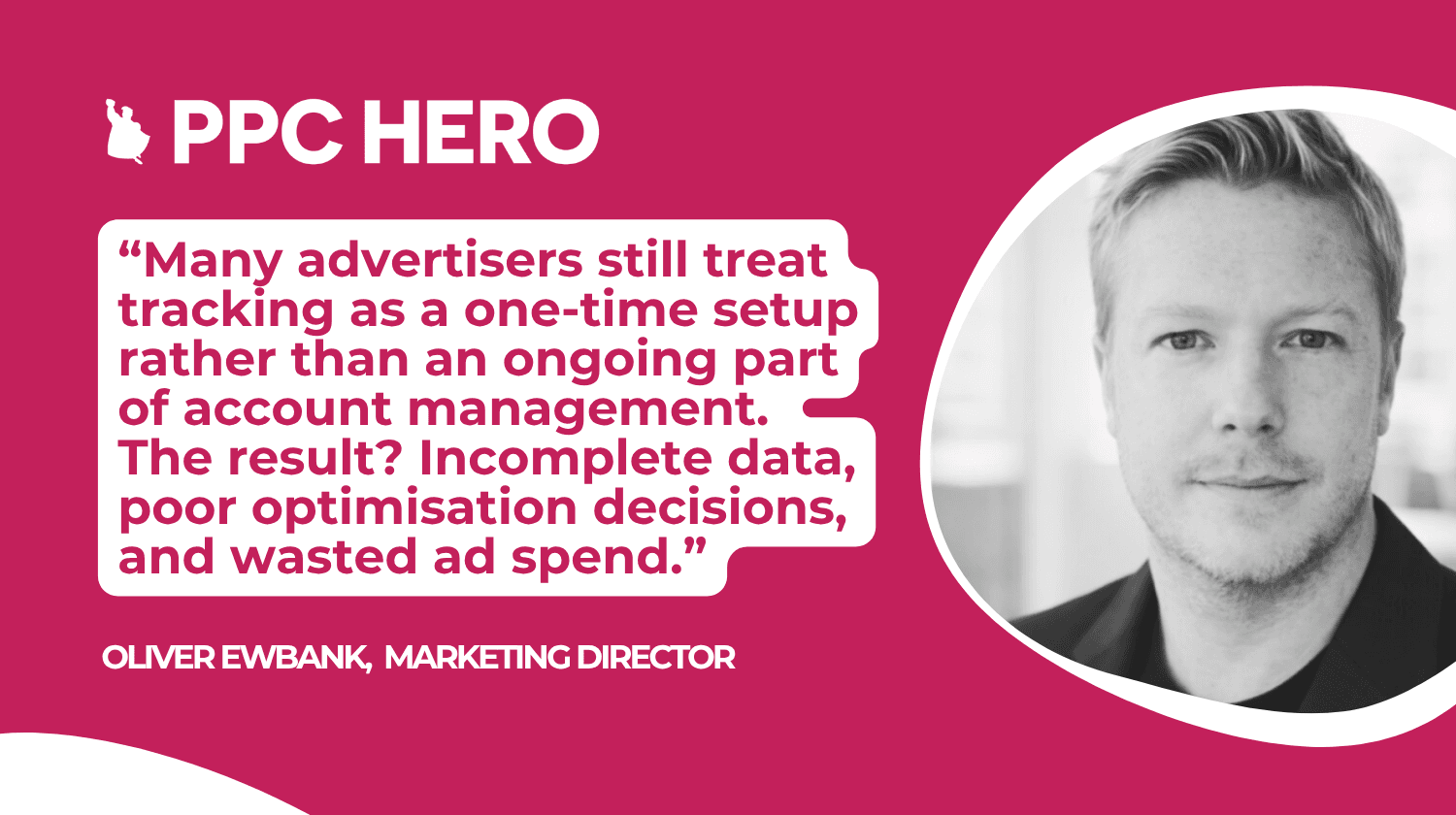
Yet many advertisers still treat tracking as a one-time setup rather than an ongoing part of account management. The result? Incomplete data, poor optimisation decisions, and wasted ad spend. If you’re auditing a Google Ads account today, these are the five tracking areas that matter most. 1.
Build Your Tracking Foundation First Before worrying about bidding strategies or campaign structure, make sure your measurement setup is working correctly.
At a minimum, every advertiser should have: Google Tag installed sitewide Google Analytics 4 linked to Google Ads Primary conversion actions configured correctly Google Tag Manager managing deployments where possible A surprising number of accounts still have duplicate conversions, broken thank-you page tracking, or tags that only fire on parts of the website.
If the data going into Google Ads is inaccurate, the machine learning powering Smart Bidding will make poor decisions. Think of conversion tracking as the fuel for automation. Better inputs create better outputs. 2.
Enhanced Conversions Are No Longer Optional Privacy changes have made traditional cookie-based tracking less reliable than it was a few years ago. Browser restrictions, ad blockers, and cross-device behaviour all contribute to conversion loss.
Enhanced Conversions help recover some of that missing data by securely using first-party customer information, such as email addresses, to improve conversion matching. For lead generation advertisers, this often means recovering form submissions that would otherwise go unreported.
For ecommerce brands, it can improve purchase attribution, particularly for Safari and iOS users. Many advertisers have already adopted Smart Bidding. Far fewer have implemented Enhanced Conversions correctly, despite the direct impact on bidding performance. 3.
Consent Mode Matters for Both Compliance and Performance For advertisers targeting users in the UK and Europe, Consent Mode v2 is now a critical part of any tracking setup. Beyond compliance requirements, Consent Mode helps Google model conversions from users who decline cookies, reducing some of the reporting gaps created by consent banners.
Without it, advertisers may see: Reduced audience sizes Incomplete conversion reporting Lower-quality signals for Smart Bidding The key is ensuring your Consent Management Platform integrates properly with Google Ads and GA4. Many businesses have a cookie banner in place but haven’t verified whether consent signals are being passed correctly.
That’s a mistake worth fixing. 4. Align Conversion Tracking With Business Outcomes One of the biggest tracking mistakes is measuring activity rather than value. Not all conversions are equal. A newsletter signup and a qualified sales lead should not carry the same weight.
Similarly, a £20 purchase and a £2,000 purchase should not send identical signals to Google’s bidding algorithms. The goal should be to move beyond simple conversion volume and toward conversion value.
Examples include: Assigning estimated values to different lead types Passing actual ecommerce revenue Importing offline sales data from CRM systems Tracking customer lifetime value where possible The more accurately Google understands what a valuable customer looks like, the better it can optimize campaigns. 5.
Make Tracking an Ongoing Process Tracking is not something you set up once and forget. Websites change. Forms get updated. Developers launch new pages. CRM integrations break.. Regular tracking audits should be part of every account management process.
At minimum, advertisers should routinely check: Conversion volumes for unexpected spikes or drops Duplicate conversion actions Tag firing behaviour GA4 and Google Ads integration status Consent Mode diagnostics Enhanced Conversion reporting Small tracking issues can create major optimisation problems over time.
Final Thoughts The future of Google Ads isn’t more automation, it’s better data. Most advertisers already have access to Smart Bidding, automated targeting, and AI-powered campaign types. The real competitive advantage comes from providing those systems with accurate conversion data.
If you’re looking to improve Google Ads performance in 2026, don’t start with bidding strategies or campaign restructuring. Start with your tracking. Because when measurement improves, optimisation becomes significantly easier. Next Post: How to Pitch to Speak at Marketing Events
Original Source
This briefing is based on reporting from PPC Hero. Use the original post for full primary-source context.
Style
Audience