Next phase for autonomous railcar technology in commercial service testing
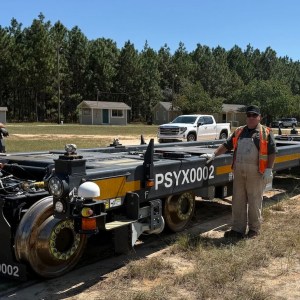
Parallel Systems advanced its autonomous battery-electric railcar program to Phase 4 testing on Georgia short lines, covering 30 miles with remote supervision replacing line-of-sight oversight. The technology targets short-haul container freight currently dominated by trucks, with commercial operations targeted for 2026.
Early-stage autonomous freight rail fits the broader pattern of logistics cost disruption, but meaningful carrier rate competition with trucking on short-haul lanes is likely 3-5 years away pending FRA approval of all seven test phases.
Autonomous rail could eventually compress short-haul freight costs between inland warehouses and ports like Savannah, potentially shifting carrier rate dynamics for Southeast-based FBA and DTC sellers. No actionable impact within 30 days — this is 2-3 year infrastructure horizon.
Operational Impact
This story may require teams to revisit workflows, monitoring, or platform assumptions.
Bottom Line
Autonomous rail is years out — zero seller impact today.
Source Lens
Industry Context
Useful background context, but lower-priority than direct platform, community, or operator intelligence.
Impact Level
low
Autonomous rail is years out — zero seller impact today.
Key Stat / Trigger
300+ vehicle backlog with commercial operations targeted for 2026
Focus on the operational implication, not just the headline.
Full Coverage
Parallel Systems has advanced its autonomous battery-electric railcar program to a fourth testing phase on Genesee & Wyoming short lines in Georgia. The operational milestone comes as part of the company’s effort to establish a lower-cost rail alternative for short-haul container freight.
The Los Angeles-based company completed the first phase of its Federal Railroad Administration-approved test program on a two-mile segment of G&W’s Heart of Georgia Railroad, then began a second phase over 30 miles between Vidalia and an area east of Helena, Georgia.
The second-phase territory includes 43 public grade crossings, protected by flaggers during the tests. “This phase introduces a major unlock: Remote supervision as opposed to line-of-sight supervision in the field, opening the door to centralized operations across rail networks,” the company said on social media.
“We’re also significantly extending the distance of our automated runs, while expanding operations across more complex infrastructure, including diamond crossings.”
Parallel’s self-propelled vehicles are designed to carry containers individually or operate in digital platoons, a model intended to give railroads an economic way to pursue smaller-volume and shorter-distance freight lanes that are generally served by trucks.
Rival Intramotev has already put its autonomous railcar systems in commercial service, with a mining operation in Pennsylvania, and with short line operator R. J. Corman. Seven-stage program Georgia is the first U. S. commercial pilot for Parallel’s technology, but it remains a testing and approval program rather than unrestricted freight service.
The program is structured in seven phases across a 160-mile corridor on the two G&W lines. Each phase is intended to increase operating complexity, and FRA must determine that a phase has met its requirements before the participants can proceed to the next one, Trains reported earlier. The approved territory extends from near Cordele, Ga.
, on the Heart of Georgia Railroad eastward through Vidalia and onward on Georgia Central toward Pooler, near the Port of Savannah. FRA said the program is intended to evaluate the technology and its operational approach for short-haul container movements.
The company reportedly said in 2025 it had a backlog exceeding 300 vehicles and expected initial commercial operations in 2026, subject to test outcomes and regulatory approval.
Parallel closed a $38 million Series B financing round alongside the Georgia-pilot announcement, saying the capital would support commercialization of its Generation 3 vehicle and autonomous rail system. The company said its cumulative fundraising then stood at about $100 million. This article was edited Sept.
25 to correct that this is Parallel’s fourth testing phase. Subscribe to FreightWaves’ Rail e-newsletter and get the latest insights on rail freight right in your inbox. Read more articles by Stuart Chirls here.
Read more: Greenbrier racks up $600 million in new railcar orders New $100M inland rail terminal will handle 60,000 TEUs a year Regulators turn down requests for summary denial of UP-NS merger Union Pacific blasts rival railroads’ trackage rights requests Rail freight slides in rare off-week The post Next phase for autonomous railcar technology in commercial service testing appeared first on FreightWaves.
Monitor your inbound freight costs from Southeast distribution hubs (Atlanta, Savannah) annually — autonomous rail reaching commercial scale could create new rate leverage points worth benchmarking.
No action needed in next 30 days — file this under long-term logistics diversification watch, not immediate operational change.
Original Source
This briefing is based on reporting from Freightwaves. Use the original post for full primary-source context.
Style
Audience