Amazon Drone Delivery Expansion: What Changes Now
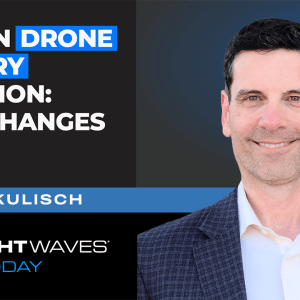
Amazon drone delivery is expanding again — but the real story is why it took 13 years to get here. FreightWaves Parcel & Air Cargo Editor Eric Kulisch breaks down Amazon Prime Air, the FAA’s pending beyond-visual-line-of-sight rules, which states are first in line, and what has to happen before drone delivery scales beyond a […] The post Amazon Drone Delivery Expansion: What Changes Now appeared first on FreightWaves.
Source Lens
Industry Context
Useful background context, but lower-priority than direct platform, community, or operator intelligence.
Impact Level
medium
Use this briefing to decide whether your team needs an immediate workflow, policy, or reporting change.
Key Stat / Trigger
No single quantitative trigger surfaced in this report.
Focus on the operational implication, not just the headline.
Full Coverage
#fwtv_Dot21VR7mhM. fwtv-panel{border:1px solid #d0d0d0;padding:18px;border-radius:6px;line-height:1. 6}#fwtv_Dot21VR7mhM. fwtv-panel p{margin:0 0 12px}#fwtv_Dot21VR7mhM.
fwtv-note{font-style:italic;color:#666;margin-top:16px;padding-top:12px;border-top:1px solid #e0e0e0}Amazon drone delivery is expanding again — but the real story is why it took 13 years to get here.
FreightWaves Parcel & Air Cargo Editor Eric Kulisch breaks down Amazon Prime Air, the FAA’s pending beyond-visual-line-of-sight rules, which states are first in line, and what has to happen before drone delivery scales beyond a few test markets.
If the FAA finalizes the next rules, this could be the point where drone delivery moves from demo to actual network buildout.
#DroneDelivery #AmazonPrimeAir #FAARegulationsAmazon is rapidly expanding its Prime Air drone delivery program to seven states — Arizona, Florida, Kansas, Louisiana, Michigan, Nebraska, and Texas — with additional metro areas including Chicago, Syracuse, Cleveland, Atlanta, and Boise announced as coming soon.
The expansion comes as the FAA is expected to finalize standardized beyond-visual-line-of-sight (BVLOS) rules within weeks, a regulatory milestone that could allow operators to scale drone delivery far more broadly than is currently possible under individual waivers. The regulatory backdrop has long constrained growth.
Amazon’s drone ambitions date to December 2013, when founder Jeff Bezos appeared on 60 Minutes to announce Prime Air — but the program has taken roughly 13 years to reach meaningful commercial deployment, largely because operators must obtain site-specific FAA waivers to fly beyond an operator’s line of sight.
“The door will open, the floodgates will open more once these rules are passed,” said FreightWaves Parcel & Air Cargo Editor Eric Kulisch. “And you can kind of, if you have the technology, you can start spreading out the program.” Amazon’s current MK30 drone operates at altitudes of roughly 200 to 300 feet and has a delivery range of approximately 7.
5 miles from a fulfillment center. The drone descends to about 13 feet above the ground and drops packages through a chute. Orders under $50 carry a $3 drone-delivery fee; orders above that threshold qualify for free drone delivery, similar to how same-day ground options are priced.
“I think that’s maybe why Amazon’s announcing this, because maybe the dam will break and they can roll it out to more cities,” Kulisch said. Pending FAA BVLOS rules would require drones to broadcast their identity and location at all times and to yield right-of-way to crewed aircraft transmitting ADS-B signals.
Those provisions matter for general aviation pilots who currently have no reliable way to detect low-altitude commercial drones operating on waivers. Amazon promotes detect-and-avoid technology on the MK30, but standardized transponder requirements remain tied to the forthcoming rulemaking.
One market still waiting is Memphis, Tennessee, where Amazon had planned an earlier rollout that was delayed by negotiations with the local airport authority and city planning commission. Kulisch said cities that work through those agreements faster tend to move to the front of the expansion queue. The longer-term stakes extend well beyond parcel delivery.
A Morgan Stanley white paper published in 2021 projected the broader urban air mobility market — encompassing cargo drones and electric vertical takeoff and landing passenger aircraft — would reach roughly $1 trillion by 2040, on par with today’s U. S. trucking industry.
By 2050, Morgan Stanley’s base-case estimate rises to $9 trillion, approximately the size of the entire global logistics industry today, with a bear case of $2. 3 trillion and a bull case of $19 trillion.
For carriers, brokers, and shippers, the drone expansion represents an incremental but accelerating shift in last-mile economics — one that consumer demand for ultra-fast delivery, already reshaping ground networks at companies like Walmart and Home Depot, is pushing forward.
Amazon’s Prime Air drone delivery is live in 7 states, with Chicago, Cleveland, Atlanta, Syracuse, and Boise metro areas announced as next expansions. FAA beyond-visual-line-of-sight standardized rules are expected within weeks, which could remove the biggest scaling barrier for commercial drone operators.
Morgan Stanley projects urban air mobility could reach a $9 trillion base-case valuation by 2050, roughly equal to the entire logistics industry today. This Summary is generated thanks to a transcription of the interview, for the full interview please enjoy the video above.
The post Amazon Drone Delivery Expansion: What Changes Now appeared first on FreightWaves.
Original Source
This briefing is based on reporting from Freightwaves. Use the original post for full primary-source context.
Style
Audience