

Alaska Airlines upgrades Amazon cargo contract
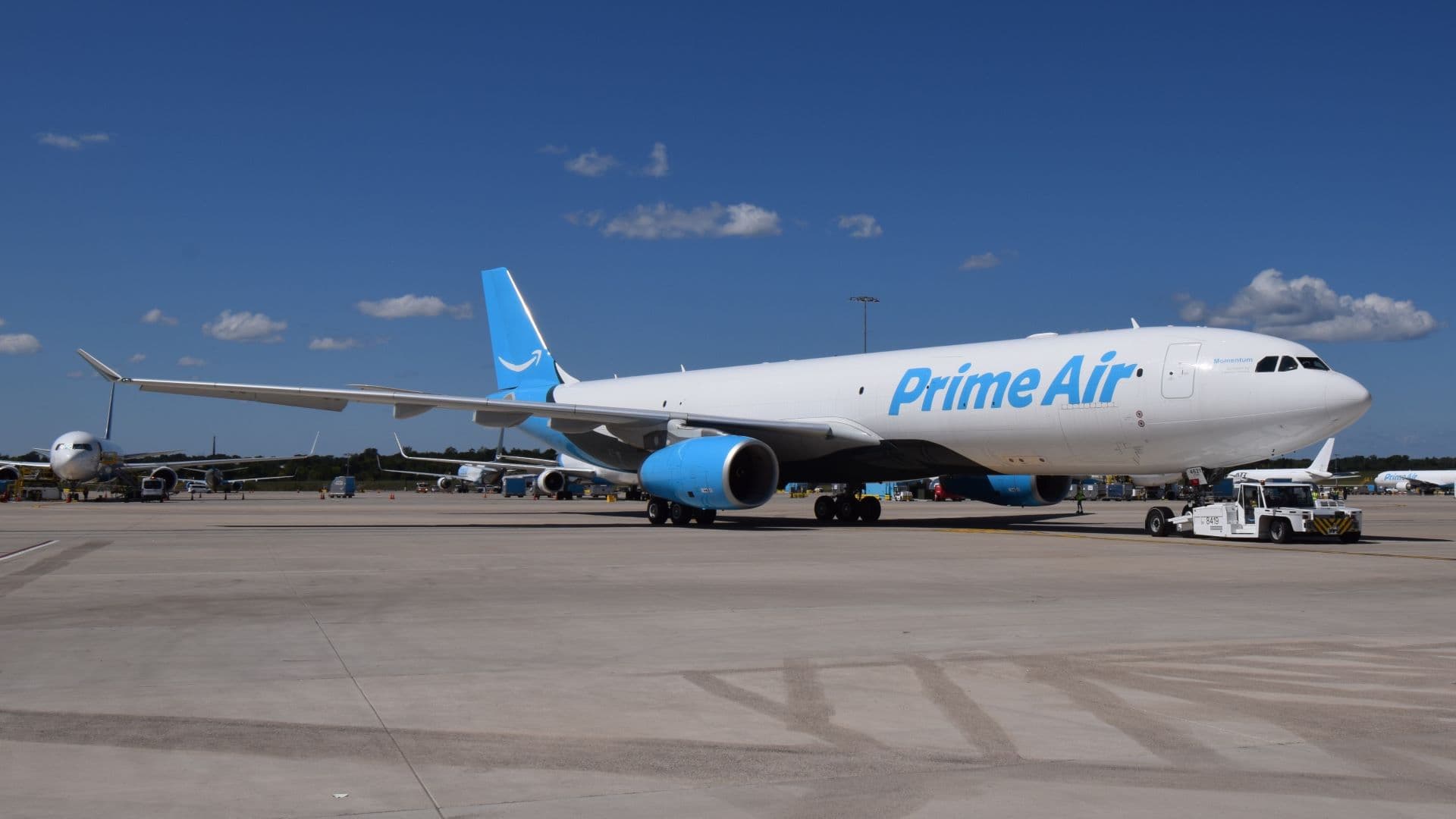
Alaska Airlines renegotiated its unprofitable Amazon cargo contract to break-even status but still seeks better margins on 10 Airbus A330 freighters. The restructured deal improves economics but executives indicate more work needed for profitability.
Amazon's notorious vendor margin pressure extends to logistics partners, signaling potential future shipping cost increases as carriers demand better returns. This could translate to higher FBA fees or delivery costs as Amazon's logistics network repricing ripples through the system.
Amazon's aggressive vendor negotiations extend beyond product suppliers to logistics partners, creating system-wide pressure that historically leads to seller fee increases as costs get passed down the chain.
Monitor FBA fee announcements in Q2-Q3 2026 -- logistics partner margin pressure often precedes Amazon fee increases within 6-12 months.
Diversify fulfillment options now by testing Walmart Fulfillment Services or third-party 3PLs to reduce Amazon dependency.
Bottom Line
Amazon logistics partner margin squeeze signals potential FBA fee increases ahead.
Source Lens
Industry Context
Useful background context, but lower-priority than direct platform, community, or operator intelligence.
Impact Level
medium
Amazon logistics partner margin squeeze signals potential FBA fee increases ahead.
Key Stat / Trigger
10 Airbus A330 freighters moved from losses to break-even
Focus on the operational implication, not just the headline.
Full Coverage
Alaska Air Group has renegotiated a cargo transportation contract with Amazon that was unprofitable, but executives on Tuesday suggested improvements to the deal didn’t go far enough.
Alaska Airlines (NYSE: ALK) operates 10 Airbus A330-300 converted freighter aircraft for the retail and logistics behemoth, shuttling e-commerce packages between nodes in its U. S. air distribution network. Alaska inherited the Amazon (NASDAQ: AMZN) flying contract when it acquired Hawaiian Airlines 18 months ago.
Under the transport agreement, Amazon supplies the aircraft and Alaska Airlines provides crews, maintenance and insurance to operate them.
“We’ve restructured the Amazon deal from losses to not having losses, and we’ve got a little more work to do there as well,” said Alaska Air CEO Ben Minicucci during a call with analysts after the company reported first-quarter earnings.
The first public sign that Alaska Air was unhappy with its Amazon partnership came in December when Chief Financial Officer Shane Tackett said the airline wasn’t making money from it. People familiar with Amazon’s culture say the company typically forces vendors to accept very small profit margins.
A contract that was marginally profitable at the start could have turned negative with the transition to a new airline, which has different crew bases and other operating needs, and compensates pilots differently. Both companies are headquartered in Seattle. “We’ve really enjoyed getting to work more closely with the folks at Amazon.
We know them because they’re neighbors of ours. We have folks who used to work in Alaska over there. We’ve worked on deepening the partnership, and I think it’s going well,” a less-than-enthusiastic Minicucci said. “The partnership is getting better. It’s getting healthier.
We’re continuing to talk about how we can deepen it further, in a way that’s mutually beneficial to each other. We had a nice sort of update to the agreement that’s in force today that helps us on the economic side, and we’re hopeful that we can expand that through more partnership over time.”
Hawaiian agreed to become an Amazon contractor in 2022 as a way to diversify revenue when it was losing money following the Covid crisis. Amazon had leased the Airbus A330 passenger-to-freighter aircraft and was looking for an operator because it isn’t a licensed airline. Hawaiian was one of only two A330 operators in the United States.
Alaska Air, the parent of Alaska Airlines and regional carrier Horizon Air, has not disclosed specific concerns with the Amazon contract. But an aviation professional told FreightWaves in December that Amazon drove a hard bargain, leaving Hawaiian with an uneconomical fixed-fee deal with little room to decrease costs and enhance margins.
Another logistics expert, speaking on condition of anonymity at the time, speculated that the lack of coordinated passenger and cargo crew bases could be a challenge for Alaska Airlines.
Periodic changes to Amazon’s route structure, or the number of flight hours required each month, could conflict with Hawaiian’s original pricing assumptions on pilot staffing levels and expenditures, or make it more difficult to rotate crews to passenger flying. “I won’t share where the specific economics on the freighters were.
But, if we’re going to put time into flying aircraft around, we feel like we need to earn a reasonable margin — not a break-even margin. That’s not really our philosophy in terms of investment,” Tackett said on Tuesday. “We’ll be focused on generating decent returns on this flying.”
Q1 results Cargo revenue, most of which comes from shipments carried on Alaska Airlines passenger aircraft and five Boeing 737-700 and 737-800 converted freighters, increased 23% year over year to $150 million in the first quarter.
“Over the next year or two, we’re excited regardless of the freighter contract, about the opportunities with belly cargo on the widebodies, the opportunities to continue to grow our own freight market share up in the state of Alaska and along the West Coast,” Tackett said.
Alaska Airlines, traditionally a narrowbody carrier, began operating from its Seattle hub to Tokyo and Seoul, South Korea, last year using Airbus A330-200 passenger jets from Hawaiian’s fleet. In January, the carrier switched to Boeing 787-9 Dreamliners on the Tokyo route, increasing passenger and cargo capacity.
Alaska begins daily 787-9 passenger service to Rome next Tuesday and to London Heathrow airport on May 21.
Chief Operating Officer Jason Berry noted that the cargo division’s quarterly performance was aided by the integration of Hawaiian and Alaska Airlines cargo systems, with combined booking systems and a unified sales approach allowing the carrier to leverage wider network connectivity.
Overall, Alaska Air posted a net loss of $193 million as the carrier felt the brunt of surging jet fuel prices and revenue pressure because of heavy flooding in Hawaii and drug cartel violence in Mexico, two of its key leis
Original Source
This briefing is based on reporting from Freightwaves. Use the original post for full primary-source context.
Style
Audience