

Tesla says mass production of electric Semi to begin this year
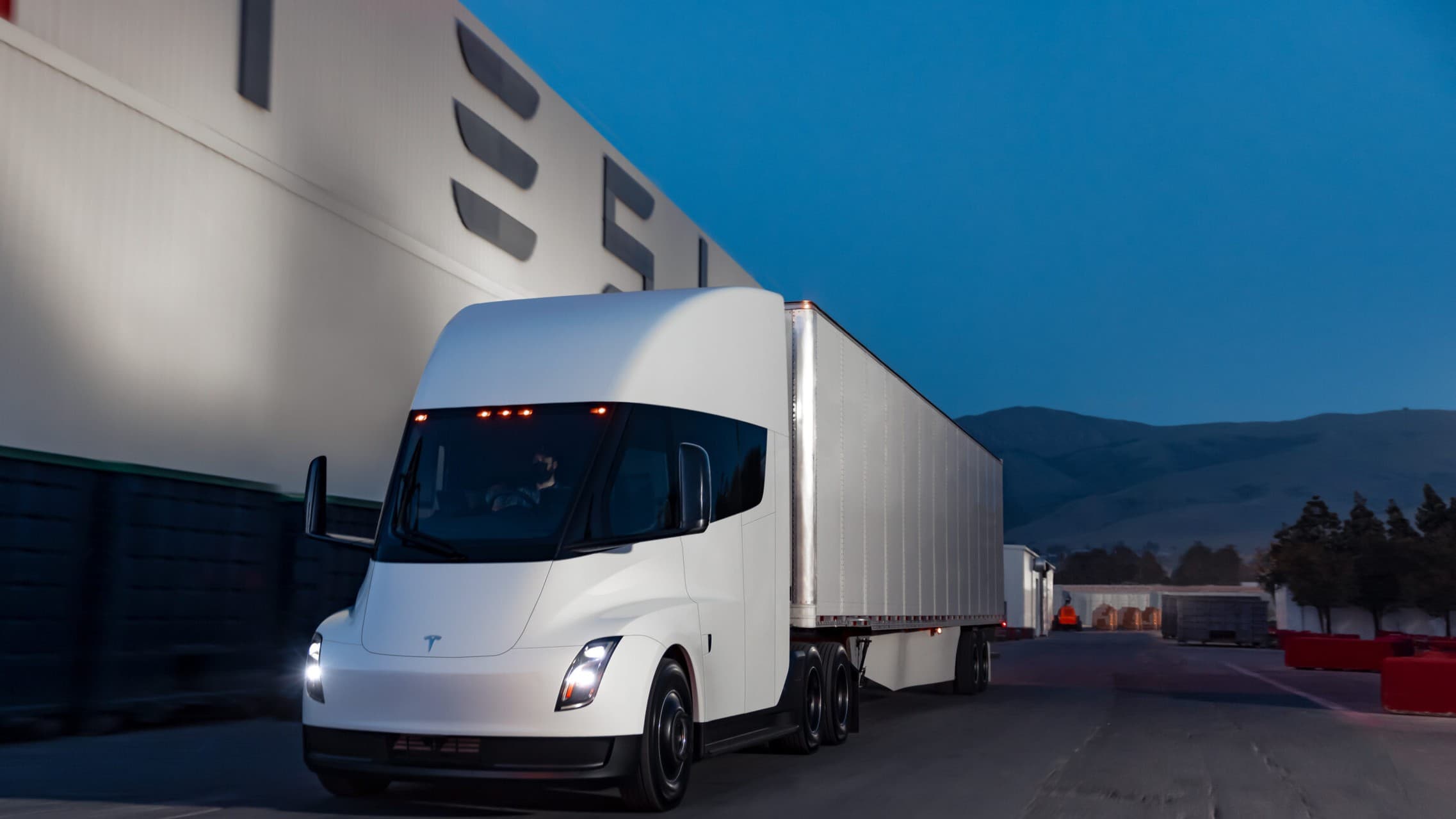
Tesla announced mass production of its electric Semi truck will begin in 2026, with slow initial ramp before accelerating into 2027. Company reported Q1 revenue of $22.4 billion, up 16% year-over-year, while expanding charging infrastructure for commercial freight.
Electric freight adoption could reduce last-mile delivery costs for heavy items, potentially affecting FBA fees and shipping rates within 2-3 years. Sellers shipping bulky products should monitor logistics cost trends as electric commercial vehicles scale.
Electric commercial vehicles represent a long-term shift in logistics infrastructure that could eventually impact marketplace fulfillment costs and delivery speed for heavy items.
Track FBA dimensional weight fees in Seller Central reports - electric freight could eventually reduce costs for oversized items
Monitor shipping cost trends for heavy products over 50 lbs as electric commercial delivery scales in 2027-2028
Bottom Line
Tesla Semi production means potential future logistics cost changes for sellers.
Source Lens
Industry Context
Useful background context, but lower-priority than direct platform, community, or operator intelligence.
Impact Level
low
Tesla Semi production means potential future logistics cost changes for sellers.
Key Stat / Trigger
$22.4 billion Q1 revenue, up 16% year-over-year
Focus on the operational implication, not just the headline.
Full Coverage
Tesla said its long-awaited Class 8 truck, the Tesla Semi, will begin volume production later this year, a milestone CEO Elon Musk framed as part of a broader manufacturing and AI investment cycle.
Speaking during Tesla’s Q1 earnings call, Musk said the company will “begin production of our semi-truck soon,” cautioning that output will ramp slowly at first before accelerating later in the year and into 2027.
The company reiterated in its shareholder update that both the Tesla Semi and its Cybercab robotaxi platform are “on schedule for volume production starting in 2026,” as Tesla expands manufacturing capacity and supply chains to support new products.
Austin, Texas-based Tesla (NASDAQ: TSLA) released its first-quarter earnings Wednesday and held a conference call with analysts after the market closed. Financials beat on revenue growth, margins improve Tesla reported Q1 revenue of $22. 4 billion, up 16% year over year, driven by higher vehicle deliveries, stronger services revenue and improved pricing.
Net income (GAAP): $477 million Operating income: $941 million Free cash flow: $1. 4 billion Operating margin came in at 4. 2%, while adjusted EBITDA reached $3. 7 billion, reflecting continued investment in AI, robotics and manufacturing capacity.
Tesla said profitability was boosted by higher vehicle pricing, lower material costs and growth in software-related revenue such as Full Self-Driving (FSD), though partially offset by rising operating expenses tied to AI development and new product launches.
Semi production tied to supply chain buildout Tesla has been preparing its Nevada facility for Semi production while expanding battery, cathode and lithium supply chains—areas executives repeatedly flagged as critical constraints.
Musk emphasized that new products like the Semi will follow a typical “S-curve” ramp, with early production limited by supply chain complexity before scaling rapidly. The company also highlighted deployment of Megachargers and heavy-duty charging infrastructure alongside the Semi rollout, signaling a broader push into commercial freight electrification.
Bigger bet on AI, autonomy and robotics Beyond trucking, Tesla is doubling down on AI-driven revenue streams, including robotaxis and humanoid robots (Optimus), while expanding its training compute and chip design capabilities.
The company launched unsupervised robotaxi rides in Dallas and Houston in April and continues to scale its autonomous fleet, though executives said meaningful revenue contribution is more likely in 2027.
Tesla expects capital expenditures to surge to support six factories, AI infrastructure and new product lines, positioning the company for what Musk described as a “very significant increase in future revenue.” The post Tesla says mass production of electric Semi to begin this year appeared first on FreightWaves.
Original Source
This briefing is based on reporting from Freightwaves. Use the original post for full primary-source context.
Style
Audience