

Rail merger a failure on first sight, shippers protest
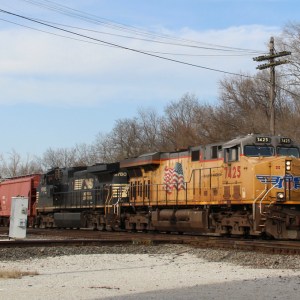
The merger filing of Union Pacific and Norfolk Southern still lacks information for proper federal review, say shippers’ trade groups. The post Rail merger a failure on first sight, shippers protest appeared first on FreightWaves.
Source Lens
Industry Context
Useful background context, but lower-priority than direct platform, community, or operator intelligence.
Impact Level
medium
Use this briefing to decide whether your team needs an immediate workflow, policy, or reporting change.
Key Stat / Trigger
No single quantitative trigger surfaced in this report.
Focus on the operational implication, not just the headline.
Full Coverage
A coalition of industrial shippers say plans to create the first coast-to-coast railroad still don’t provide enough data for regulators to make a proper review.
Union Pacific (NYSE: UNP) and Norfolk Southern (NYSE: NSC) in four filings have failed to provide basic information to allow their transcontinental tie-up to move forward under the Surface Transportation Board’s merger rules, shippers claim.
A broad coalition representing chemical producers and industrial shippers in a joint motion filed Thursday with the STB argued that the railroads have failed to provide enough information to meet the statutory public-interest standard.
“This prima facie threshold is a preliminary screen based only on the sufficiency of the evidence UP and NS submitted in their application and supplemental filings, viewed in the most favorable light,” the groups said. “At this stage, the Board does not weigh the strength of the application or decide whether the merger should ultimately be approved.
Even if a prima facie case has been made, the merits of the application will only be weighed after evidence and testimony are provided by stakeholders around the country over the next year.” Prima facie is Latin for “on its face,” and is a legal indication that a lawsuit or other matter has enough basic facts to move forward.
The filing comes as a growing number of politicians and other public officials have voiced their opposition to the merger. At the same time, the Senate today approved the renomination of Democrat Karen Hedlund to the STB. Appointed by President Joe Biden in 202, Hedlund’s term had expired at the end of 2025. Her new terms runs through Dec. 31, 2030.
The STB rejected as incomplete the initial UP-NS merger application in January before conditionally accepting a second filing in May while requesting more supporting data. The companies completed those filings in late July. The STB and predecessor regulators in the postwar era have never rejected a merger application twice.
The shipper groups said that the STB itself noted that its review of the most recent filings “may include an evaluation as to whether [a]pplicants have presented a prima facie case,” that the proposed merger is consistent with the public interest.
The shippers said that the STB’s tougher standards adopted in the early 2000s after a series of chaotic mergers require any new consolidations to enhance competition, assess downstream effects, and provide plans to manage transitional service disruptions, among other elements.
Rival railroads and many shippers say that the merger will reduce competition and raise rates.
“The application fails to address the full range of competitive harms, propose any conditions to enhance competition for rail shippers, present reasonable and documented benefit claims, remedy merger-related service failures, or account for the likely impact of future mergers,” the shippers said.
The group includes the Alliance for Chemical Distribution; American Chemistry Council; American Fuel & Petrochemical Manufacturers; the Fertilizer Institut;, and the National Industrial Transportation League. Subscribe to FreightWaves’ Rail e-newsletter and get the latest insights on rail freight right in your inbox. Read more articles by Stuart Chirls here.
Read more: These two industrial categories paced another strong week for rail freight CPKC income higher as revenue sets new second-quarter record Industrial products spark rail freight gains BNSF CEO assails new rail merger filing, says transcon will raise rates, prices The post Rail merger a failure on first sight, shippers protest appeared first on FreightWaves.
Original Source
This briefing is based on reporting from Freightwaves. Use the original post for full primary-source context.
Style
Audience