Trucking Downturn: Why 85% of New Carriers Didn’t Survive
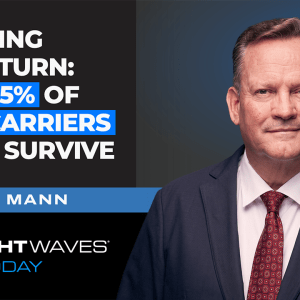
The freight market has seen a brutal downturn, with an astounding 85% failure rate for new carriers in the past three years. Kirk Mann, EVP & GM of Transportation and Vendor Solutions at Mitsubishi HC Capital America, dives into why this cycle was the longest, the impact of over-financed assets, and what it means for […] The post Trucking Downturn: Why 85% of New Carriers Didn’t Survive appeared first on FreightWaves.
Source Lens
Industry Context
Useful background context, but lower-priority than direct platform, community, or operator intelligence.
Impact Level
medium
Use this briefing to decide whether your team needs an immediate workflow, policy, or reporting change.
Key Stat / Trigger
No single quantitative trigger surfaced in this report.
Focus on the operational implication, not just the headline.
Full Coverage
#fwtv_PKPMfxam8k. fwtv-panel{border:1px solid #d0d0d0;padding:18px;border-radius:6px;line-height:1. 6}#fwtv_PKPMfxam8k. fwtv-panel p{margin:0 0 12px}#fwtv_PKPMfxam8k.
fwtv-note{font-style:italic;color:#666;margin-top:16px;padding-top:12px;border-top:1px solid #e0e0e0}The freight market has seen a brutal downturn, with an astounding 85% failure rate for new carriers in the past three years.
Kirk Mann, EVP & GM of Transportation and Vendor Solutions at Mitsubishi HC Capital America, dives into why this cycle was the longest, the impact of over-financed assets, and what it means for the future of freight demand and equipment financing. Learn how lenders navigate this volatile landscape and what’s next for carrier growth.
The average three-year failure rate for motor carriers with fewer than two years of operating experience and their own ICC authority hit 85% during the prolonged freight downturn, according to Kirk Mann, EVP & GM of Transportation and Vendor Solutions at Mitsubishi HC Capital.
Mann shared the figure in a FreightWaves interview, offering one of the starkest measures yet of how the roughly three-and-a-half-year downturn devastated the smallest participants in the for-hire trucking market. The elevated failure rate traces directly to the equipment bubble that inflated during 2021 and 2022.
Mann recalled a conversation with his chief risk officer in which they discussed a four-year-old Freightliner Cascadia with fewer than 500,000 miles — an asset the risk officer valued at roughly $45,000 but that the company was financing at $100,000 to $110,000.
FreightWaves data showed pre-COVID prices on five-year-old equipment running around $34,000, climbing to as high as $120,000 at the peak. Carriers that entered the business buying equipment at those inflated values were immediately underwater when rates collapsed. “I remember we were way bubble. It was an asset bubble of enormous proportions,” Mann said.
When defaults mounted, Mitsubishi HC Capital leaned on workout tools rather than immediate repossession. Mann said the company restructured approximately 75% of its loans during its 2020 customer assistance program launched at the onset of COVID-19, and that 95% of those borrowers resumed payments within 90 days.
Even so, the lender accumulated repossessed inventory it held “for quite a long time” before conditions improved enough to move units through dealer networks, auctions, and internal sales channels. Mann said the current recovery is real but uneven.
Balance sheets at medium and large fleets are tight but better than expected, and spot rates have firmed alongside higher freight rejection rates over the last six months. Still, he said freight demand — not equipment availability — remains the binding constraint.
“For us to get to that growth phase again, I think folks are looking for the freight side or the demand of freight to increase before they decide to increase the size of their fleet or even replace some units,” he said. Replacement demand exists, but he described it as less than 100% of what would be expected in a normal expansion.
On the lending side, financing rates today range from roughly 5. 25% for investment-grade private fleets — a level Mann said banks are willing to approach — up to approximately 12% or higher for lower-credit small operators, who are also typically required to put down a deposit to preserve equity and keep payments manageable.
Mann said fleets of 50 to 200 units are increasingly approaching Mitsubishi HC Capital through dealer relationships, a sign that liquidity constraints among traditional lenders are pushing mid-size carriers toward alternative capital sources.
Mann described the downturn as the longest he has seen, stopping short of calling it the worst ever but noting that the combination of duration, an asset bubble, pandemic-era stimulus that kept marginal capacity alive, and the entry of private fleets into the for-hire backhaul market made it unusually difficult for independent lenders.
He added that his Japanese parent company’s preference for “controlled, profitable growth” positions the lender to expand lending volume as the market tightens — but only once freight demand catches up to support healthier carrier economics.
85% of carriers with under 2 years’ experience and their own MC authority failed over a three-year period during the freight downturnEquipment financed at $100,000–$110,000 during the 2021–22 bubble had an underlying value of roughly $45,000, according to Mitsubishi HC Capital’s risk teamMitsubishi HC Capital restructured about 75% of its loans during COVID-19, with 95% of those borrowers resuming payments within 90 daysThis Summary is generated thanks to a transcription of the interview, for the full interview please enjoy the video above.
The post Trucking Downturn: Why 85% of New Carriers Didn’t Survive appeared first on FreightWaves.
Original Source
This briefing is based on reporting from Freightwaves. Use the original post for full primary-source context.
Style
Audience