

Shell Starship 3.0 showcased at US Eco-Marathon
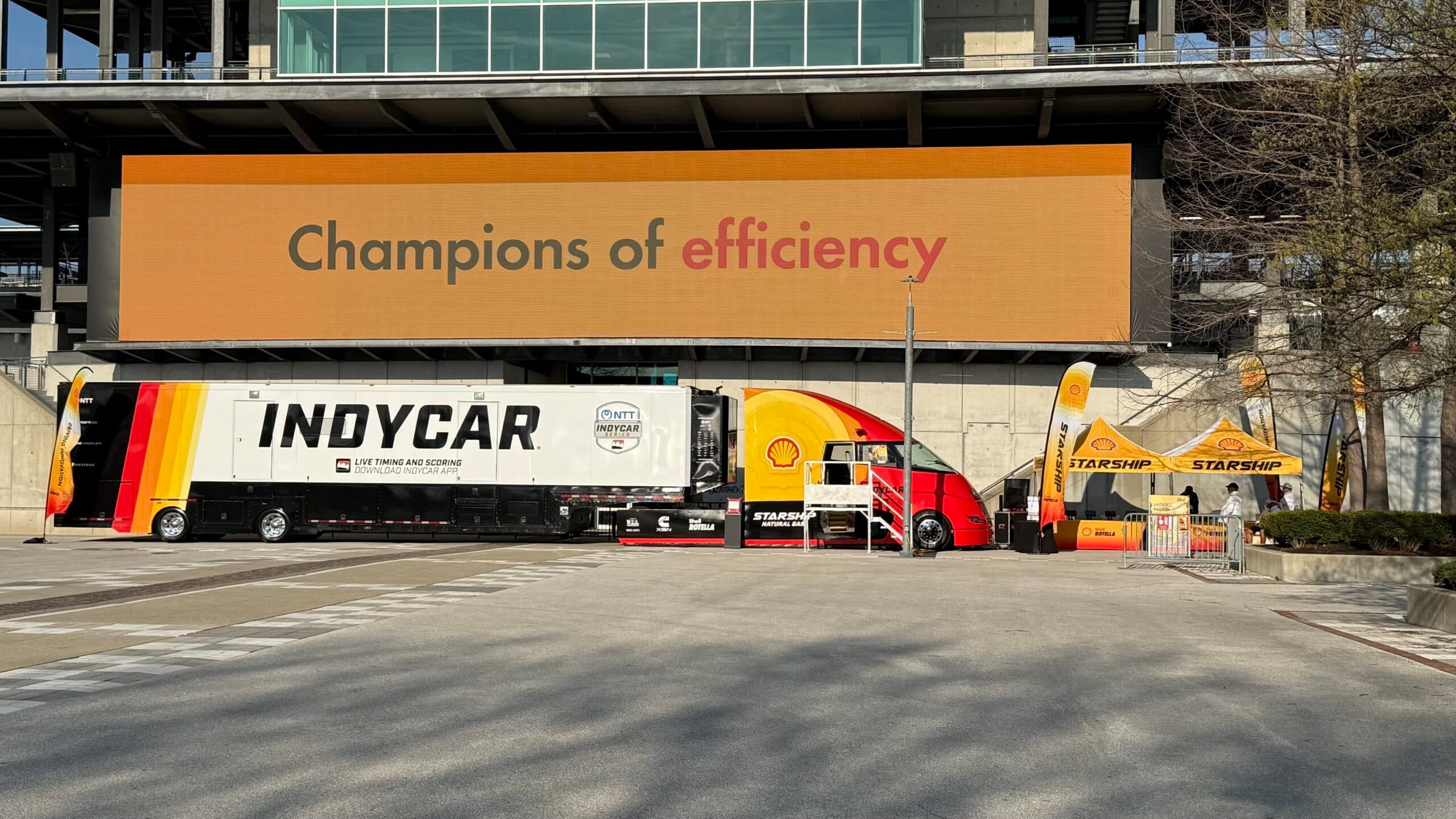
Shell showcased Starship 3.0 natural gas truck at US Eco-Marathon on April 22, 2026, demonstrating freight efficiency improvements through aerodynamics and alternative fuel technology. The truck achieves 0.25 drag coefficient compared to standard 0.6 and uses available components for immediate fleet implementation.
Freight efficiency gains directly impact last-mile delivery costs that affect seller shipping rates and customer expectations. Monitor your shipping cost trends as carriers adopt these technologies - efficiency improvements may create competitive pricing opportunities or margin expansion.
Transportation innovation creates deflationary pressure on logistics costs, potentially improving seller margins and enabling more competitive shipping offers to customers.
Review shipping analytics in seller central - if freight costs are rising faster than 3% annually, negotiate with carriers adopting efficiency tech
Evaluate FBA vs merchant fulfillment cost ratios quarterly as carrier efficiency improvements may shift the break-even point
Bottom Line
Freight efficiency tech means lower shipping costs for sellers.
Source Lens
Industry Context
Useful background context, but lower-priority than direct platform, community, or operator intelligence.
Impact Level
low
Freight efficiency tech means lower shipping costs for sellers.
Key Stat / Trigger
0.25 drag coefficient versus standard 0.6
Focus on the operational implication, not just the headline.
Full Coverage
INDIANAPOLIS — Shell’s Starship 3. 0 natural gas truck made its latest stop at the Indianapolis Motor Speedway during the U. S. Shell Eco-marathon. The event, marking more than 40 years since its 1985 launch, showcased a decade of iterative engineering aimed at decarbonizing commercial trucking through available technologies rather than far-future promises.
The demonstration brought together Shell engineers, fleet efficiency experts and Penske Entertainment sustainability leaders to discuss the practical realities of reducing emissions in long-haul freight. The sector faces mandates to reduce its emissions and chart a path toward achieving carbon neutrality by 2050.
“It’s part of a varied portfolio of solutions,” said Ryan Manthiri, project leader for innovation at Shell Global Solutions and engineering manager for the Starship program. Manthiri stressed that there is no one-size-fits-all solution.
Starship’s Evolution from Diesel to Natural Gas Shell launched the Starship initiative in 2015 as a material demonstration program focused on reducing emissions and energy usage in commercial road transport. The first truck debuted in 2018 with a diesel powertrain, reflecting diesel’s dominance at the time.
The program has since evolved through three iterations, each designed around the sector’s energy transition at that snapshot in time. Starship 3. 0 pivoted to natural gas to align with low-carbon fuel standards and the push toward renewable natural gas. RNG is derived from landfills, dairy farms and other waste streams.
Demonstrations prove concepts, but ensuring the technology works in practice is essential. “We found, regardless of whatever sector we were in, whether it’s mining, manufacturing, transport or marine, the best way to do this is through material demonstrations,” Manthiri said.
The latest chapter includes Starship China, a diesel-electric hybrid featuring a 30-kilowatt lithium-ion battery paired with a 270-kilowatt electric motor. The configuration suits the stop-and-go logistics operations common in the Chinese market. Engineering the ‘Lab on Wheels’ The Starship 3.
0’s most noticeable feature is its fully carbon-fiber cab with a sloping hood and rounded bumper. However, despite its custom exterior, Shell engineers emphasize that many efficiency gains come from components available to any fleet today. The truck achieves a drag coefficient of 0. 25 — roughly half that of a standard Class 8 tractor at 0. 6.
An automatic gap sealer closes the space between tractor and trailer, while an automated boat tail reduces the low-pressure wake at the rear.
“A lot of times when we talk to people who see the truck, they kind of look at it and they kind of like, ‘Oh, well, I don’t know how realistic it is,’” said Scott Burian, global communications manager for Shell Lubricants. “But there’s so many things on this truck that you can implement and make immediate impacts to your fleet.”
Burian pointed to engine oil as a prime example. The Starship runs 5W-30 natural gas full synthetic oil. “A lot of truckers today still use 15W-40, and if you go down even from 15W-40 to a 10W-30 Shell Rotella T5 or T4 product, you’re going to get up to 2% fuel economy savings,” Burian said. “If you go down to a 5W-30, you’re up to 3.
3% fuel economy savings compared to that conventional 15W-40.” Other off-the-shelf components include the Eaton Endurant transmission and Meritor fuel-light axle. Natural Gas Performance Surprises Converting the truck from its original 15-liter diesel to a 15-liter natural gas engine proved more straightforward than expected, Manthiri said.
The engine footprints are nearly identical, and the natural gas unit delivers comparable performance with simplified after-treatment systems. “You have very little NOx, very little volatile organic compounds coming off — near zero to near zero NOx coming off actually,” Manthiri said.
“The after-treatment systems that are required here are way, way smaller than what you would expect in diesel, which makes maintenance a whole lot easier.” The truck also runs quieter than diesel equivalents. Shell tested it at 80,000 pounds gross vehicle weight in 2023 and covered just shy of 5,000 miles at 73,000 pounds last year.
Technology Creating Real-World Takeaways Mike Roeth, executive director of the North American Council for Freight Efficiency (NACFE), which has validated Starship data through real-world demonstration runs, emphasized that efficiency gains remain available across existing diesel and natural gas fleets. “We saw 11.
5 miles per gallon by two trucks in Run on Less. And that shocks a lot of people when the national average is under 7,” Roeth said. “Right now it’s $6 a gallon diesel. Now we’re talking about hundreds of percent, not just tens of a percent.” The Starship 3.
0 achieved 204 ton-miles per gallon compared to roughly 80 for a standard Class 8 tractor — a two-and-a-half times improvement in freight efficiency. Shell has integrated the truck into IndyCar logisti
Original Source
This briefing is based on reporting from Freightwaves. Use the original post for full primary-source context.
Style
Audience