Unilever puts business results first in factory digital twin rollout
As it expands digital twins to 40 sites worldwide, the consumer goods manufacturer is prioritizing measurable gains, repeatable processes and workforce training.
Source Lens
Industry Context
Useful background context, but lower-priority than direct platform, community, or operator intelligence.
Impact Level
medium
Use this briefing to decide whether your team needs an immediate workflow, policy, or reporting change.
Key Stat / Trigger
No single quantitative trigger surfaced in this report.
Focus on the operational implication, not just the headline.
Full Coverage
An article from Unilever puts business results first in factory digital twin rollout As it expands digital twins to 40 sites worldwide, the consumer goods manufacturer is prioritizing measurable gains, repeatable processes and workforce training. Published Oct.
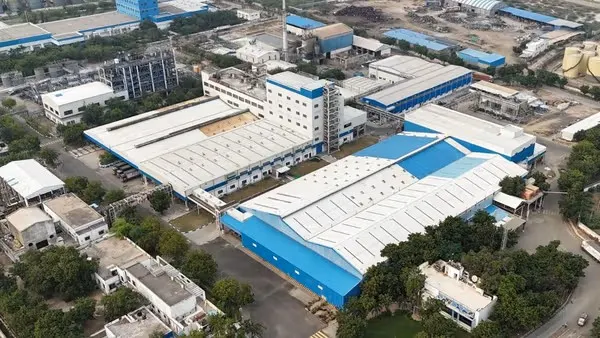
15, 2026 Antone Gonsalves Reporter Share Copy link Email / Print License Add us on Google Unilever's Gandhidham personal care manufacturing facility in India. The site helped lay the groundwork for Unilever's digital twin expansion across dozens of locations worldwide. Courtesy of Unilever Listen to the article 4 min This audio is auto-generated.
Please let us know if you have feedback. As Unilever scales its digital twin use from five sites to dozens more across its global factory network, the company will carry a key lesson to each location: set clear initial goals and metrics, and track progress closely.
"As we started doing this work in the early days, we were probably not clear enough on making sure that we were driving a benefit that we could tangibly measure in the results," Vicky Cuthbert, chief product supply chain officer for the company’s personal care business, told Supply Chain Dive.
Vicky Cuthbert, personal care chief product supply chain officer at Unilever Courtesy of Unilever Over the next 18 months, Unilever will partner with consulting and technology services company Accenture to roll out artificial intelligence-enabled digital twins at about 40 locations.
The expansion will be based on learnings from previous deployments at five manufacturing sites — one in the U. S. , Poland and Vietnam, and two in India. The technology will provide virtual models of equipment and production lines, collecting data from physical systems to monitor and predict performance and the effectiveness of the processes they run.
Cuthbert's experience with the digital twins already in production taught her the importance of defining the problem before deployment and measuring progress toward solving it. "[The] time upfront, making sure that's very clear for all involved stakeholders is incredibly important," Cuthbert said.
Cuthbert warns managers not to underestimate the impact advanced technology has on people. Such technology offers a unique view of manufacturing processes, but it also affects employees responsible for production, product quality and other plant operations.
Avoiding mistakes requires training teams in the skills needed to work effectively with digital twins, Cuthbert said. Unilever has developed a program called DigiEdge that develops employees' digital skills across planning and factory operations using a gamified training format.
"Don't underestimate the overall organizational and cultural impact that this has, and how you need to take the organization along with you," Cuthbert said. Digital twin potential The digital twin promise that stands out for Cuthbert is predicting when factory equipment will likely need maintenance, based on sensor data.
Reliable predictive maintenance will help manage production downtime and ensure the right spare parts are available, she said. At the five sites using digital twins today, the technology has yielded several benefits, per a press release.
The Raeford, North Carolina, personal care plant cut waste by 20% and increased capacity by 10%, while the Poznań, Poland, food factory reduced minor stoppages by up to 20%. The Gandhidham, India, personal care plant reduced product defects by 30% over four years. The Cu Chi, Vietnam, home care facility saved 1% to 2% on premium ingredients.
Today, digital twins suggest corrections for problems that require human approval before any action is taken, Cuthbert said. Agents within the technology can sometimes act autonomously on low-risk processes, paving the way for more independent activity in the future.
"As we learn about how the human and the agent can coexist, that literally is adjusting depending on the process area every week at the moment," Cuthbert said.
Choosing a site Unilever selects plants for digital twins from among its several hundred factories worldwide based on whether the technology can significantly improve and standardize particular operations. The goal is to eventually replicate the reworked processes at other sites, Cuthbert said.
"What we're looking for in terms of success for these applications is really as hardwired to the business as we can, and that could be a specific service impact, an improvement in agility or responsiveness, and then also the classical productivity and growth," Cuthbert said.
Generally, more technically advanced factories are chosen because they have the technology infrastructure, cybersecurity and data-gathering sensors on the production floor to support digital twins, Cuthbert said.
"There's a minimum amount that we need to have in place so that we're able to collect the information at the appropriate parts of the process that we're creating a twin," Cuthbert said. Recommended R
Original Source
This briefing is based on reporting from Supply Chain Dive. Use the original post for full primary-source context.
Style
Audience