

General Motors is driving toward supply chain resiliency
The automaker is upping its domestic production investments while securing memory supply to shield rising commodity and logistics costs.
Source Lens
Industry Context
Useful background context, but lower-priority than direct platform, community, or operator intelligence.
Impact Level
medium
Use this briefing to decide whether your team needs an immediate workflow, policy, or reporting change.
Key Stat / Trigger
No single quantitative trigger surfaced in this report.
Focus on the operational implication, not just the headline.
Full Coverage
An article from Dive Brief General Motors is driving toward supply chain resiliency The automaker is upping its domestic production investments while securing memory supply to shield rising commodity and logistics costs.
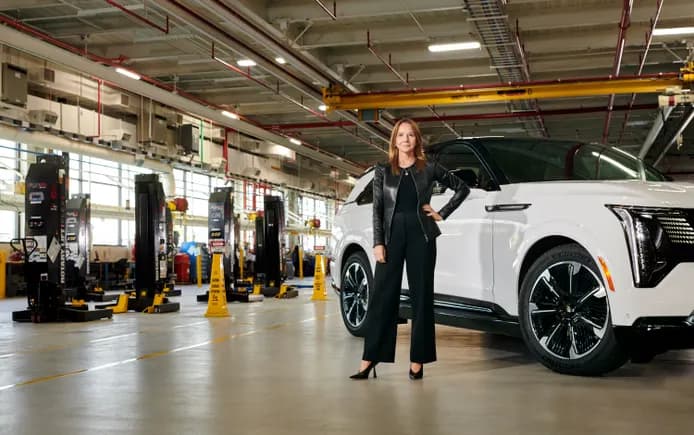
Published July 30, 2026 Phil Neuffer Lead Editor Share Copy link Email / Print License Add us on Google Mary Barra, General Motors chair and CEO standing in front of a Cadillac Escalade SUV in dealership service facility. GM plans to spend up to $1. 5 billion on U. S. manufacturing next year, executives said on a July 21 earnings call.
Courtesy of General Motors Listen to the article 3 min This audio is auto-generated. Please let us know if you have feedback. Dive Brief: General Motors is undertaking several efforts to strengthen its supply chain, including investing in onshoring and rightsizing its battery sourcing, executives said on a July 21 earnings call.
The company, which already expects to spend $9 billion on U. S. manufacturing this year, is lining up between $1 billion and $1. 5 billion in additional funds to support onshore production in 2027, executives said on the call. The effort will bring the automaker’s U. S.
production capacity to 2 million units and reduce tariff exposure, according to CEO Mary Barra. Dive Insight: General Motors is pulling multiple levers to ensure supply chain resiliency as trade winds shift and costs rise. The company’s plans to invest further in U. S. production have accelerated since the beginning of 2025.
Most recently, the automaker said it would spend $275 million to boost production of full-size and midsize trucks and a future Cadillac model at its Spring Hill Manufacturing Plant in Tennessee. GM also said in January it would be shifting production of its Buick Envision model to the U. S. from China, beginning in 2028.
Beyond its ongoing investments in bringing more production to the U. S. , the company is also shoring up access to critical supplies used within its vehicles, such as memory and semiconductors.
For instance, the automaker has expanded its supplier relationship with Micron Technology, giving it access to critical memory technology while deepening integration across vehicle platforms, reinforcing supply availability for the long term.
Per an agreement signed this month, Micron will provide low-power double-data-rate memory, NOR and universal flash storage NAND products to GM. Beyond Micron, GM has “a strong” supplier relationship with Samsung, Barra said on the July 21 earnings call, noting that the partnerships with both suppliers date back to 2022.
“We haven't disclosed specific pricing, but I think we've got a good relationship with both suppliers, and we're going to continue to work with them and align on next-generation memory technology, so we can have jointly developed technology road map that I think will enable us to not only enable future product innovation, but also performance improvement as we go forward,” Barra said.
Continuing to ensure adequate memory supply will be critical as GM advances a technology-focused vehicle production strategy, which includes the development of a next-generation computing architecture expected to launch in 2028.
These moves come as the company continues to deal with and expect more commodity and logistics costs this year, but executives are confident the strategy, particularly to bet on domestic manufacturing, will help it overcome these hurdles.
“The investments we are making to onshore production, launch key vehicles and expand full-size SUV capacity will give us more flexibility and position us to grow revenue, gain market share and improve profitability in 2027,” CFO Paul Jacobson said on the earnings call. Editor’s note: This story was first published in our Procurement Weekly newsletter.
Sign up here. Recommended Reading EV transition challenges auto supply chain resilience, Moody’s says WardsAuto SDVs pose challenges to automotive supply chains, Moody’s says WardsAuto Add us on Google Share Copy link Email / Print License Filed Under: Risk and Resilience, Operations Management, Procurement, Manufacturing
Original Source
This briefing is based on reporting from Supply Chain Dive. Use the original post for full primary-source context.
Style
Audience