They Watched the Family Business Get Rolled Up. Then They Built the Version They Wanted to Work For.
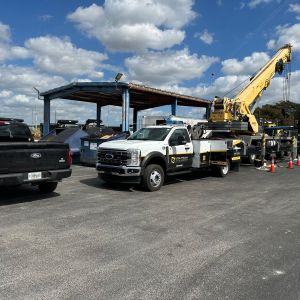
A Business That Did Not Exist Yet In 1997, if a fleet needed a repair, the truck went to a shop. That was the entire menu. That was the year Bob Dickinson started what became Dickinson Fleet Services out of a small operation in Indianapolis, and his grandsons Kyle and Kevin Coltrain grew up around […] The post They Watched the Family Business Get Rolled Up. Then They Built the Version They Wanted to Work For. appeared first on FreightWaves.
Source Lens
Industry Context
Useful background context, but lower-priority than direct platform, community, or operator intelligence.
Impact Level
medium
Use this briefing to decide whether your team needs an immediate workflow, policy, or reporting change.
Key Stat / Trigger
No single quantitative trigger surfaced in this report.
Focus on the operational implication, not just the headline.
Full Coverage
A Business That Did Not Exist Yet In 1997, if a fleet needed a repair, the truck went to a shop. That was the entire menu. That was the year Bob Dickinson started what became Dickinson Fleet Services out of a small operation in Indianapolis, and his grandsons Kyle and Kevin Coltrain grew up around it.
Their father, Ted Coltrain, and their uncle, Mike Dickinson, ran the company as it scaled. The brothers were in the shop on weekends before either of them had a title. The early product was narrow because the market had no idea what to ask for.
As Kevin Coltrain described it on The Long Haul, mobile maintenance in the early 2000s meant oil changes, preventive maintenance and minor repairs, and most of the job was explaining to customers what mobile maintenance even was. Both brothers went to work in the family business after college.
Kyle, a wide receiver at the University of Central Florida who thought he was headed into coaching, went into field sales in Tampa during the years when the pitch still required starting from scratch. Kevin managed regional operations across multiple markets. Then they watched what happened to it.
The Roll-Up They Lived Through Dickinson Fleet Services took on Ridgemont Equity Partners as majority shareholder, and in an acquisition announced January 5, 2021, Cox Automotive bought the company outright, folding it into its Pivet fleet services platform.
At the time of that deal, Dickinson operated more than 700 mobile repair units and employed roughly 800 technicians. Under Cox the business grew past 1,500 technicians serving more than 14,000 clients annually and was rebranded as Fleet Services by Cox Automotive.
In early 2025, Cox acquired the remaining minority stake held by Mike Dickinson and Ted Coltrain. Kyle’s account of that arc is notably measured. He describes going from a small family owned business to a private equity backed company to a subsidiary of a large corporation, and says there was good and bad in all of it.
He is not claiming the buyers were villains. His argument is narrower and harder to dismiss. When large capital arrives, it comes with goals and agendas and timelines. Those timelines get translated into quotas.
And the quota that concerned him most was the technician headcount target, because in his telling, a manager carrying a mandate to add ten technicians in a month will hire someone off a phone screen who says he can turn a wrench. That risk is specific to this line of work. A mobile technician is alone.
Kyle put it plainly: a tech in the field does not have a buddy in the next shop bay to ask for help, and is often working nights, early mornings and weekends. A shop can absorb a marginal hire because someone more experienced is standing nearby. A mobile operation cannot. The second pressure runs the same direction.
Push a technician to finish a four-hour job in two, Kevin said, and things get missed. Not because anyone set out to do poor work. Because the clock was set wrong. The brothers launched Coltrain Onsite Fleet Care in August 2025 with seven states of coverage.
Kyle told the podcast the company now runs about 70 mobile technicians across 15 states, largely east of the Mississippi plus Texas. What a Mobile Unit Can Actually Do in 2026 Most small carriers are working from an outdated picture, and the gap costs them money.
Coltrain’s units are equipped with the Miller Trailblazer 330 Air Pak, a combination welder, generator and compressor. That single piece of equipment changes the conversation.
It means welding and trailer body work happen in the yard, which Kyle described as close to unheard of in a mobile environment and something that surprises most of the people he sits down with. The company’s own materials put the figure at 95 percent of routine repairs and maintenance handled on site.
In the episode, the brothers filled in what that covers: engine diagnostics through a direct plug into the truck, after-treatment work including DEF system sensors and diesel particulate filter replacement, brake jobs down to shoes, drums and chambers, air conditioning, lighting, and bolt-on components including starters, alternators and radiators.
The remaining 5 percent is defined by two things, and Kevin was direct about both. Internal engine work means opening the engine, and an open engine in an outdoor environment invites contamination. Pulling a motor introduces a safety exposure for a technician working without a shop’s lifting infrastructure.
Catastrophic body and accident damage goes to a body shop for paint. Those jobs leave the yard because quality and safety say so, not because the truck cannot carry the tools. Knowing that line before you need it is the operational point. A carrier who understands what can be handled in the yard stops treating every fault code as a tow decision.
The Hours Are the Product The most useful reframe in the conversation was about scheduling, not wrenching. Kyle said that when a prospect asks what hours his mobile unit
Original Source
This briefing is based on reporting from Freightwaves. Use the original post for full primary-source context.
Style
Audience