Alaska Air eyes 50% share of intra-island Hawaii cargo market
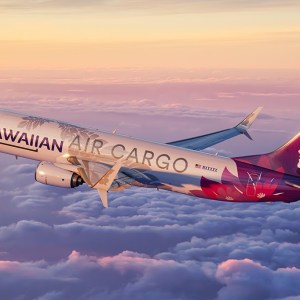
Alaska Air targets $750M cargo revenue by 2030, adding 4 Boeing 737-800 freighters and launching intra-Hawaii cargo service in H1 2027. The airline operates 11 Amazon-supplied A330-300 freighters and renegotiated its Amazon contract on more favorable terms in 2026.
Airline-driven cargo expansion is adding meaningful capacity to transpacific and intra-Hawaii lanes, countering freight rate pressure from supply chain tightness — relevant context for brands managing international sourcing or Hawaii distribution costs.
Alaska's expanded transpacific routes (Seoul, Tokyo, London, Rome — Paris and Athens in 2027) create new capacity for perishables and high-value goods, potentially softening air freight rates on those lanes. Amazon sellers shipping time-sensitive or temperature-sensitive inventory to Hawaii or transpacific markets should monitor lane-specific rates as capacity increases.
Operational Impact
This story may require teams to revisit workflows, monitoring, or platform assumptions.
Bottom Line
More air cargo capacity on Pacific routes may soften freight rates for Amazon sellers.
Source Lens
Industry Context
Useful background context, but lower-priority than direct platform, community, or operator intelligence.
Impact Level
medium
More air cargo capacity on Pacific routes may soften freight rates for Amazon sellers.
Key Stat / Trigger
Cargo contributes up to 20% of flight revenue on transpacific routes
Focus on the operational implication, not just the headline.
Full Coverage
Alaska Airlines expects cargo revenue to reach $750 million by 2030 as it builds off the acquisition of Hawaiian Airlines to diversify and scale up its cargo business through international route expansion and planned intra-island freighter service in Hawai’i, executives said during an investor event on Wednesday.
Management’s theme was that the hard work of integration, including a unified cargo booking system and single operating certificate, and transforming from a domestic carrier into an international one is mostly done; now the Seattle-based airline is moving into the value-creation phase by focusing on areas such as premium travel, the loyalty program and cargo.
After the merger with Hawaiian Airlines in September 2024, Alaska’s cargo revenue grew 57% to $549 million last year.
The jump seems bigger than it actually is because the merged figures are compared to the mostly solo-Alaska Air performance, but the company’s cargo opportunities have clearly expanded, especially with Hawaiian providing first-time entry into widebody passenger aircraft and long-haul international routes.
In the first half of 2026, Alaska Air’s cargo revenue was $316 million — putting it on track for more than $600 million in revenue with the peak shipping season still ahead. Alaska Air (NYSE: ALK) currently serves five international destinations, including Tokyo, Seoul, South Korea; London and Rome from Seattle.
Next year, the company will begin service to Paris and Athens from its Seattle hub and expects to fly to 15 international destinations by 2030. Most of those cities are located in strong industrial economies with large trade flows.
The Boeing 787-9s used on those routes have significant capacity for cargo containers in the lower deck and cargo yields are higher on longer distances than with short-haul domestic routes. Alaska Airlines currently operates three Boeing 737-700 converted freighters and two larger Boeing 737-800 passenger-to-freighter aircraft in its domestic network.
The cargo jets were originally a way for Alaska to serve communities across Alaska, providing freight and mail connectivity to the Seattle hub and export markets across the lower 48 states. For years, cargo revenue was about a $130 million to $150 million annual business.
In late July, the company disclosed plans to lease four additional 737-800 converted freighters. Alaska Air intends to operate two new dedicated freighters within Hawaii, serving the islands from its base at Honolulu airport. The planes will be painted in a Hawaiian Air Cargo livery and are expected to enter service in the first half of 2027.
Alaska Air also inherited Hawaiian’s side hustle flying Airbus A330-300 cargo jets for Amazon. The planes are supplied by Amazon, with Alaska responsible for providing crews, maintenance and insurance. Alaska currently operates 11 Amazon freighters and earlier this year renegotiated its transportation contract with more favorable terms.
“Cargo allows us to fully monetize our assets across the network. As we grow internationally, optimize fleet deployment and leverage a combined Alaska and Hawaiian footprint, cargo becomes an increasingly meaningful contributor to both revenue growth and margin expansion,” said Ian Morgan, vice president of cargo, during the live-streamed event.
As Alaska Air expands internationally, cargo can generate incremental revenue and profit. “Cargo contributes as much as 20% of flight revenue on transpacific routes, creating meaningful revenue enhancement without additional aircraft.
Collectively, these businesses produce margins that are twice the system average, making cargo an important contributor to our long term financial targets,” Morgan said.
Stemwilt Growers in Washington, through its freight forwarder Jetstream, took advantage of Alaska Air’s first summer offering non-stop service from Seattle to Seoul to ship cherries to Korea, according to a blog on the Alaska Air Cargo website.
Stemilt shipped about 860,000 pounds of dark sweet cherries to Seoul on Alaska 787 Dreamliners and also sent some cherry shipments to London via the new service. The grower has been shipping cherries to Korea for 25 years.
Stemilt moves its fresh-harvested cherries in refrigerated trucks to Seattle-Tacoma International Airport, where Jetstream stores the cherries in custom coolers until tendering the pallets to Alaska Air, which is able to maintain them at below 50 degrees of temperature for optimal shelf life.
Alaska Airlines inaugural service to Rome from Seattle takes off from Seattle-Tacoma International Airport with a Boeing 787-9. (Photo: Joe Nicholson/Alaska Airlines) Alaska Air’s cargo chief said the airline could reach 50% market share in the state of Alaska, up from 37%, as it introduces more 737-800 freighters to the fleet.
Competitors include Northern Air Cargo and Lynden Air Cargo. Hawaii represents a similar opportunity, but from a much smaller base. Alaska Air holds a 6% share of the interisland cargo market, whe
If you ship perishables or premium goods transpacific, request rate quotes on Seattle-Seoul/Tokyo lanes now — new belly cargo capacity from Alaska's 787-9s could create negotiating leverage with freight forwarders before peak season.
Hawaii-based or Hawaii-shipping sellers should track intra-island freight rates heading into H1 2027 when Alaska's dedicated freighters launch — increased competition could lower last-mile costs to outer islands.
Original Source
This briefing is based on reporting from Freightwaves. Use the original post for full primary-source context.
Style
Audience