

What 100 Enterprise Brands Taught Us About the Amazon Search Ceiling
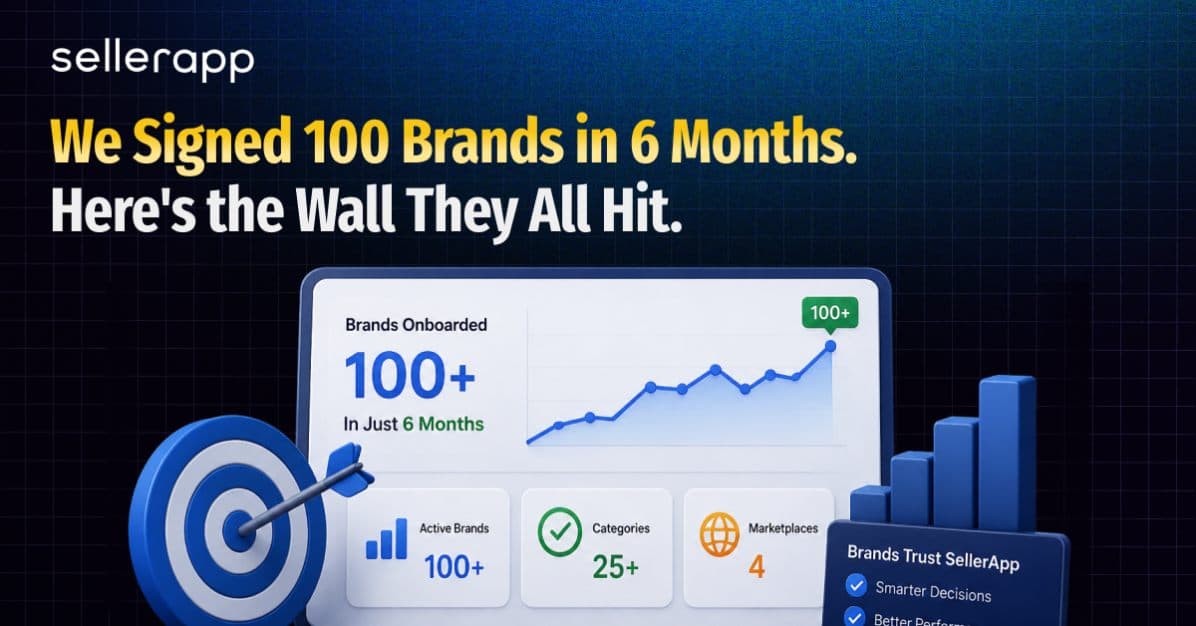
We closed 100 enterprise clients in the first six months of 2026. A hundred, in two quarters, all for Amazon DSP. We’re giving ourselves one sentence to enjoy that, so this is it. Now the number that actually runs this article. Across all hundred accounts, more than 60% of the revenue we drove came from… The post What 100 Enterprise Brands Taught Us About the Amazon Search Ceiling appeared first on SellerApp Blog. Related posts: Amazon Review Trader Websites: What Sellers Must Know? 10 DTC Trend
Source Lens
Industry Context
Useful background context, but lower-priority than direct platform, community, or operator intelligence.
Impact Level
medium
Use this briefing to decide whether your team needs an immediate workflow, policy, or reporting change.
Key Stat / Trigger
No single quantitative trigger surfaced in this report.
Focus on the operational implication, not just the headline.
Full Coverage
--> What 100 Enterprise Brands Taught Us About the Amazon Search Ceiling Dave July 15, 2026 10 mins to read [shared_counts] We closed 100 enterprise clients in the first six months of 2026. A hundred, in two quarters, all for Amazon DSP. We’re giving ourselves one sentence to enjoy that, so this is it. Now the number that actually runs this article.
Across all hundred accounts, more than 60% of the revenue we drove came from people who had never bought the brand before. Not repeat buyers we chased with retargeting. Not shoppers already reaching for their wallet. First-time customers, at a volume these brands had spent years being told was out of reach.
That one number told us something almost every one of them had missed. Their Sponsored Products campaigns had stopped growing, and they were still shoveling money in. We call the thing they hit the search ceiling. This is what it is and what to do about it.
If you’ve been weighing Amazon DSP against Sponsored Products, or asking whether DSP is worth it at your spend, this is the same answer we give our own clients.
Here’s our 100-client scoreboard What we did The numbers that matter Enterprise DSP clients closed in H1 2026 100 Average new-to-brand rate across those accounts Above 60% Platform-average new-to-brand rate, for comparison 36. 5% Share of conversions that were DSP-assisted 42% Share of voice growth within six months Tripled We didn’t get there with a trick.
We got there by putting the next dollar where it still compounds, at the exact moment the economics flipped. Here’s the walk-through. More spend stops buying more growth the day you max out search Almost every Amazon brand runs on one belief. Spend more, grow more. It isn’t a dumb belief.
It’s precisely how the platform pays you back, right up until it doesn’t. Sponsored Products does one job, and it does it well. It puts you in front of people already searching for your Amazon product category. But there are only so many of those people. Once your campaigns have caught them, you’ve reached the edge of what search will ever give you.
Push past that edge and the math flips on you. You start paying more for clicks you were already winning. Our own State of Amazon Advertising 2026 benchmark report, which we built from $3 billion in managed ad spend and then held against 28 independent sources to keep ourselves honest, found Sponsored Products CPC climbed 15. 5% year over year to $1.
12 while conversion sat flat. (Source: SellerApp State of Amazon Advertising 2026, published June 2026. Built on $3B in managed spend across 33,000+ brands, cross-referenced against 28 independent sources including Amazon Ads, Statista, and 26 other independent sources including our competitors like Skai, Pattern.) That’s the ceiling.
It doesn’t mean you failed at search. It means you won at search and used it up. Your next search dollar returns less than your next DSP dollar This is where the money leaks, and it’s a logic point, so stay with me. These brands didn’t overspend. We want them spending more, not less. The trouble is where the next dollar goes.
On a maxed-out search campaign, your hundred-thousandth dollar buys a fraction of what your ten-thousandth bought, because you already won the easy conversions and now you’re paying top bids to chase the stragglers. That’s diminishing returns, and it’s not an opinion, it’s arithmetic. So the question was never “should we spend less.”
It was “does the next dollar do more in search, or somewhere we haven’t drained yet.” For a brand at six figures a month, that somewhere is almost always DSP. Most brands read this exactly backwards. They hit the ceiling, mistake flat growth for under-spending, and pour more into the one channel with the least left to give.
It feels like the responsible call. It’s the most expensive one on the table. In Q1 2026, DSP became cheaper per click than Sponsored Products For years, there was a fair reason to keep money out of DSP. It cost more, and it was a nightmare to justify to finance. That reason is dead, and most of the market hasn’t noticed the funeral.
Our research caught something that hadn’t happened in the five years we’ve tracked this. In Q1 2026, DSP became cheaper per click than Sponsored Products. DSP clicks grew 156% year over year, and its share of total Amazon ad spend rose from 17. 7% to 23. 4% across 2025. Now put that next to the ceiling.
The channel that reaches 95% of shoppers who aren’t searching for you is now cheaper per click than the channel where you’ve run out of people to reach. The marginal-dollar math isn’t close anymore. It’s lopsided. That’s why a hundred brands moved, and most of them moved before their competitors ran the numbers.
DSP rewards scale, so here’s the spend line where it starts working We’d rather tell you the truth than sell the whole room. DSP pays off at scale, and under a certain spend it’s the wrong tool. Monthly Amazon ad spend What we’d tell you Under $10k Not yet. Tighten search, grow the cat
Original Source
This briefing is based on reporting from SellerApp Blog. Use the original post for full primary-source context.
Style
Audience