

Amazon DSP Frequency Capping: A Complete Guide to Frequency Caps, Settings & Reports
If your Amazon DSP budget is climbing while sales stay flat, the problem may not be your audience or your creative. You may simply be paying to reach the same shoppers too many times. And those wasted impressions are getting more expensive. SellerApp’s State of Amazon Advertising 2026 found that platform-wide CPM surged 47.46% in… The post Amazon DSP Frequency Capping: A Complete Guide to Frequency Caps, Settings & Reports appeared first on SellerApp Blog. Related posts: Boost Your Success: The
Source Lens
Industry Context
Useful background context, but lower-priority than direct platform, community, or operator intelligence.
Impact Level
medium
Use this briefing to decide whether your team needs an immediate workflow, policy, or reporting change.
Key Stat / Trigger
No single quantitative trigger surfaced in this report.
Focus on the operational implication, not just the headline.
Full Coverage
If your Amazon DSP budget is climbing while sales stay flat, the problem may not be your audience or your creative. You may simply be paying to reach the same shoppers too many times. And those wasted impressions are getting more expensive. SellerApp’s State of Amazon Advertising 2026 found that platform-wide CPM surged 47. 46% in 2025 to an average of $7.
82 per thousand impressions. When reach costs nearly 50% more than it did a year ago, repeatedly serving ads to shoppers who have already tuned out can drain your budget fast. The opportunity cost is just as important. Our benchmark research found that 36. 5% of DSP-attributed purchases come from new-to-brand customers.
Every impression wasted on an overexposed shopper is budget that could have gone toward reaching someone who has never bought from your brand before. That is where Amazon DSP Frequency Capping comes in.
By controlling how often shoppers see your ads, you can reduce wasted exposure, protect reach, and keep more of your budget working toward incremental growth.
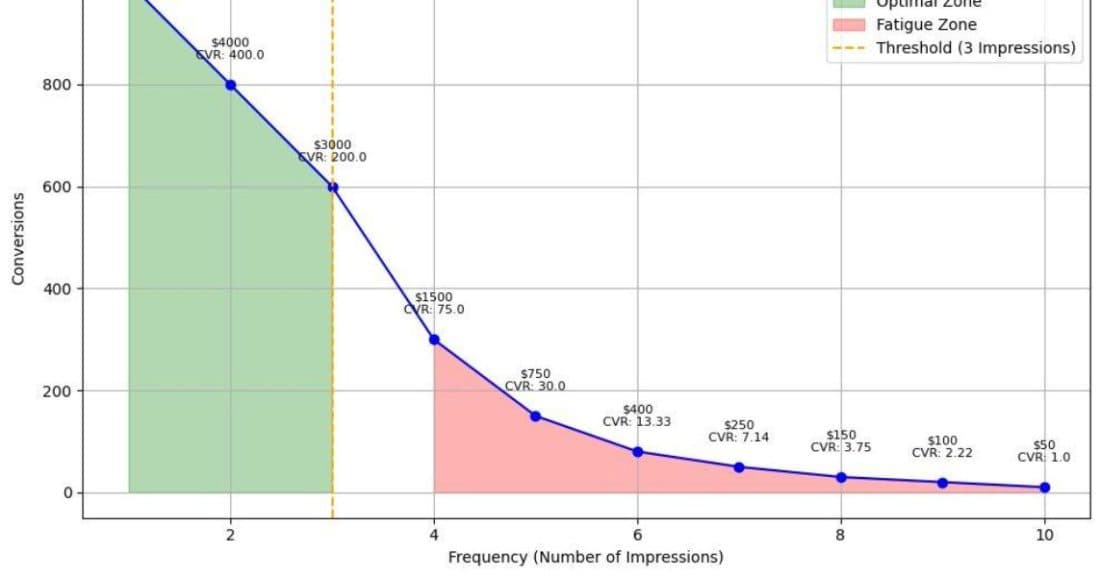
This guide shows you how to set frequency caps at the order and line-item level, use Frequency Groups across overlapping campaigns, read frequency reports, and find the point where more impressions stop helping and start costing you. Quick Gudie: What Is Frequency Capping in Amazon DSP? Frequency Cap vs.
Frequency Optimization Why the Amazon DSP Frequency Cap Matters for Advertisers How Ad Frequency Impacts ROAS and Brand Perception How Frequency Capping in Amazon DSP Works How the Frequency Cap of Amazon DSP Ads Applies Across Devices Amazon DSP Frequency Cap Settings: How to Set Them Up Amazon DSP Reach and Frequency: Finding the Right Balance How to Generate the Frequency Report in Amazon Marketing Cloud How to Read the Amazon DSP Frequency Report (Step by Step) Managing Frequency at Scale with SellerApp’s DSP Dashboard Common Amazon DSP Frequency Capping Mistakes to Avoid Amazon DSP Frequency Capping Best Practices Checklist Final Takeaway: Mastering Frequency Capping in Amazon DSP FAQ What Is Frequency Capping in Amazon DSP?
At its simplest, a frequency cap is a rule that limits how many times a single shopper can see your ad within a set period. For example, a cap of 3 impressions every 7 days means one shopper can see your ad no more than three times in a week. Once they hit that limit, Amazon DSP stops serving them the ad until the seven-day window resets.
Understanding Amazon DSP Ad Frequency Frequency is the average number of times each shopper saw your ad. Say your campaign delivered 100,000 impressions across 20,000 unique shoppers. Those 100,000 impressions were not shown to 100,000 different people. They were repeat ad views across the same group of 20,000 shoppers.
Divide 100,000 total impressions by 20,000 unique shoppers, and you get an average frequency of five. In other words, each shopper saw your ad five times on average. That single number tells you a lot about whether you are building awareness or just repeating yourself to the same faces.
The reason ad frequency matters so much is that it behaves like a dial with a sweet spot. Too low and shoppers never remember you. Too high and you are paying to irritate people who already decided. Watching ad frequency over time is one of the first habits strong advertisers build, because it is the earliest warning sign that spend is drifting toward waste.
Reach and Frequency in Amazon DSP Explained Reach and frequency are two sides of the same coin, and you cannot fully understand one without the other. Reach tells you how many unique shoppers saw your ad. Frequency tells you how many times, on average, each shopper saw it.
Amazon DSP reach and frequency together describe the shape of your audience exposure, and the balance between them decides how efficiently your budget works. Here is the trade-off in plain terms. A fixed budget can buy you broad reach with light frequency, or narrow reach with heavy frequency.
When you study Amazon DSP reach and frequency side by side, you are really asking whether you want to introduce your brand to more shoppers or reinforce your message with a smaller audience. Frequency capping is the lever that lets you make that choice deliberately instead of leaving it to the auction.
SellerApp helps you see both sides of that decision in one place, so you can track whether your campaigns are expanding unique reach or concentrating too much spend on repeat exposure. From there, you can adjust frequency based on what the campaign actually needs: more new shoppers, more repetition, or a better balance between the two. Frequency Cap vs.
Frequency Optimization A frequency cap is a hard ceiling. You set a number, and the platform will not exceed it. Frequency optimization is softer. It leans on Amazon’s modeling to find an efficient exposure level based on conversion signals, without you dictating a strict limit. Most experienced advertisers use both.
For example, you might set a frequency cap of five im
Original Source
This briefing is based on reporting from SellerApp Blog. Use the original post for full primary-source context.
Style
Audience