

ATRI documents big jump in insurance premiums even as providers in the red
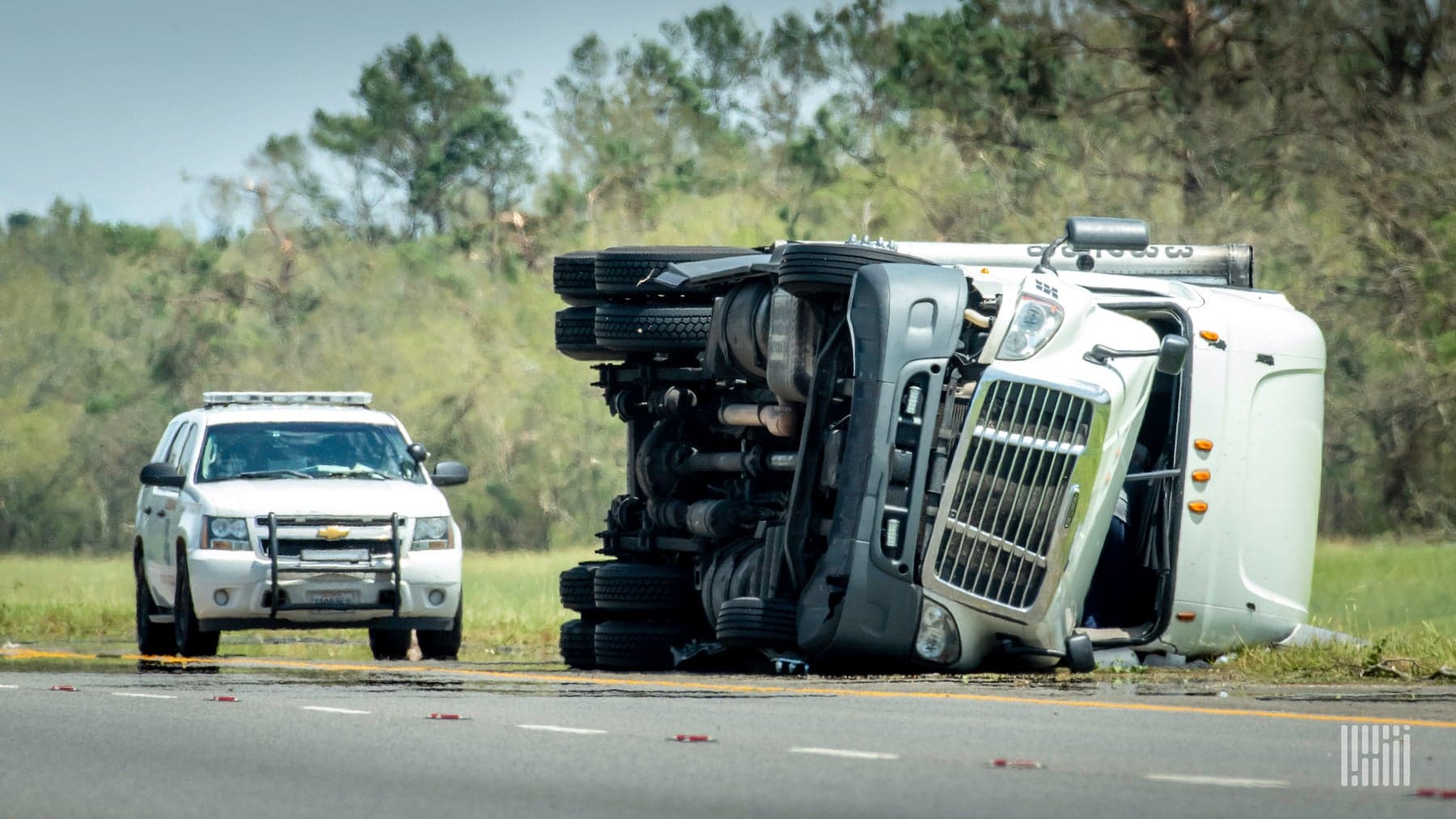
ATRI’s report on truck insurance costs documents a big spike paid by carriers. The post ATRI documents big jump in insurance premiums even as providers in the red appeared first on FreightWaves.
Source Lens
Industry Context
Useful background context, but lower-priority than direct platform, community, or operator intelligence.
Impact Level
medium
Use this briefing to decide whether your team needs an immediate workflow, policy, or reporting change.
Key Stat / Trigger
No single quantitative trigger surfaced in this report.
Focus on the operational implication, not just the headline.
Full Coverage
With the impact on insurance rates from Montgomery vs. Caribe Transport II suddenly a hot topic, the latest report by the American Transportation Research Institute (ATRI) has driven home the point that any increase in insurance costs is going to be added to a base that already has been soaring.
Insurance fallout from Montgomery would not necessarily hit carriers, which was the focus of the recently-released report from ATRI, the research arm of the American Trucking Associations. The 3PL industry would be the target.
That would presumably be a relief, given that virtually every number in the ATRI report released this week summarizing the insurance market over the last several years points higher. In one of its first paragraphs, ATRI spells out some of the key figures.
Based on numbers between 2017 and 2025, which is the time span ATRI studied, the average annual increase in the commercial auto segment–which is the term for truck insurance, despite the use of the word “auto”–rose an average of 8. 3%. ATRI says the U. S. inflation rate during that time was 3. 9%.
The rate of crashes with heavy-duty trucks that led to an injury or a fatality, rated per 100 million miles, declined 8. 4% during that time.
The report cited a quarterly survey by the Council of Insurance Agents and Brokers that said the fourth quarter of 2025 was the “softest” quarter since 2017 for “all account sizes and the majority of lines of business.” But one sector that didn’t make that list of “soft” insurance markets was commercial auto, which the CIAB said increased sequentially by 6.
6% during that quarter. CIAB said it was the highest increase of all the lines of business tracked by the group. (A webinar on the report’s findings will be held June 2. Registration for the event can be found here.) The increase in premiums was likely impacted by crash rates.
ATRI notes that “crash rates rose over the 2010s after reaching a low-water mark in 2009 amid reduced traffic during the Great Recession.” They fell again with the collapse in traffic levels as a result of the pandemic.
ATRI produced a chart that showed in the last few years, fatal crashes have taken a turn for the better, and non-fatal crashes with injuries have been mostly steady after falling sharply during the pandemic. But the bottom line is that crash rates, fatal or otherwise, are up since 2009. ATRI said there were two likely causes.
Citing research by the insurance ratings and research firm of AM Best, ATRI said distracted driving is a factor. Another reason: “Insurance industry analysts have also reported an influx of inexperienced truck drivers during the pandemic boom of the early 2020s as another contributor to rising claims and claim severity,” ATRI said.
Ratio on the bad side of 100 And insurance companies are not getting wealthy on the higher premiums, according to the report. Much like a trucking company operating ratio is deteriorating as it rises, what is known as the “combined ratio” for commercial auto insurance has exceeded 100, according to AM Best, every year since 2014.
“meaning insurers have been continuously paying out more in claims than they collect in premiums,” ATRI said. The one year where the ratio was less than 100 was 2021, when traffic volumes were still restrained as a result of the pandemic. The ratio in 2023 was 109. 2, improving slightly to 107. 2 in 2024.
“But these ratios still need a significant decrease to reach profitability,” AM Best said. “This trend of unprofitability indicates an ongoing struggle among many insurers to accurately estimate and price the cost of risk, a problem exacerbated by the influx of new freight capacity during the COVID-19 freight boom of 2020 and 2021,” ATRI said.
“In response, insurers have increased premiums not only to keep pace with their own rising costs but also to recuperate a history of losses.” How insurers compensate The response from insurers beyond raising rates, ATRI said, is that coverage limits have been reduced in some cases or insurers are exiting markets completely.
“Both of these financial decisions exert upward pressure on rates for motor carriers, which are often forced to seek additional insurers to complete their policy stacks or retain more risk than desired,” ATRI said. Another force driving up rates, according to ATRI: “social inflation.”
ATRI defines social inflation as “the increase in claim payouts and losses caused by social factors and societal attitudes, which raises litigation costs beyond the rate of economic inflation more generally.”
It cited the “contributors” to social inflation as “the passage of plaintiff-biased laws and regulations, changing public perception of the trucking industry or large verdicts, widespread attorney advertising, and manipulative plaintiff tactics such as those made famous by the ‘reptile theory.’”
(In a blog post, National Interstate Insurance gave an example of reptile theory in action. “According to Reptile Theory, it would be improper to say, ‘The truck d
Original Source
This briefing is based on reporting from Freightwaves. Use the original post for full primary-source context.
Style
Audience