Fresh food is growing and rearranging itself. Blue Book is betting 125 years of payment history is what holds it together
The fresh food trade is growing and rearranging itself at the same time. GLP-1 drugs are changing what people eat, tariffs are redrawing where product comes from, new companies keep arriving in fresh fruit, and a steady run of M&A keeps changing who trades with whom. Every one of those shifts puts a grower, a […] The post Fresh food is growing and rearranging itself. Blue Book is betting 125 years of payment history is what holds it together appeared first on FreightWaves.
Source Lens
Industry Context
Useful background context, but lower-priority than direct platform, community, or operator intelligence.
Impact Level
medium
Use this briefing to decide whether your team needs an immediate workflow, policy, or reporting change.
Key Stat / Trigger
No single quantitative trigger surfaced in this report.
Focus on the operational implication, not just the headline.
Full Coverage
The fresh food trade is growing and rearranging itself at the same time. GLP-1 drugs are changing what people eat, tariffs are redrawing where product comes from, new companies keep arriving in fresh fruit, and a steady run of M&A keeps changing who trades with whom.
Every one of those shifts puts a grower, a wholesaler or a carrier in front of a counterparty they have never dealt with before.
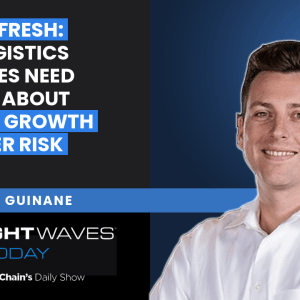
Brad Guinane, Blue Book’s president of supply chain solutions, made the case at F3, in a conversation with Will Hopping, chief product and technology officer at Sonar, that the company’s 125-year record of how businesses actually behave is what lets those trades happen at all. A fake identity can be built in minutes.
A payment history takes decades, and that gap cuts both ways: it is how you catch an impersonator, and it is how a company nobody has traded with yet proves it is worth trading with. Blue Book helps farmers, growers, wholesalers, retailers and logistics companies find and vet one another, and it steps in when claims and collections issues arise.
Guinane said AI has made it far easier to pose as one of those trusted partners. “What you can do with AI and two minutes to create a website that’s a lookalike and change a letter on an email and go call a farmer or a wholesaler and say you are someone who you are not, that can now happen way easier than it ever could before,” he said.
Impersonation is the most common scheme Impersonation attempts are the threat Blue Book sees most often, Guinane said. Many companies in the trade have little digital footprint, and in peak season a perishable load has to leave the warehouse fast.
“It’s very easy to say, I’ll change a letter or I’ll give you a call and say, I am this company and I need to move 20 crates of strawberries and go do it for me. And then I’d go do something else with it,” he said. Guinane said several data points show fraud rising, while noting it is unclear how much went recorded in the past.
Payment history works as an identity check That record is the reason both halves work. Blue Book sees about $70 billion a year in accounts receivable data, almost all of it from its roughly 5,000 produce and logistics customers plus some factoring companies, Guinane said.
The data shows who owes what and whether a company pays in 30 days or 45, and Blue Book’s internal ratings team uses it to build each company’s rating. Blue Book also sends about 60,000 surveys a day and gets one back every 30 seconds, he said. Trading partners use them to report how a company pays and any claims they have had with it.
A lookalike website has none of that behind it. “It becomes very difficult to fake a ten, fifteen, twenty, thirty, forty year history,” he said. Some food companies require whoever transports their goods to hold a Blue Book number, a rating, and a history, Guinane said.
Since joining, he has been struck by “the number of customers that we actually get that come from our existing customer base saying, you have to be a part of this in order for me to work with you.” When a trade does go wrong The record also does work after a deal closes.
Blue Book runs claims and collections for members, which is the part of the business that returns money rather than preventing its loss, and the same payment history that identifies a counterparty up front is what gets a stalled invoice moving. A certificate for handling perishables A Blue Book rating covers payment behavior and claims.
Customers also asked for a check on how their partners handle perishables, Guinane said: “How can we ensure that partners that we’re working with understand how to handle fresh products, perishables?” Blue Book answered with a certification it recently released, built with its produce, floral, and nursery customers.
Guinane said companies are using it to set themselves apart, and Blue Book plans to keep adding checks like it. “How do we help our customers differentiate themselves?” Guinane said. Companies are using the credential to win work rather than simply to qualify for it, and Blue Book plans to keep adding checks like it.
Next come integrations and new categories The company’s data has moved from a printed book to a software platform updated daily and weekly. Guinane said the next step is feeding that data into MCP and updating Blue Book’s APIs so customers can integrate it at the CRM and ERP level.
Beyond produce, Blue Book already rates floral and nursery companies, and Guinane said it plans to cover more of the grocery store. “Think about walking into a grocery store and seeing all of the food that is in the refrigerated section from meats to frozen,” he said.
“Blue Book will be there, and we’ll be providing data and insights to help people transact safely.” To learn more visit Blue Book Services. The post Fresh food is growing and rearranging itself. Blue Book is betting 125 years of payment history is what holds it together appeared first on FreightWaves.
Original Source
This briefing is based on reporting from Freightwaves. Use the original post for full primary-source context.
Style
Audience
Get fee and policy changes before they hit your margin
The free Daily Marketplace Brief flags fee and policy changes across Amazon, Walmart, TikTok Shop, eBay and Etsy, with the source document.