

Trans-Pacific ocean rates remain above pre-war levels despite muted outlook
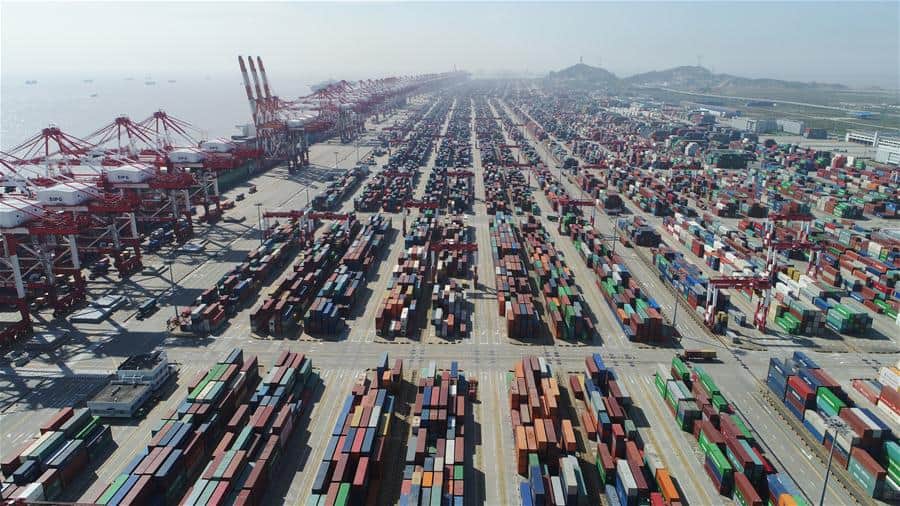
Ocean freight rates on the trans-Pacific remain above pre-war levels as retailers warn of tepid peak season gains. The post Trans-Pacific ocean rates remain above pre-war levels despite muted outlook appeared first on FreightWaves.
Source Lens
Industry Context
Useful background context, but lower-priority than direct platform, community, or operator intelligence.
Impact Level
medium
Use this briefing to decide whether your team needs an immediate workflow, policy, or reporting change.
Key Stat / Trigger
No single quantitative trigger surfaced in this report.
Focus on the operational implication, not just the headline.
Full Coverage
Freight rates on the benchmark Asia-United States trade lanes remain above pre-war levels, but that’s due more to capacity manipulation by carriers than increasing demand. The weekly Freightos Baltic Index shows trans-Pacific rates around $1,000 higher per forty foot equivalent unit (FEU) than before the start of the Iran war in late February. Asia-U. S.
West Coast prices increased 4% to $2,828 per FEU for the week ended May 8. Asia-U. S. East Coast prices were just 1% higher, at $4,340 per FEU. “Asia-Europe prices that climbed by a few hundred dollars per FEU in March have mostly slipped back to pre-war levels,” said Freightos (NASDAQ: CRGO) analyst Judah Levine, in a research note.
Asia-North Europe spot rates this past week were 10% higher at $2,850 per FEU, but so far this week are trending down, similar to rate behavior to the Mediterranean earlier this month. window. googletag = window. googletag || {cmd: []}; googletag. cmd. push(function() {googletag.
defineSlot('/21776187881/FW-Responsive-Main_Content-Slot1', [[300, 100], [320, 50], [728, 90], [468, 60]], 'div-gpt-ad-1709668545404-0'). defineSizeMapping(gptSizeMaps. banner1). addService(googletag. pubads()); googletag. pubads(). enableSingleRequest(); googletag. pubads(). collapseEmptyDivs(); googletag. enableServices(); }); googletag. cmd.
push(function() {googletag.
display('div-gpt-ad-1709668545404-0'); }); “Carriers are planning additional, likely modest, increases for mid-month,” Levine said, stepping up blanked sailings amid reports of east-west service space tightening and some scheduled containers being rolled – or bumped – to a later voyage, to shore up higher spot rates during a period of low demand, in the hope that peak season demand picks up later in the year.
Levine noted that Washington and Tehran resumed attacks in the Strait of Hormuz after the U. S. paused Operation Freedom escorts of merchant ships less than two days after its launch. Iran says it has formed the Persian Gulf Strait Authority to coordinate traffic it approves through the disputed waterway.
It’s unclear what effect this week’s talks in Beijing between President Donald Trump and Chinese leader Xi Jinping might have on the conflict. Levine noted that Maersk (OTC: AMKBY) in its first quarter earnings call said the closure of the strait is adding about $500 million per month in costs that it has so far passed on in freight rates.
Other analysts want that availability of fuel, and not prices, could become the top priority for carriers in the coming months. The U. S.
-based National Retail Federation outlook predicts a muted trans-Pacific peak season, Levine said, “with June volumes projected 2% below May and July only 4% higher before easing again, suggesting importer caution and a potentially weak second half for carriers still facing high fuel costs.” Read more articles by Stuart Chirls here. window.
googletag = window. googletag || {cmd: []}; googletag. cmd. push(function() {googletag. defineSlot('/21776187881/fw-responsive-main_content-slot3', [[728, 90], [468, 60], [320, 50], [300, 100]], 'div-gpt-ad-1665767553440-0'). defineSizeMapping(gptSizeMaps. banner1). addService(googletag. pubads()); googletag. pubads(). enableSingleRequest(); googletag.
pubads(). collapseEmptyDivs(); googletag. enableServices(); }); googletag. cmd. push(function() {googletag. display('div-gpt-ad-1665767553440-0'); });
Original Source
This briefing is based on reporting from Freightwaves. Use the original post for full primary-source context.
Style
Audience