

The Iran conflict sent Asia-US shipping rates soaring thousands of miles away. Here’s why.
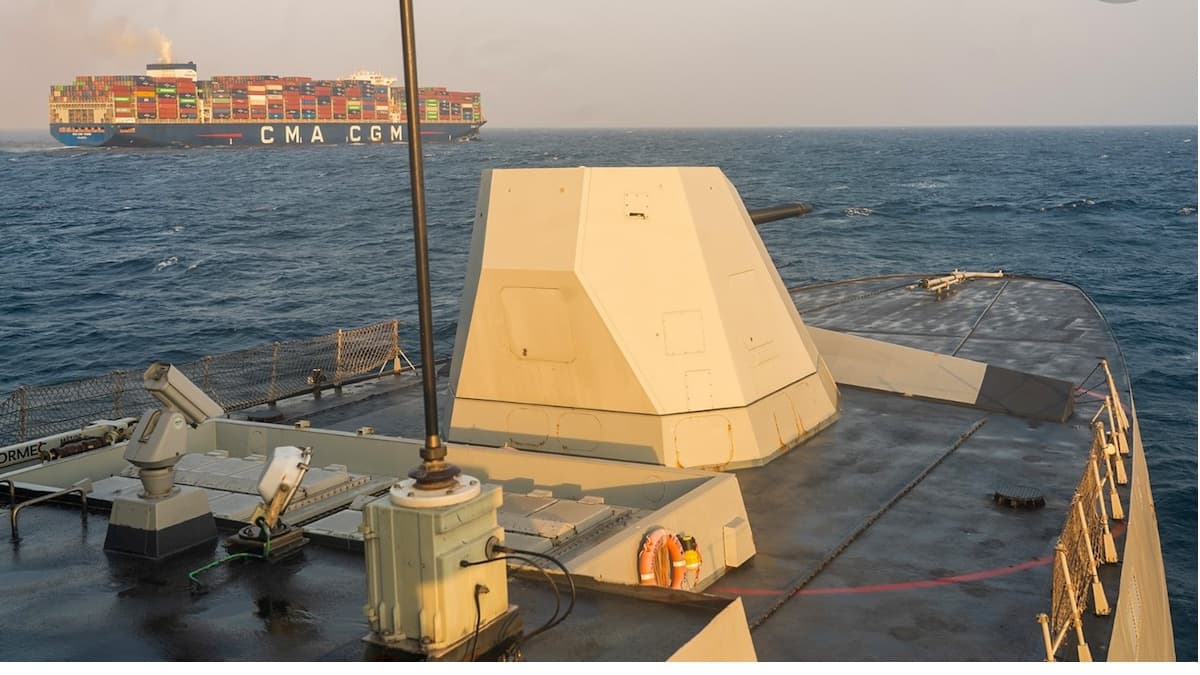
Asia-US shipping rates jumped 22% to West Coast and 19% to East Coast in one month due to Iran conflict forcing carriers to reroute through alternative hubs. Trans-Pacific spot rates now hit $2,857 per container to West Coast and $3,871 to East Coast as of April 23.
Higher shipping costs will squeeze margins for sellers importing inventory from Asia, especially those with heavy/bulky products or tight profit margins. Monitor your landed costs closely and consider raising prices or switching to domestic suppliers for high-volume SKUs.
This adds to the ongoing margin compression trend as sellers face rising costs across advertising, fulfillment, and now international shipping while competing on price-sensitive marketplaces.
Check your Q2 inventory costs in Seller Central's Inventory Planning report -- if shipping represents >15% of landed cost, negotiate longer payment terms with suppliers or raise prices immediately.
Lock in shipping rates with 3PL partners for Q3 inventory orders before rates climb further, and diversify supplier base to include domestic options.
Bottom Line
22% shipping rate spike means higher inventory costs for Asia imports.
Source Lens
Industry Context
Useful background context, but lower-priority than direct platform, community, or operator intelligence.
Impact Level
medium
22% shipping rate spike means higher inventory costs for Asia imports.
Key Stat / Trigger
22% increase in Far East to US West Coast shipping rates
Focus on the operational implication, not just the headline.
Full Coverage
Spot rates on the benchmark trans-Pacific ocean shipping trade have increased by double-digits in just the past month, as the conflict in the Middle East drives downstream effects to the other side of the globe. “On U. S.
-bound trades from the Far East, freight rates are still elevated from one month ago as disruption in the Middle East continues to have a cascading effect through Southeast Asian transshipment hubs,” said analyst Peter Sand of shipping platform Xeneta, in an update. “Shippers moving cargo to the U. S.
via these hubs are paying the price for bottlenecks created thousands of miles away.” Xeneta market average spot rates as of April 23 from the Far East to the U. S. West Coast were $2,857 per forty foot equivalent unit (FEU), and $3,871 per FEU to the East Coast. “Far East to U. S. West Coast spot rates are up 22% over the past month, while Far East to U. S.
East Coast are up 19%,” Sands said “Even the trans-Atlantic from North Europe to U. S. East Coast – which does not call at Asia transshipment hubs or Middle East ports – has surged 46% compared to one month ago. “The crisis is still very much present – it has simply migrated from the regional to the global.”
Sand noted that the ongoing Middle East conflict has forced carriers to build entirely new service networks with little to no warning, including rerouting via land bridges such as Jeddah and alternative ports on the Indian Ocean coastline.
“On the European ocean container shipping trades, these new routing patterns are now established and carriers have reorganized capacity, meaning freight rates are easing from the spike in the immediate aftermath of conflict. “Compared to one month ago, average spot rates from the Far East are down 6% to North Europe and 13% to [the] Mediterranean.”
But he cautioned that the softening of rates on the European trades isn’t necessarily a sign that the market is returning to normal.
“The Strait of Hormuz remains effectively closed to container shipping, the ceasefire is fragile and, while the alternative routing arrangements that carriers have put in place are stabilizing supply chains, they are still costly workarounds.
“Until there is greater assurance of safe and free passage for ships in the Strait of Hormuz, the underlying drivers of disruption – longer transit times, reduced schedule reliability, congestion at alternative hubs, and elevated surcharges – will continue to hold freight rates above pre-crisis levels.”
Over the weekend, Iranian Foreign Minister Abbas Araghchi during his tour of the region and Pakistan gave regional mediators a new offer to cease attacks on shipping in exchange for an end to the war, including the U. S. naval blockade of Iranian ports and the postponement of nuclear negotiations.
The development was reported by the Wall Street Journal, citing officials familiar with the matter. Meanwhile, Sand said ocean carriers are managing capacity to shore up falling rates in Europe while also keeping U. S. -bound trades tight. Sand said four of the five major fronthaul trades saw capacity decline,with Far East to North Europe down 6. 6%.
“That combination of crisis-driven congestion and deliberate supply management is why rates remain elevated across the board, even where the direct impact of the conflict should be limited,” he said. Read more articles by Stuart Chirls here.
Original Source
This briefing is based on reporting from Freightwaves. Use the original post for full primary-source context.
Style
Audience