

Third straight decline in benchmark diesel as futures trend higher
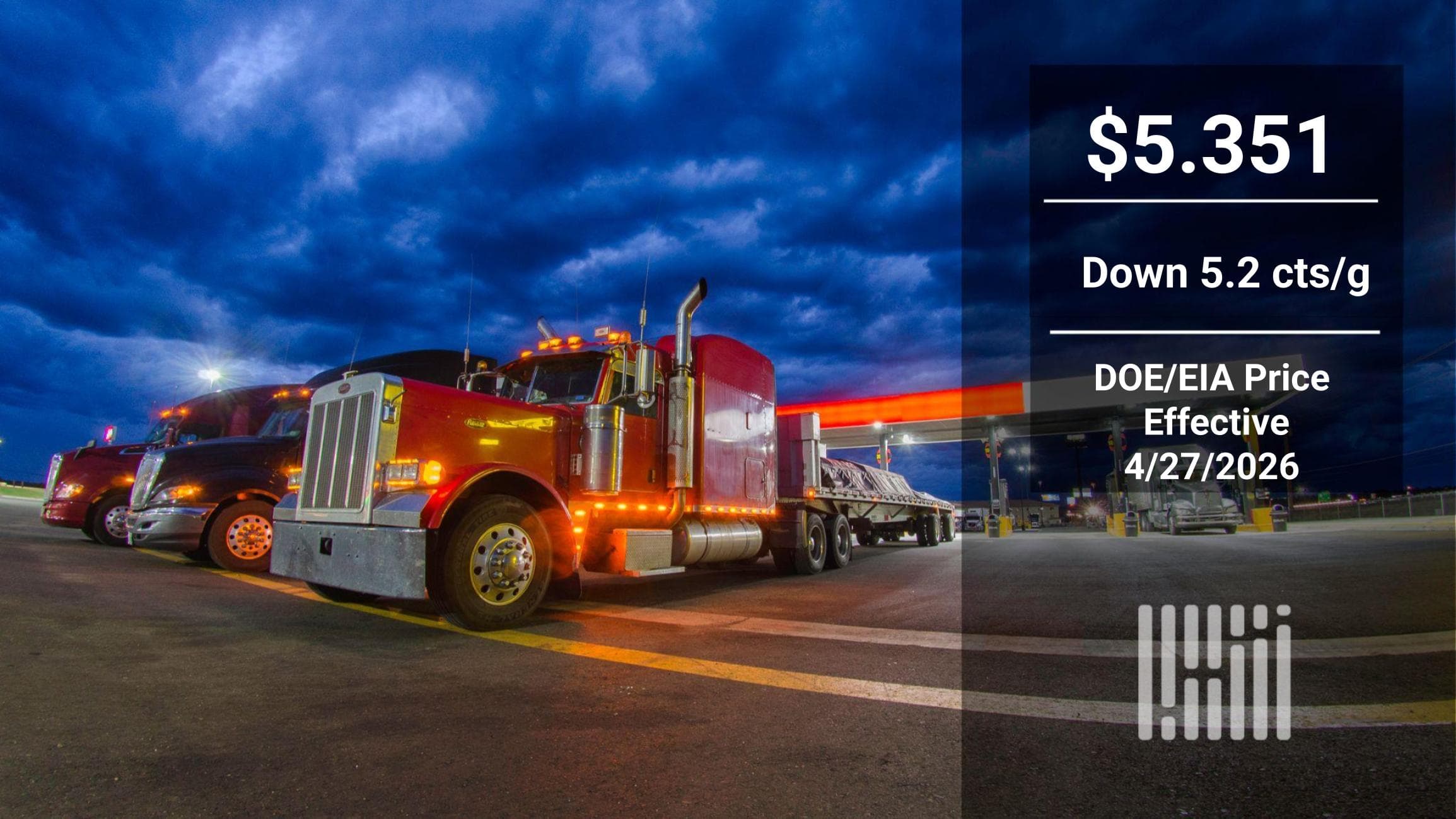
Diesel prices fell 5.2 cents to $5.351/gallon for the third straight week, dropping 29.2 cents total over three weeks. Futures prices are now trending higher, suggesting the decline may reverse soon.
Rising fuel costs will increase FBA inbound shipping fees and third-party logistics costs within 30-60 days. Sellers should review their shipping cost assumptions in Q2 budgets and consider locking in current 3PL rates before fuel surcharges reset.
Rising fuel costs will compress margins across all marketplace channels as shipping and fulfillment expenses increase, particularly impacting heavy or bulky products with high logistics costs.
Check your 3PL contracts for fuel surcharge clauses -- if diesel rises above $5.50/gallon, negotiate rate locks now.
Review FBA shipment timing -- consolidate inbound shipments in next 30 days before fuel costs potentially spike.
Bottom Line
Diesel price reversal means higher logistics costs ahead for sellers.
Source Lens
Industry Context
Useful background context, but lower-priority than direct platform, community, or operator intelligence.
Impact Level
medium
Diesel price reversal means higher logistics costs ahead for sellers.
Key Stat / Trigger
29.2 cents per gallon diesel price drop over three weeks
Focus on the operational implication, not just the headline.
Full Coverage
The weekly benchmark diesel price used for most fuel surcharges recorded its third straight decrease after weeks of higher numbers, but the recent direction of futures prices suggest the pullback may not continue. The Department of Energy\Energy Information Administration average weekly retail diesel price fell 5. 2 cents/gallon to $5.
351/g, published Tuesday and effective Monday. That’s a decline of 29. 2 cts/g over the last 3 weeks in the benchmark price used to set most fuel surcharges. But futures prices have turned higher, the AAA price was up today for the first time in more than 2 weeks, and there’s little bearish news out of the Strait of Hormuz.
The price released Tuesday could be a bottom for this cycle. window. googletag = window. googletag || {cmd: []}; googletag. cmd. push(function() {googletag. defineSlot('/21776187881/FW-Responsive-Main_Content-Slot1', [[300, 100], [320, 50], [728, 90], [468, 60]], 'div-gpt-ad-1709668545404-0'). defineSizeMapping(gptSizeMaps. banner1). addService(googletag.
pubads()); googletag. pubads(). enableSingleRequest(); googletag. pubads(). collapseEmptyDivs(); googletag. enableServices(); }); googletag. cmd. push(function() {googletag. display('div-gpt-ad-1709668545404-0'); }); I know I said I wasn't going to do this chart every day anymore.
But I thought it notable that the AAA average retail #diesel price rose today after 17 days of declines and one day of no change. pic. twitter. com/cMYh0sD66x— John Kingston (@JohnHKingston) April 28, 2026 The price has declined 29.
2 cts/g over the last three weeks, which means it is that much under the highest price in the cycle since the start of the war in Iran and the broader Middle East. The price published by the DOE/EIA right before the recent downturn was $5. 643/g on April 6. The record high in the DOE/EIA series, which goes back to 1994, is $5. 81, set in June 2022.
The settlement price of ultra low sulfur diesel (ULSD) on the CME commodity exchange reached its highest level since the war began on March 27, when it settled at $4. 4955/g. It settled slightly below that on April 7, at $4. 4744/g. ULSD plummeted a day later, more than 66 cts/g, on announcement of a ceasefire, settling at $3. 8084/g.
Prices have made a steady move higher since then, despite a market that has been up and down on any given day’s news on the possible reopening of the Strait of Hormuz. ULSD crossed the $4/g mark in trading Monday before settling just under that. It exceeded the $4 mark again Tuesday before a slight decline by 11 a. m. Tuesday.
What comes next There has been enough stability in current markets that extreme talk of an eventual $200/b price for Brent crude, the world’s benchmark, has mostly faded. window. googletag = window. googletag || {cmd: []}; googletag. cmd. push(function() {googletag.
defineSlot('/21776187881/fw-responsive-main_content-slot3', [[728, 90], [468, 60], [320, 50], [300, 100]], 'div-gpt-ad-1665767553440-0'). defineSizeMapping(gptSizeMaps. banner1). addService(googletag. pubads()); googletag. pubads(). enableSingleRequest(); googletag. pubads(). collapseEmptyDivs(); googletag. enableServices(); }); googletag. cmd.
push(function() {googletag. display('div-gpt-ad-1665767553440-0'); }); But what hasn’t faded are growing concerns that oil prices may be sticking at higher levels for awhile, regardless of whatever developments occur with the reopening of the Strait of Hormuz. The energy research team at Bank of America summed up that view in a recent report.
The team led by Francisco Blanch said in the report that the oil market “is facing a sobering reality.” The “quick resolution scenario—with the assumption that full oil flows would be restored in Hormuz in short order—seems now highly unlikely,” the report said. The report noted that the physical oil markets remain tight.
However, dated Brent, which is a physical crude barrel for short-term delivery in contrast to Brent traded on futures market for June delivery, is now only about $5-$6/b more than Brent on commodity exchanges. That gap was about $10/b until recently. window. googletag = window. googletag || {cmd: []}; googletag. cmd. push(function() {googletag.
defineSlot('/21776187881/fw-responsive-main_content-slot4', [[300, 100], [320, 50], [728, 90], [468, 60]], 'div-gpt-ad-1709668086344-0'). defineSizeMapping(gptSizeMaps. banner1). addService(googletag. pubads()); googletag. pubads(). enableSingleRequest(); googletag. pubads(). collapseEmptyDivs(); googletag. enableServices(); }); googletag. cmd.
push(function() {googletag. display('div-gpt-ad-1709668086344-0'); }); “The physical oil market continues to tighten as a large share of global seaborne volumes remains trapped in the Middle East and global oil markets remain in steep backwardation,” BOA said.
Market structure tells a story Backwardation is a market structure where the highest price in the market is oil for immediate delivery, with prices then declining as the forward curve goes out into the future. Backwardation is a structure that develops when a commo
Original Source
This briefing is based on reporting from Freightwaves. Use the original post for full primary-source context.
Style
Audience