

Knight-Swift aims for double-digit rate hike in tight market
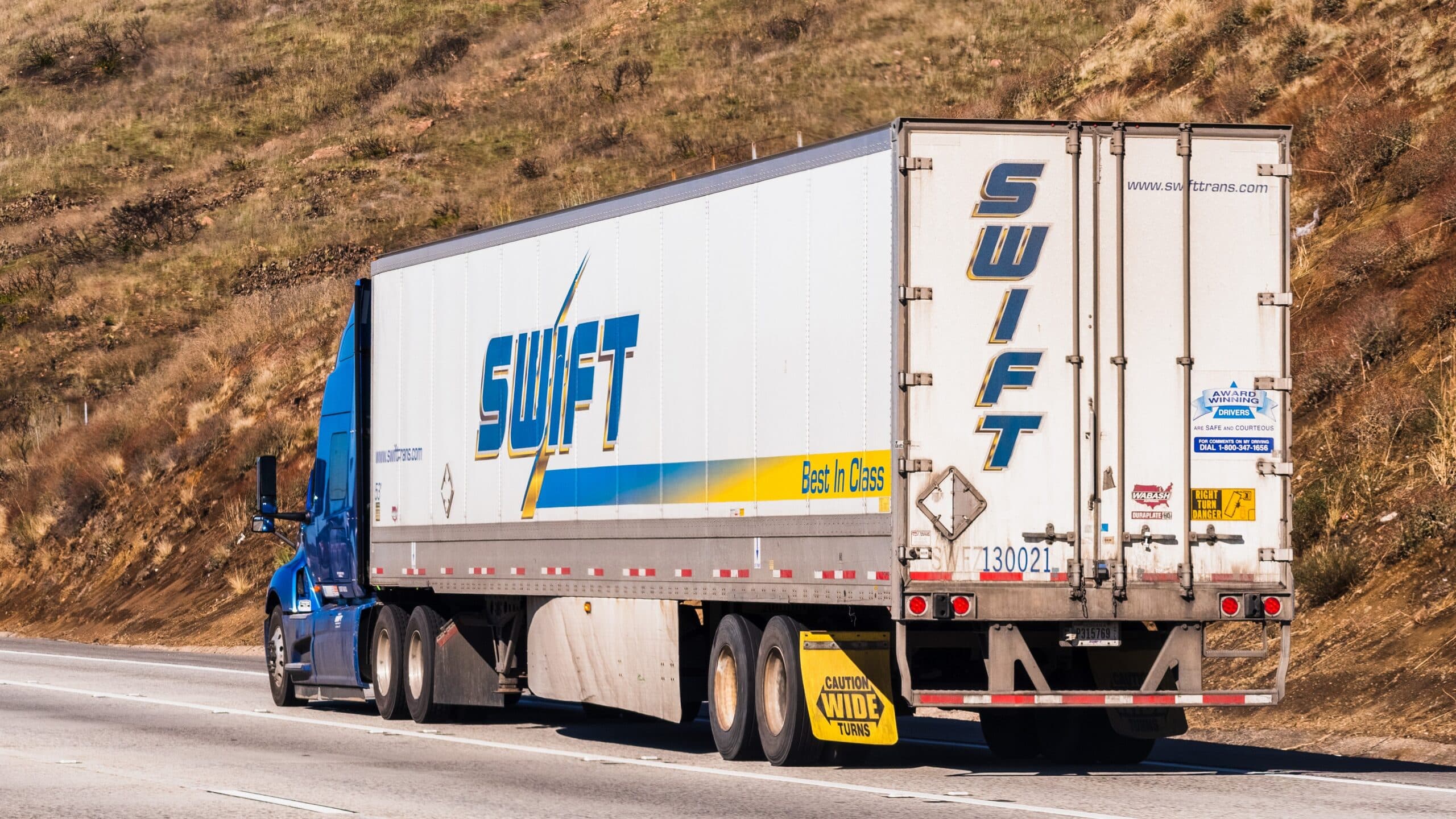
Knight-Swift Transportation is targeting double-digit rate increases for shipping contracts during bid season, up from earlier expectations of low-to-mid single-digit increases. The trucking company cited market tightening due to fuel costs and regulations forcing capacity offline.
Higher shipping rates will directly impact FBA inbound costs and 3PL fulfillment expenses for sellers using truckload carriers. Monitor your logistics partners' contract renewals closely - many will pass through 10%+ rate increases in Q2-Q3 2026.
This reflects broader supply chain inflation pressures that will compress seller margins across all fulfillment methods, accelerating the shift toward Amazon's logistics ecosystem despite higher FBA fees.
Review FBA inbound shipping costs in Seller Central's shipping queue - if using truckload carriers, expect 10%+ increases during contract renewals.
Audit 3PL contracts for rate escalation clauses and negotiate caps before carriers implement double-digit increases in Q2-Q3.
Bottom Line
Double-digit trucking rate hikes mean higher FBA and fulfillment costs ahead.
Source Lens
Industry Context
Useful background context, but lower-priority than direct platform, community, or operator intelligence.
Impact Level
medium
Double-digit trucking rate hikes mean higher FBA and fulfillment costs ahead.
Key Stat / Trigger
double-digit rate increases during bid season
Focus on the operational implication, not just the headline.
Full Coverage
Knight-Swift Transportation reported a messy first quarter but the company is becoming increasingly bullish on truckload market fundamentals. Knight-Swift (NYSE: KNX) reported a headline net loss of $1. 3 million for the first quarter on Wednesday after the market closed.
Adjusted earnings per share of 9 cents were in line with the negative preannouncement last week, which was well below the consensus estimate of 25 cents at the time. The result included several items that are not expected to recur.
The quarter included 8 cents per share in negative claims development in its less-than-truckload unit, 5 to 6 cents per share from weather and fuel headwinds, and 2 cents per share from an adverse value-added tax ruling in its Mexico business.
Click for full story – “Knight-Swift says shippers already seeking peak-season capacity” “The first quarter had its challenges, but these were largely transitory and even bring some upside as the weather disruption exposed market tightness that has served to accelerate the pricing environment, and the spike in fuel prices adds one more headwind to truckload capacity,” said Knight-Swift CEO Adam Miller in a news release.
Table: Knight-Swift’s key performance indicators – Consolidated Miller said the TL market is continuing to tighten as heightened regulation and surging fuel costs are forcing capacity to the sidelines.
The carrier is now targeting high-single- to low-double-digit rate increases during bid season versus its expectation for low- to mid-single-digit increases at the beginning of the year.
“While the pricing environment is improving, we are still seeing carrier failures, as the damage done over a prolonged downcycle is not quickly recovered, especially with the cash flow crunch brought on by the recent fuel spike,” Miller said. The company reiterated second-quarter adjusted EPS guidance of 45 to 49 cents.
That outlook was also issued last week and bracketed the consensus estimate at the time. First-quarter consolidated revenue of $1. 85 billion was 1% higher year over year. Table: Knight-Swift’s key performance indicators – TL Revenue in the TL unit was in line with the prior year at $1. 05 billion.
Average tractors in service declined 4%, which was offset by a 4% increase in revenue per tractor, excluding fuel surcharges. The increase in revenue per tractor was driven by a 2. 3% increase in loaded miles per tractor and a 1. 6% increase in revenue per loaded mile (excluding fuel). The TL unit reported a 96. 3% adjusted operating ratio (3.
7% operating margin), which was 70 basis points worse y/y. Fuel and weather, among other headwinds, negatively impacted the period. Table: Knight-Swift’s key performance indicators – LTL The LTL unit reported a 3% y/y revenue increase to $313 million. A 1% decline in daily shipments was offset by a 4% increase in revenue per shipment (excluding fuel).
Weight per shipment reached the highest level recorded since 2021, and rate renewals continued to come in higher by a mid-single-digit percentage. The segment booked a 99. 6% adjusted OR in the quarter; however, the adverse claim development was a 570-bp headwind. Knight-Swift will host a call at 5:30 p. m. EDT on Wednesday to discuss first-quarter results.
Click for full story – “Knight-Swift says shippers already seeking peak-season capacity” Table: Knight-Swift’s key performance indicators – Logistics & Intermodal More FreightWaves articles by Todd Maiden: Werner doubling intermodal fleet in Mexico Knight-Swift cuts Q1 guide; remains upbeat on TL fundamentals J. B.
Hunt says TL inflection ‘structural,’ not temporary The post Knight-Swift aims for double-digit rate hike in tight market appeared first on FreightWaves.
Original Source
This briefing is based on reporting from Freightwaves. Use the original post for full primary-source context.
Style
Audience