Container ship attacks escalate in Strait of Hormuz
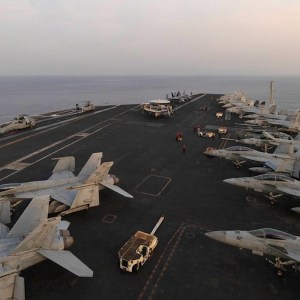
10+ container ships attacked near the Strait of Hormuz since Oct. 5, with two vessels sunk; Strait crossings dropped from 176 to 131 in one week as carriers reroute or reduce transits. Maersk, ONE, PIL, and OOCL have active schedules on affected feeder vessels, meaning cargo disruptions could hit any shipper using those carriers.
This accelerates supply chain fragility already stressed by Red Sea reroutes — sellers relying on just-in-time replenishment face compounding transit delays and cost spikes heading into peak season, squeezing already thin marketplace margins.
Feeder slot consolidation means your cargo may be on a vessel not listed on your bill of lading — voiding war insurance coverage without warning. Sellers importing via Asia-Middle East-Europe lanes should confirm carrier of record on each shipment and build 3-4 weeks of buffer stock now for Q1 restocks.
Operational Impact
This story may require teams to revisit workflows, monitoring, or platform assumptions.
Bottom Line
Hormuz attacks spike; sellers on Maersk/ONE/OOCL lanes face uninsured cargo risk now.
Source Lens
Industry Context
Useful background context, but lower-priority than direct platform, community, or operator intelligence.
Impact Level
high
Hormuz attacks spike; sellers on Maersk/ONE/OOCL lanes face uninsured cargo risk now.
Key Stat / Trigger
131 Strait of Hormuz crossings in week ending Oct. 14, down from 176 the prior week
Focus on the operational implication, not just the headline.
Full Coverage
Container shipping is facing an escalating threat in the Strait of Hormuz, which can impact shippers far from the region. The attacks this week included the Singapore-flagged GFS Pride, which caught fire and sank with containers still aboard.
Maritime authorities reported at least 10 vessels attacked in or near the chokepoint since Sunday, with six incidents on Sunday alone, the highest one-day total since the U. S. -Iran war began in February.
The 2,824-TEU feeder vessel GFS Pride was hit by an unknown projectile on Tuesday while transiting the strait, sustaining damage and a fire before sinking off Oman. Singapore’s Maritime and Port Authority said all 21 crew members were evacuated safely and no injuries were reported.
Iran’s Islamic Revolutionary Guard Corps said the vessel struck a naval mine on an “unauthorized” route and was carrying contraband. Singaporean authorities and maritime analysts disputed that account, with the MPA saying the ship was struck by projectiles; CNN reported that experts assessed a drone strike as the more likely cause.
A second Singapore-flagged container ship, the GFS Giselle, was also struck by projectiles and suffered hull damage, but reached safe anchorage under its own power; its 22 crew members were reported safe. Two other feeder vessels were also hit, including the 2,500-TEU DP World Kaveri operated by a unit of Dubai’s DP World.
The downstream effect can resonate far beyond attacks in the region. Other carriers may have bought feeder slots on the vessels, suggested analyst Lars Jensen. He noted Maersk (OTC: AMKBY), Ocean Network Express, PIL and OOCL showed active schedules for some of the ships.
Analysts point out that for shippers, war insurance can be cancelled on short notice if cargo moves on a vessel not owned by the carrier listed on the bill of lading. British security monitor UKMTO data showed 12 vessels reported attacks between Oct. 5 and Oct. 11, the largest weekly total since the war began, following 10 attacks the prior week.
Six vessels were struck on Sunday, including five tankers and one container ship. The GFS Pride and the Antigua and Barbuda-flagged bulk carrier Cape Dao, which sank after being struck on Sept. 23, are the second and third vessels to sink since the conflict began, according to IMO casualty data. Iran has linked the intensified campaign to the U. S.
blockade of its ports and tougher sanctions, while U. S. Central Command said commercial traffic continues through the strait with coordinated protection from American forces and regional partners. The violence is beginning to constrain traffic. Analyst Kpler counted 131 crossings through the strait in the week ended Oct.
14, down from 176 the previous week, though the firm cautioned that the decline was not solely attributable to the latest attacks. Kpler estimated 12. 6 million barrels of crude oil per day moved through the strait on Oct. 13, below the roughly 15 million barrels per day reported at the end of September. Read more articles by Stuart Chirls here.
Read more: New Long Beach record as volume nears 1M containers Houthi attacks add new geopolitical risk to softening container rates New chief for DP World Americas Philadelphia ports sets $837 million expansion, first new berth in 50 years Despite new record, Port of LA chief warns of tariff-driven planning risk The post Container ship attacks escalate in Strait of Hormuz appeared first on FreightWaves.
Check your freight forwarder's bill of lading against the actual carrying vessel — if they differ, contact your cargo insurer immediately to confirm war risk coverage is still active.
Audit FBA/WFS inbound lead times for any SKUs sourced from UAE, India, or Southeast Asia routing through Hormuz; add 4+ weeks to reorder points in Seller Central Restock or Walmart Supplier Center before November.
Original Source
This briefing is based on reporting from Freightwaves. Use the original post for full primary-source context.
Style
Audience