Is UPS parcel pivot a strategic winner or a ‘Trojan horse’?
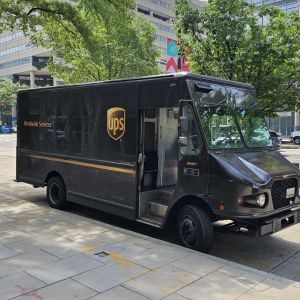
UPS is focusing on premium service over parcel volume with a potential Teamsters union strike on the horizon. The post Is UPS parcel pivot a strategic winner or a ‘Trojan horse’? appeared first on FreightWaves.
Source Lens
Industry Context
Useful background context, but lower-priority than direct platform, community, or operator intelligence.
Impact Level
medium
Use this briefing to decide whether your team needs an immediate workflow, policy, or reporting change.
Key Stat / Trigger
No single quantitative trigger surfaced in this report.
Focus on the operational implication, not just the headline.
Full Coverage
ORLANDO, Florida — For 18 months, United Parcel Service management has talked about shedding unprofitable e-commerce volume to concentrate on more complex, premium services in sectors like B2B distribution, healthcare, automotive and small enterprises.
Many hear that to mean UPS intends to walk away from lightweight B2C delivery space, now crowded with lower-cost competitors, especially after phasing out 50% of its business with Amazon.
Meanwhile, the shipping giant recently issued a news release in which it described a new global operating model centered on providing integrated logistics services as the company continues its “evolution” from a small package carrier.
Analysts question whether UPS (NYSE: UPS) can successfully morph into an integrated logistics provider if it shrinks parcel volume. And industry consultant Satish Jindel suspects there are other motives behind the messaging, arguing the company has no intention of exiting any part of the parcel business. “I think it’s a very difficult needle to thread.
They’re a parcel carrier. Plain and simple,” Richard Metzler, an industry veteran who has held high-level executive positions at companies like DHL Express, Greatwide Logistics, XPO and uShip, said in a phone interview. “Is Supply Chain Services a serious logistics business? For sure.
But in my opinion, it will be tough to backfill what they exit in parcel with just logistics, small-and-medium businesses, heavyweight and healthcare.”
And since Amazon is rapidly moving to serve those market segments with its third-party freight, distribution, fulfillment and parcel shipping service, under the Amazon Supply Chain Services banner, profit margins won’t be safe in logistics either, he added In early August, Jindel warned negotiations on the next contract for more than 300,000 van and truck drivers and package handlers will turn into a tectonic clash that reshapes the parcel shipping sector, with either UPS becoming the top dog or getting overlapped by rival couriers, depending on how the talks play out.
UPS’s labor costs are so out of whack with the rest of the industry because of the lucrative 2023 contract the Teamsters secured that UPS is becoming unaffordable for retail shippers, according to many industry watchers.
Jindel is now going further, predicting that UPS will welcome a strike by the Teamsters union and its combative boss Sean O’Brien, who is already drawing red lines that could easily trigger a work stoppage in 2028, so it can reset its cost structure.
The emphasis on revenue quality over sheer parcel volume is actually a smokescreen to keep parcel delivery competitors, like FedEx and Amazon, off guard so they don’t prepare for a driver exodus when Teamsters workers go on strike, enabling UPS to hire drivers from competitors and reset its cost structure.
That would allow UPS to again dominate the parcel market like it did in the 1990s, he opined in an interview.
Although UPS downsized its domestic parcel network — eliminating 150 sort centers, 30,000 positions and 50 million labor hours — to align with lower volumes from shedding Amazon business, it wouldn’t be investing more than $8 billion over four years to automate facilities, if it planned to stop delivering from fulfillment centers to consumers’ doorsteps, Jindel explained.
UPS is trying to make people believe they are pulling out of short-haul parcel delivery. “They are not. This is a Trojan horse to misguide competitors and the Teamsters,” the founder and president of ShipMatrix told FreightWaves. ShipMatrix supports hundreds of shippers with parcel visibility, analytics, invoice processing, auditing and carrier selection.
Jindel has a strong track record of predicting industry events or making recommendations that eventually are adopted, including the spinoff of FedEx Freight and retailers’ overreaction to consumer interest in free, superfast delivery. In the Aug. 31 news release downplaying the parcel operations, UPS also named Matt Guffey as chief U. S.
domestic officer, with responsibility over all parcel and delivery business units: small package, non-union subsidiaries Roadie and Happy Returns, The UPS Stores and Mail Innovations (the company’s consolidation program with the U. S. Postal Service for lightweight parcels). UPS purchased Roadie in 2021 for $548 million.
The carrier handles same-day, urgent shipments that don’t go through the parent company’s parcel sortation network. Instead, the crowdsourced delivery platform instead picks up orders from brand-name stores and delivers them to homes and businesses, with independent drivers providing their own vehicles.
Jindel said the reorganization under Guffey suggests that UPS intends all five units will eventually utilize non-union workers because, for the first time, management has brought all the parcel services under one executive.
It will allow use of a fully integrated parcel network to meet customers’ needs at the lowest cost by placing the right parcel in the right ne
Original Source
This briefing is based on reporting from Freightwaves. Use the original post for full primary-source context.
Style
Audience