Why Owner-Operators Are Leaving The Small-Fleet Tier, And Where Their Trucks Go Next
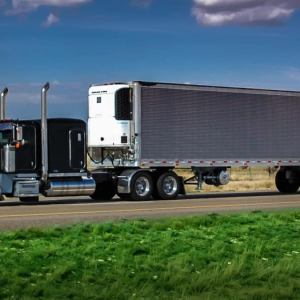
For three and a half years the smallest tier of trucking has been quietly emptying out, with the number of tractors run by one-to-six-truck carriers sliding from a 2023 peak near 398,000 all the way back to about 362,000, and the easy explanation, that owner-operators are simply going out of business, misses what the federal […] The post Why Owner-Operators Are Leaving The Small-Fleet Tier, And Where Their Trucks Go Next appeared first on FreightWaves.
Source Lens
Industry Context
Useful background context, but lower-priority than direct platform, community, or operator intelligence.
Impact Level
medium
Use this briefing to decide whether your team needs an immediate workflow, policy, or reporting change.
Key Stat / Trigger
No single quantitative trigger surfaced in this report.
Focus on the operational implication, not just the headline.
Full Coverage
For three and a half years the smallest tier of trucking has been quietly emptying out, with the number of tractors run by one-to-six-truck carriers sliding from a 2023 peak near 398,000 all the way back to about 362,000, and the easy explanation, that owner-operators are simply going out of business, misses what the federal data actually shows, because a large share of those trucks never leave the road at all, they just change whose name is on the authority.
The story of the shrinking owner-operator tier is really two stories, one about why they are getting squeezed out and one about where the equipment lands, and the second one is the more interesting of the two. The Exodus, By The Numbers The scale of the retreat is clear in the fleet-size data.
FreightWaves SONAR’s count of tractors operated by carriers with one to six power units (TCTCO. USA) sits at 362,033, below both its five-year average of about 378,800 and its 12-month average of roughly 364,960.
The segment surged during the freight boom, as pandemic-era demand and easy authority pulled a wave of new entrants into the market, peaked close to 398,000 tractors in the first half of 2023, and has declined almost without interruption since.
That is roughly 36,000 tractors, on the order of nine percent of the segment, pulled back out of the smallest tier over three and a half years, effectively unwinding the entire boom. What makes that remarkable is how many operators the tier still holds. In the latest FMCSA census, more than 1.
8 million active carrier registrations fall into the one-to-six-truck band, a count that includes private and intrastate operators alongside for-hire freight haulers, and it is the overwhelming majority of all registered carriers.
This is not a small corner of trucking thinning out, it is the broadest base of the market contracting at the edges, and it has been doing so steadily regardless of which way freight has moved month to month.
The Squeeze, Starting With Fuel The reasons owner-operators are leaving are not mysterious, they are mathematical, and they come from both sides of the ledger at once. On the cost side, running a truck set a record in 2025, with the American Transportation Research Institute putting the average marginal cost at 2. 336 dollars per mile.
In that 2025 breakdown, driver pay was the heaviest line at roughly 82 cents per mile, with fuel the next tier down at about 48 cents. Then 2026 rewrote the fuel math entirely. Diesel set records this year, with the Department of Energy’s national on-highway average topping its previous all-time high in September and reaching 6.
127 dollars a gallon by the week of November 9. At the six to seven miles per gallon a working truck gets, diesel over six dollars a gallon runs roughly a dollar a mile in fuel alone, close to double what fuel cost a year earlier, and that increase landed on top of a cost base that was already the highest ATRI had ever recorded.
The run-up was not purely a refining story, crude oil climbed back above 100 dollars a barrel in the same stretch, but diesel outran crude as global refining capacity tightened. For the operator trying to pencil out a load, a cost that used to be the second or third line on the sheet is now vying to be the biggest.
For the owner-operator, that dollar-a-mile fuel hit is close to unavoidable, because most small carriers never get the benefit of a fuel surcharge in the first place. A surcharge is largely a contract-freight mechanism, a separate line that moves with the Department of Energy’s weekly diesel average and shows up on dedicated and committed lanes.
The small operator living on load-board freight from the spot market rarely sees one, because spot rates are quoted all-in, a single number that already bakes in whatever the broker is willing to pay that day. There is no surcharge line to adjust when diesel spikes, so the owner-operator absorbs the full move into a rate they never got to reprice.
A mid-sized fleet running contract freight under a negotiated surcharge program recovers a chunk of every fuel increase, while the spot-dependent owner-operator recovers almost none of it. The same gallon costs them more and comes back to them less. Insurance is the other cost that lands hardest on the smallest. Premiums ran around 10.
6 cents per mile in 2025, up nearly four percent on the year and well above where they sat just a few years ago, and the operator with one or two trucks pays the most per unit with the least ability to self-insure or negotiate.
Stack record fuel, rising insurance, and the fastest increases ATRI tracked in tolls, maintenance, and driver benefits on top of each other, and the structural problem is simple, there is no scale to spread any of it across. The Other Jaw Of The Vise, Costs Outrunning Rates Here is the part that gets misread.
Rates are not the owner-operator’s problem the way they were a couple of years ago. Spot van and reefer rates have firmed through 2026, running stronger for this
Original Source
This briefing is based on reporting from Freightwaves. Use the original post for full primary-source context.
Style
Audience