84% of ChatGPT Buying Decisions Come From Product Cards
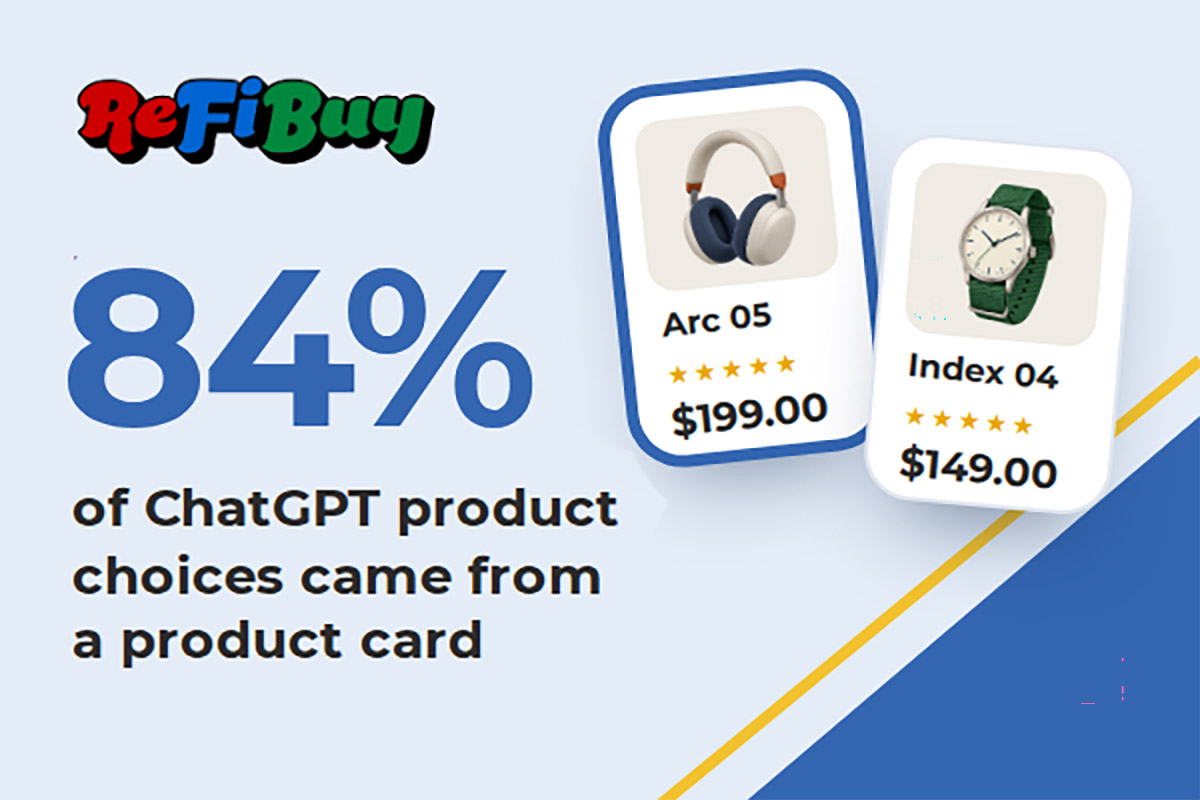
Product cards dominated buying decisions in a new behavioral study of AI shopping commissioned by ReFiBuy and conducted by Clickstream Solutions. In ChatGPT, 84% of final product choices came from product cards, the visual listings that bring product images, prices and key details into the AI conversation. Rather than relying on surveys or traffic data […]
Source Lens
Industry Context
Useful background context, but lower-priority than direct platform, community, or operator intelligence.
Impact Level
medium
Use this briefing to decide whether your team needs an immediate workflow, policy, or reporting change.
Key Stat / Trigger
No single quantitative trigger surfaced in this report.
Focus on the operational implication, not just the headline.
Full Coverage
Product cards dominated buying decisions in a new behavioral study of AI shopping commissioned by ReFiBuy and conducted by Clickstream Solutions. In ChatGPT, 84% of final product choices came from product cards, the visual listings that bring product images, prices and key details into the AI conversation.
Rather than relying on surveys or traffic data alone, the study observed what shoppers compared, rejected and chose during shopping tasks, with spoken commentary revealing the reasoning behind those decisions. The study, In AI Shopping, the Product Card Is Your Storefront, recorded 40 U. S.
participants completing 224 shopping tasks across six product categories in ChatGPT and Google AI Mode. The recordings captured how shoppers compared products and chose between offers, including product cards they considered but never clicked.
Download Behavioral Study of AI Shopping Key Findings 84% of final product choices in ChatGPT came from a product card. If a product misses the product-card set, it misses the comparison where most choices were made. 75% of shopping tasks started with product-card engagement.
Shoppers went to the product cards first, making the image, title, price and other displayed product data an early part of the buying decision. 43% of choices went to the first product card, more than any other position. Position pays, making the top spot worth treating as a priority. 76% of offer choices went to the first offer card.
Position pays again at the offer level, where price, availability and delivery shape the next step. The Agentic Commerce user behavior study proved our thesis that, like the Amazon Buy Box, product cards on ChatGPT are critical to winning the consumer’s buying decision. Eighty-four percent of final product choices in ChatGPT came from a product card.
Being mapped correctly to a product card and appearing as high as possible in the offer-card list are absolutely critical to optimizing for ChatGPT. – Scot Wingo, co-founder and CEO, ReFiBuy When an AI assistant showed two or more product cards, shoppers chose the first one 43. 4% of the time. Chance would put that at about 29%.
Nearly all of the advantage goes to the top slot. The second card was chosen less often than chance would predict. – Eric Van Buskirk, founder, Clickstream Solutions What Brands and Retailers Can Do For brands investing in answer engine optimization (AEO) and generative engine optimization (GEO), visibility is the start of the job.
The work continues in the product and offer cards where products compete for the buying decision. ReFiBuy calls that work Agentic Commerce Optimization (ACO).
ReFiBuy turned the findings into eight actionable recommendations for brands and retailers, from getting products into the product cards and treating the first position as a priority to keeping prices and variants consistent across product cards, offer cards and product pages.
The full report also includes recorded session captures, what shoppers relied on when they made a choice, how they reacted to sponsored placements, and the price mismatches they caught on product cards while deciding.
Original Source
This briefing is based on reporting from Tamebay. Use the original post for full primary-source context.
Style
Audience