

The Load Board Is Busy Because Shippers Are Panicking — Not Simply Because the Market Recovered. Here Is the Difference That Matters.
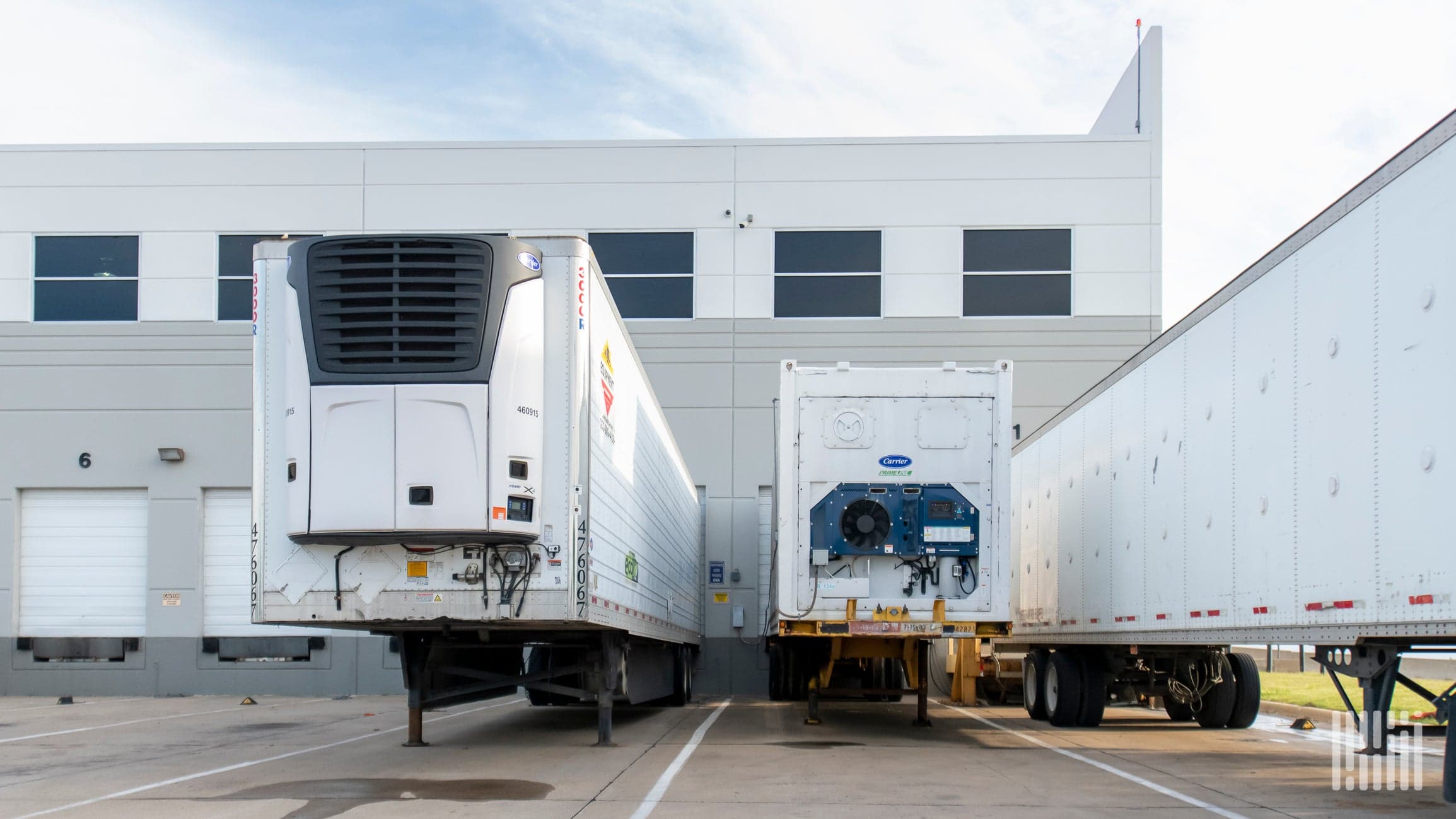
What Is Actually Driving the Freight Right Now The surge in freight movement that started in late April and is accelerating through May 2026 is not the organic demand recovery that small carriers have been waiting three years to see. It is, in large part, a tariff front-load. Shippers who import goods from China, Mexico, […] The post The Load Board Is Busy Because Shippers Are Panicking — Not Simply Because the Market Recovered. Here Is the Difference That Matters. appeared first on FreightWaves
Source Lens
Industry Context
Useful background context, but lower-priority than direct platform, community, or operator intelligence.
Impact Level
medium
Use this briefing to decide whether your team needs an immediate workflow, policy, or reporting change.
Key Stat / Trigger
No single quantitative trigger surfaced in this report.
Focus on the operational implication, not just the headline.
Full Coverage
What Is Actually Driving the Freight Right Now The surge in freight movement that started in late April and is accelerating through May 2026 is not the organic demand recovery that small carriers have been waiting three years to see. It is, in large part, a tariff front-load.
Shippers who import goods from China, Mexico, and Canada have been scrambling to pull inventory forward before tariff rates lock in or escalate further. The FreightWaves SONAR National Truckload Index (NTI.
USA) — a seven-day moving average of booked spot transactions from the TRAC consortium, inclusive of fuel — is tracking national dry van spot rates up more than 20% year over year as of mid-May 2026. The SONAR Flatbed Index (FTI.
USA) shows flatbed volume running nearly 50% above year-ago levels, driven by construction material and steel movement as reshoring and infrastructure activity pull hard against a shrunken supply of available equipment. The SONAR Reefer Index (RTI.
USA) confirms the refrigerated market has tightened ahead of produce season, with year-over-year rate gains in the same range. The SONAR Outbound Tender Rejection Index (STRI.
USA) is hovering near 14% — a level not seen consistently since the post-COVID unwind of 2022 and meaningfully above the 7% to 8% threshold that historically signals sustained upward pressure on spot pricing. Those are real numbers. That is real money on the table.
But understanding why that freight is moving matters as much as understanding that it is moving. Front-loading is a pattern that plays out every time a major tariff wave arrives. Importers anticipate the cost increase, rush to bring goods in before the effective date, and freight volumes spike.
FreightWaves SONAR documented this pattern in early 2025 when the reciprocal tariff packages first landed — the SONAR Truckload Volume Index (SONAR: STVI. USA) spiked sharply as shippers pulled inventory forward, then gave back those gains as warehouses filled and new orders slowed.
The same dynamic is repeating now as importers race to build inventory ahead of tariff escalations that remain in legal and political flux. The problem with front-loading freight — from a carrier cash flow perspective — is what happens after. Once shippers have moved the goods, inventory sits in warehouses. New orders slow. Freight volumes drop.
The carriers who stretched to capture the surge — taking on more fuel, running harder miles, signing longer commitments to load boards — get caught with inflated costs and a thinning load environment. The cycle is not new. It is predictable. And it is especially punishing for operators who confuse a busy month with a recovered market.
The Rate-to-Cash Gap That Is Going to Catch People Here is the cash flow mechanic that does not get talked about enough during a rate surge: you still do not get paid until the invoice clears. A dry van operator who books a load today at $2. 00 per mile linehaul pays for fuel, tolls, and hours immediately.
The invoice does not clear for 30 to 45 days in most standard broker arrangements.
If that operator is running without factoring and without a cash reserve, the revenue from a strong load in May is not actually available until mid-June — by which point diesel has already been purchased, insurance has already been debited, and the truck payment has already posted. Diesel at $5. 64 per gallon nationally — the figure reported by the U. S.
Energy Information Administration for the week of May 4, 2026, up from $3. 65 per gallon a year ago — represents a 54% increase in fuel cost in twelve months. At eight miles per gallon and 10,000 miles per month, that is roughly $2,500 more per truck per month going out the door compared to last May.
At the same time, the standard broker quick-pay discount is pulling between 2% and 5% off each load if you choose early payment. On a $2,000 load, that is $40 to $100 in effective fees per transaction.
A carrier with three trucks who takes quick pay on 30 loads a month is spending between $1,200 and $3,000 per month just for the right to access money they have already earned. At the current rate environment, that cost is not trivial — it is a meaningful drag on take-home margin.
Tim Denoyer, Vice President and Senior Analyst at ACT Research, noted in recent commentary that international trade represents 16% to 25% of U. S. surface freight volume. When that segment surges and then corrects, the carriers who scaled into the peak and did not manage their working capital are the ones who feel it hardest on the way down.
The Steel and Parts Problem Is Not Over Beyond the freight volume cycle, there is a second cash pressure hitting small carriers right now that runs on a slower timeline: the cost of maintaining and replacing equipment.
Section 232 tariffs on steel and aluminum derivatives currently sit at 50%, according to the Congressional Research Service’s updated tariff tracker as of May 2026. Those tariffs directly affect the cost of truck parts, chassis components, and
Original Source
This briefing is based on reporting from Freightwaves. Use the original post for full primary-source context.
Style
Audience