

Nobody Is Asking the Hard Questions About What Happens When an Autonomous Truck Breaks Down on the Highway at 2 AM. Let Us Start.
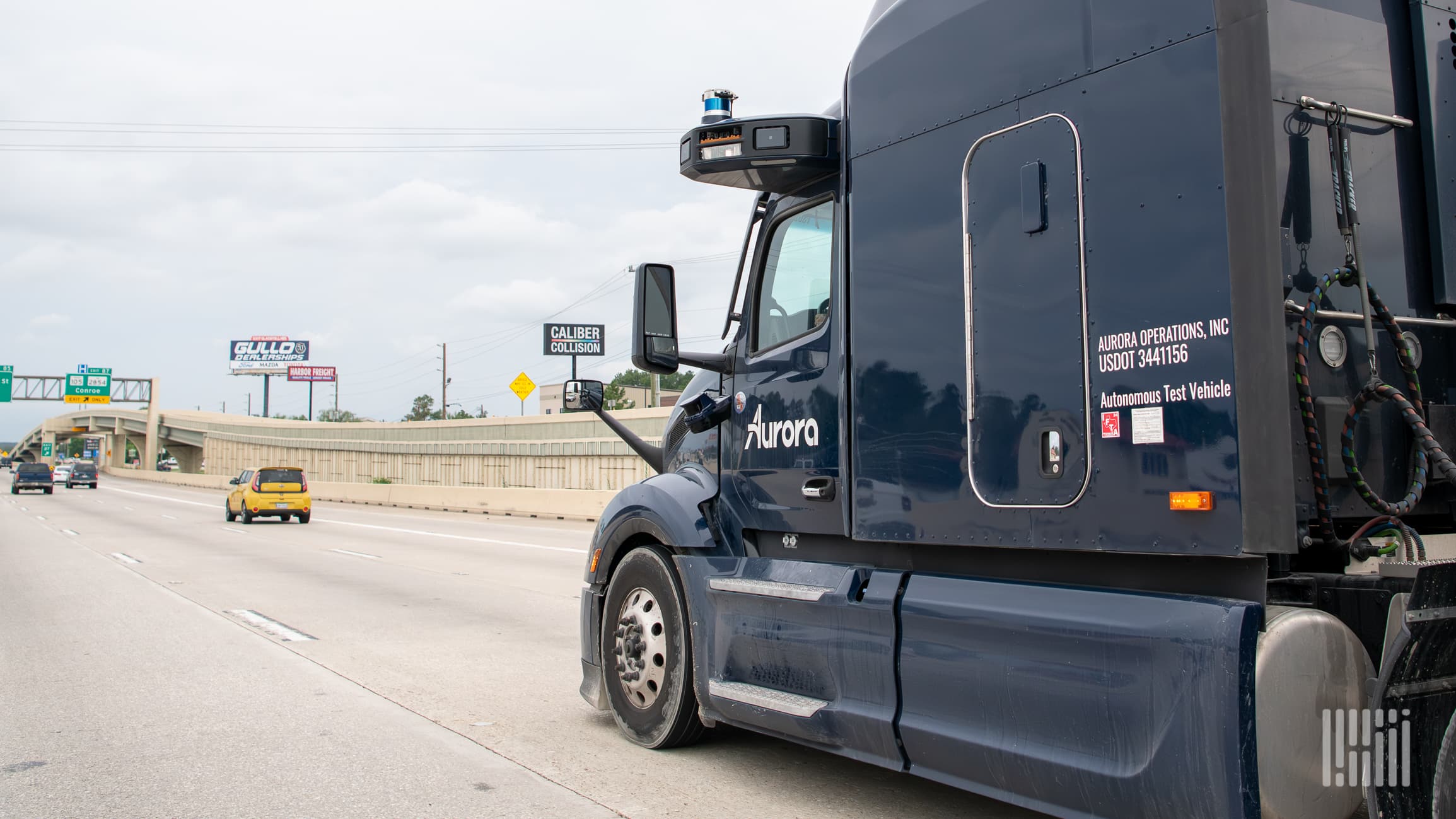
This article is not an argument for or against autonomous trucks. It is not a prediction about what the freight market looks like in 2035, and it is not an endorsement of any technology company’s safety record or business model. It is a set of questions that the industry — carriers, drivers, regulators, first responders, […] The post Nobody Is Asking the Hard Questions About What Happens When an Autonomous Truck Breaks Down on the Highway at 2 AM. Let Us Start. appeared first on FreightWaves.
Source Lens
Industry Context
Useful background context, but lower-priority than direct platform, community, or operator intelligence.
Impact Level
medium
Use this briefing to decide whether your team needs an immediate workflow, policy, or reporting change.
Key Stat / Trigger
No single quantitative trigger surfaced in this report.
Focus on the operational implication, not just the headline.
Full Coverage
This article is not an argument for or against autonomous trucks. It is not a prediction about what the freight market looks like in 2035, and it is not an endorsement of any technology company’s safety record or business model.
It is a set of questions that the industry — carriers, drivers, regulators, first responders, and the public that shares the road with 80,000-pound vehicles — deserves honest answers to before the scale of this deployment outpaces the infrastructure designed to manage it. Those questions exist because something real is happening.
Aurora Innovation is running driverless Class 8 trucks commercially between Dallas and Houston. Kodiak Robotics is operating driverless trucks in the Permian Basin. Both companies have logged real commercial miles, reported real safety data, and announced scaling plans that extend to hundreds of trucks by the end of 2026 and thousands beyond that.
This is not a press release. It is operational. And the people who have spent careers behind the wheel of a truck, who understand what it actually takes to move freight safely across this country, deserve to have this conversation on their terms — not on the terms of a venture-backed company’s investor presentation.
What a Professional Driver Does That Nobody Is Talking About Start with the thing that gets left out of every autonomous trucking announcement: what a professional driver actually does for highway safety that has nothing to do with steering and braking. An experienced driver hears the tire that is losing pressure before the monitoring system registers it.
They feel the brake pulling to one side before the alignment is measurably off on any sensor. They smell an electrical component beginning to fail before it generates a fault code. They notice the shimmy at 65 miles per hour that the ECM has not translated into a diagnostic event.
They see the passenger car drifting in the next lane and recognize — before any algorithm has processed the trajectory — that the driver is asleep. That is not just intuition.
It is years of accumulated pattern recognition built through thousands of hours in a moving vehicle, learning what that specific truck sounds like on that specific road at that specific load weight. No autonomous system in commercial deployment today replicates that.
Not because the technology does not exist in theory — but because that kind of contextual, experiential awareness is what a professional brings to the job, and it is exactly what disappears when the cab is empty. This is not an argument that autonomous trucks cannot be safe.
It is an argument that replacing that layer of awareness requires deliberately engineering something to fill the gap — and the question of whether the industry has done that adequately at scale has not been answered. The data set is too small and too controlled to know yet.
The Maintenance Problem Nobody Has Solved at Scale When an autonomous truck breaks down, who figured out it was breaking down?
In a conventional truck, the answer is usually the driver — who noticed something was wrong before a sensor said so, pulled to a safe location with professional judgment about where and how, and then managed the situation with their presence, their training, and their physical ability to act. They placed the reflective triangles.
They flagged approaching traffic. They called for help and communicated the specific nature of the problem to whoever responded. The autonomous truck’s maintenance architecture works differently and requires things that the current infrastructure was not built to provide.
Sensor calibration becomes a scheduled safety event — a lidar unit operating at even minor degradation from road grime, insect accumulation, or moisture is making decisions about a world it cannot fully see, with no one in the cab to notice the picture is degrading.
Software updates — Aurora has pushed four major releases since April 2025 — change the operational behavior of the truck in ways that require validation before deployment, and at scale that validation process introduces risk that has no parallel in conventional trucking.
Redundant systems — the backup braking, the backup steering, the backup power — must be tested regularly because their failure mode is invisible until they are needed. The problem is that in a conventional truck, a driver who discovers the backup is failing has discovered it because the primary just failed.
The entire premise of the redundant architecture is that you find out in a shop, not on the highway. But testing redundant systems requires specialized technicians with specialized tools, working in hub facilities that do not yet exist along most of the routes these trucks will eventually need to run. The CDL workforce availability is documented and ongoing.
The shortage of technicians qualified to service autonomous sensor arrays, software-defined safety systems, and redundant electronic architectures does not yet exist — because the scale of demand
Original Source
This briefing is based on reporting from Freightwaves. Use the original post for full primary-source context.
Style
Audience