

UPS: Over two-thirds of US volume now handled by automated locations
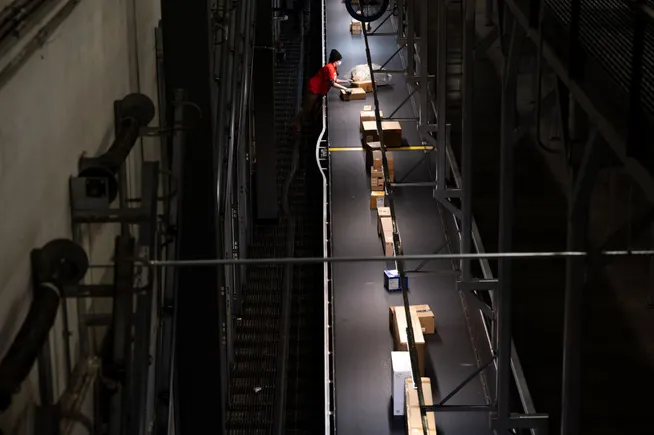
The carrier is increasing its use of automation in a bid to reduce package handling costs and more flexibly adjust capacity.
Source Lens
Industry Context
Useful background context, but lower-priority than direct platform, community, or operator intelligence.
Impact Level
medium
Use this briefing to decide whether your team needs an immediate workflow, policy, or reporting change.
Key Stat / Trigger
No single quantitative trigger surfaced in this report.
Focus on the operational implication, not just the headline.
Full Coverage
An article from Dive Brief UPS: Over two-thirds of US volume now handled by automated locations The carrier is increasing its use of automation in a bid to reduce package handling costs and more flexibly adjust capacity.
Published July 30, 2026 Max Garland Lead Reporter Share Copy link Email / Print License Add us on Google An employee removes packages from a moving conveyor belt in a loading area of the UPS Centennial Ground Hub on Dec. 6, 2021, in Louisville, Kentucky. A larger share of UPS' U. S.
volume flowed through automated buildings in Q2 as the carrier pursued cost reductions. Jon Cherry via Getty Images Listen to the article 2 min This audio is auto-generated. Please let us know if you have feedback. Dive Brief: UPS is leaning more on automated facilities to handle U. S. volume, CEO Carol Tomé said on an earnings call Tuesday.
At the end of Q2, 68. 5% of U. S. volume flowed through buildings equipped with automation, up from 64% a year ago, Tomé said. That increase equates to 337 million more packages being handled with automation, resulting in more savings for UPS, she added.
"We know that the cost per piece in an automated building is about 28% lower than a non-automated building," Tomé said. "So that gives us confidence in the productivity that we should continue to deliver going forward." Dive Insight: Over the past several years, UPS has been making steady progress toward a more automated U. S.
network that is less reliant on manual labor to move and sort packages. Examples of automated technology UPS has deployed include trailer unloading systems and vehicles that can move irregularly sized shipments through facilities. The carrier's automation push hasn't slowed down this year.
Tomé said in a January earnings call that UPS would introduce 24 more automated buildings to its network in 2026, adding onto its existing roster of 127 buildings.
The recent automation progress comes just as UPS has wrapped up its Amazon delivery reduction initiative, reducing its average daily volume delivered for the e-commerce giant by about 2 million packages since the undertaking kicked off in 2025. Tomé said on Tuesday's call that the now-removed Amazon volume was "lower quality," adding that UPS' U. S.
network is now reconfigured and further automated for more lucrative business. "We now have a leaner, more automated, more agile network that will deliver operating leverage as volume grows," Tomé said. Automated hubs allow UPS to adjust capacity more flexibly than it can with conventional facilities, EVP and CFO Brian Dykes said on the call.
The carrier has been slimming down its capacity to match the Amazon volume reduction and reduce operational costs, a strategy that has led to tens of thousands of job cuts.
"We will have eliminated 50 million hours through the course of last year and this year, nearly 78,000 operational positions that were associated with that volume, and we'll close nearly 150 buildings," Dykes said. Recommended Reading UPS’ Amazon volume cuts are nearly done. What’s next?
By Max Garland • April 28, 2026 Add us on Google Share Copy link Email / Print License Filed Under: Technology, Logistics, Last-Mile Delivery
Original Source
This briefing is based on reporting from Supply Chain Dive. Use the original post for full primary-source context.
Style
Audience