New California law clouds Trump-backed Oakland coal export terminal project
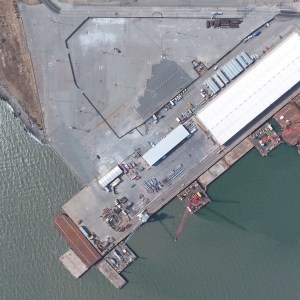
California Gov. Newsom signed AB 40 requiring a new CEQA environmental review for the proposed West Gateway coal export terminal in Oakland, which would handle up to 12M metric tons annually. The law adds regulatory delay to a $430M–$625M project backed by $75M in federal funds targeting Asian coal export markets.
This is a domestic energy infrastructure and environmental policy story. It touches West Coast port capacity only tangentially and has no near-term relevance to ecommerce supply chains or marketplace operations.
This has zero direct impact on marketplace sellers — it's an infrastructure/energy policy story with no connection to ecommerce fees, fulfillment, advertising, or platform operations. No action needed.
Operational Impact
This story may require teams to revisit workflows, monitoring, or platform assumptions.
Bottom Line
Coal terminal regulatory fight has no impact on marketplace sellers.
Source Lens
Industry Context
Useful background context, but lower-priority than direct platform, community, or operator intelligence.
Impact Level
medium
Coal terminal regulatory fight has no impact on marketplace sellers.
Key Stat / Trigger
$75M federal grant awarded June 2025 toward a $430M–$625M coal terminal
Focus on the operational implication, not just the headline.
Full Coverage
A proposed coal export terminal at the former Oakland Army Base faces a new regulatory hurdle after California Gov. Gavin Newsom signed legislation requiring a fresh environmental review, complicating a project that has regained momentum with federal backing and prospective Utah financing.
The planned West Gateway Terminal would be developed at the Oakland Bulk and Oversized Terminal near the foot of the Bay Bridge. If completed as currently envisioned, it would receive coal by rail from interior Western states, store it at the waterfront site and load it onto vessels for Asian markets.
Published reports said that project documents reviewed by prospective investors indicate potential throughput of up to 12 million metric tons annually, or about 13. 2 million short tons, enough to make it the largest coal export facility on the U. S. West Coast.
For Oakland, which has seen import container volumes move away to bigger Southern California and Canadian hubs, the terminal would represent a major shift at a waterfront site originally positioned for broader bulk and oversized cargo development.
For Western coal producers, it could provide a rare potential outlet to Pacific export markets at a time when several West Coast coal-handling options have faced local opposition or plans to phase out the commodity. Federal backing, Utah interest window. googletag = window. googletag || {cmd: []}; googletag. cmd. push(function() {var gptSlot = googletag.
defineSlot('/21776187881/FW-Responsive-Main_Content-Slot1', [[300, 100], [320, 50], [728, 90], [468, 60]], 'div-gpt-ad-1709668545404-0'). defineSizeMapping(gptSizeMaps. banner1). addService(googletag. pubads()); googletag. pubads(). enableSingleRequest(); googletag. pubads(). collapseEmptyDivs(); googletag. enableServices(); setInterval(function() {if (!
document. hidden) {googletag. pubads(). refresh([gptSlot]); } }, 30000); }); googletag. cmd. push(function() {googletag. display('div-gpt-ad-1709668545404-0'); }); The project is part of a broader Trump administration effort to support U. S. coal production and exports.
In June, the administration announced $75 million for the Oakland terminal within a nearly $700 million coal-sector package, while the Energy Department has described the terminal as export infrastructure that could support Western coal producers and overseas demand. The federal grant would cover only part of the investment.
The Energy Department has estimated the facility’s cost at about $231 million, but a feasibility report prepared for a coalition of Utah counties put the likely cost in a much wider range of $430 million to $625 million.
That same report estimated a 53-month construction and start-up schedule, a timetable that could put initial exports later than a previously projected 2028 opening. Utah’s Rural Utah Infrastructure Coalition, representing eight counties, has asked the state’s Permanent Community Impact Fund Board to consider investing about $45 million in the project.
The coalition sees a Pacific export outlet as important for accessing Asian buyers as domestic coal demand contracts and Western coal mines seek new markets. The board was expected to consider funding at an October meeting. Potential export destinations cited in project-related reporting include Japan, South Korea, Taiwan, Vietnam and Malaysia.
The facility could handle coal from Utah as well as Powder River Basin mines in Wyoming and Montana. New environmental review requirement Newsom’s signing of Assembly Bill 40 changes the project’s regulatory outlook.
The law requires a California Environmental Quality Act review for new coal projects, or existing facilities proposing to export more than 5 million tons of coal annually. The threshold would cover the proposed West Gateway operation at its contemplated scale.
The legislation was sponsored by Assemblymember Mia Bonta, D-Alameda, amid concerns that the project’s likely operations differ substantially from earlier expectations. window. googletag = window. googletag || {cmd: []}; googletag. cmd. push(function() {var gptSlot = googletag.
defineSlot('/21776187881/fw-responsive-main_content-slot3', [[728, 90], [468, 60], [320, 50], [300, 100]], 'div-gpt-ad-1665767553440-0'). defineSizeMapping(gptSizeMaps. banner1). addService(googletag. pubads()); googletag. pubads(). enableSingleRequest(); googletag. pubads(). collapseEmptyDivs(); googletag. enableServices(); setInterval(function() {if (!
document. hidden) {googletag. pubads(). refresh([gptSlot]); } }, 30000); }); googletag. cmd. push(function() {googletag. display('div-gpt-ad-1665767553440-0'); }); The terminal’s long legal history included Oakland’s 2016 ban on coal storage and handling, which developers challenged in federal court.
A judge in 2018 ruled that the city could not apply the restriction to the planned terminal under its development agreement, and the California Supreme Court’s decision not to take up Oakland’s later appeal effectively cleared a major legal obstacle in 2025. AB 40 does not necessar
No action required — this article has no bearing on Amazon, Walmart, or Target seller operations, fees, or workflows.
Skip monitoring this story unless you sell coal-related industrial equipment and ship to APAC markets via West Coast ports.
Original Source
This briefing is based on reporting from Freightwaves. Use the original post for full primary-source context.
Style
Audience