Walmart Return Policy for Online Sellers: What the Rules Actually Mean for Your Account
Most sellers don’t fully understand the Walmart return policy until it costs them something. A surprise auto-refund, a January return surge that wipes out the Q4 margin, or a listing suppressed because the negative feedback rate crossed 2%, any of these can hit before a seller even realizes what triggered them. Anything can cause a… The post Walmart Return Policy for Online Sellers: What the Rules Actually Mean for Your Account appeared first on SellerApp Blog.
Source Lens
Industry Context
Useful background context, but lower-priority than direct platform, community, or operator intelligence.
Impact Level
medium
Use this briefing to decide whether your team needs an immediate workflow, policy, or reporting change.
Key Stat / Trigger
No single quantitative trigger surfaced in this report.
Focus on the operational implication, not just the headline.
Full Coverage
Most sellers don’t fully understand the Walmart return policy until it costs them something. A surprise auto-refund, a January return surge that wipes out the Q4 margin, or a listing suppressed because the negative feedback rate crossed 2%, any of these can hit before a seller even realizes what triggered them.
Anything can cause a return for your products, and understanding the return policy at Walmart becomes essential. The Walmart return policy is not unfair for sellers. It rewards sellers whose listings, fulfillment, and customer experience are already aligned with what shoppers expect.
Once you understand that, you stop fighting the policy and start building around it. In this guide, we’ll deep dive into how Walmart’s return policy actually works, where cost exposure sits, when automation kicks in before you can intervene, and which policy details most sellers misread.
Quick Guide How the return policy in Walmart works for Customers Walmart Return Policy Windows by Category Marketplace Seller Return Policy at Walmart How to Reduce Returns As a Seller Before They Happen Walmart Return Policy: Methods and Timelines Final Thoughts How the return policy in Walmart works for Customers Before getting into what Walmart requires of sellers, it’s worth understanding what the return experience looks like from the customer’s side.
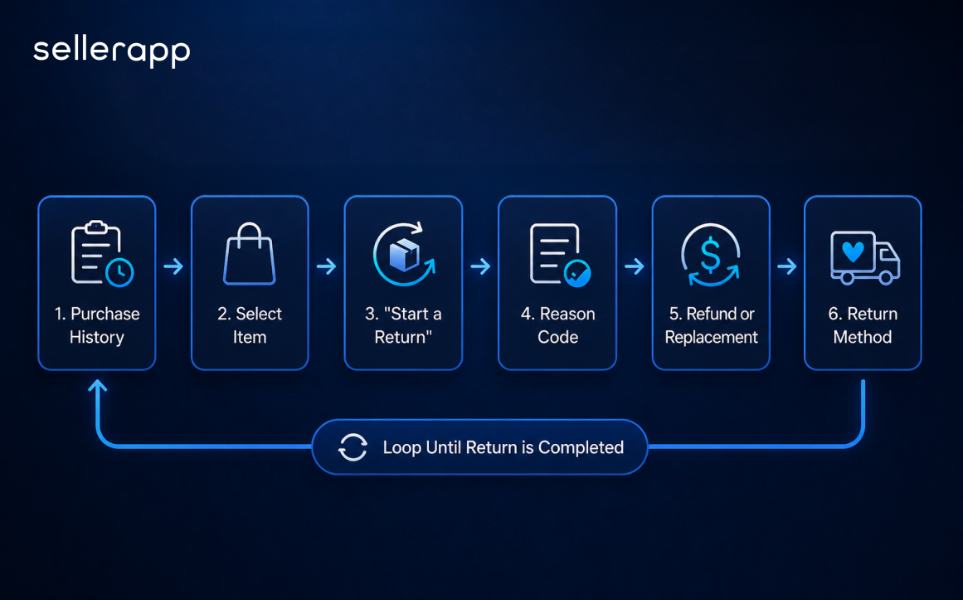
Every return starts with a decision the buyer makes in about 10 seconds, and that decision has direct financial consequences for your account. How a buyer initiates a return For the Customer, the return process is fairly simple. They will follow the steps below: How a buyer initiates a return The reason buyers select it determines who pays return shipping.
“Not as described” is always one click away, regardless of what actually happened. Your listing quality is directly connected to how often that option gets selected. How does the Walmart online return policy work for sellers?
Under the Walmart online return policy, most customers can mail the item back using a prepaid label, drop it at any Walmart store, use curbside drop-off via the app, or schedule a home pickup as a Walmart+ member. For Marketplace sellers, the in-store drop-off route creates the most operational blind spots.
When a customer walks your product into a Walmart store, the item routes through Walmart’s system before it ever reaches your returns center. That processing lag adds time you need to account for, especially when you’re operating under a 48-hour refund clock.
The Walmart + “Return from Home” perk for customers Walmart+ members can now schedule a return pickup directly from home. This indicates they don’t have to visit the store in person to return an item. The customer initiates, schedules, and hands off the item entirely from their phone.
As Walmart+ membership grows, returns will move faster, and you’ll have less time to flag issues before a refund is triggered. If your current return center operations assume a 3-5 day window before an item arrives, that assumption needs to be revisited.
Walmart Return Policy Windows by Category The real question sellers should ask is, “When exactly does the clock start?” for Walmart’s return policy. Here are the standard windows: Walmart Return Policy Windows by Category Most sellers read these windows and feel comfortable. Then they get a return on day 36 for an electronics order and wonder what happened.
The return policy at Walmart begins 7 days after the ship date, not the order date or the delivery scan, but the ship date. That 30-day electronics window is actually 37 days from the purchase date. The 14-day phone window is 21 days from the order date. On high-velocity SKUs, that difference has real inventory and reserve implications.
The holiday extension is most misunderstood Items purchased October 1 through December 31 are generally returnable until January 31. If you’re seller-fulfilled, the holiday extension is not automatic check your settings. If you’re on WFS, Walmart applies it on your behalf.
For short-window categories like electronics and phones, the return clock doesn’t start until December 26 under the holiday extension. A phone purchased on November 1 can come back in January. A drone bought before Thanksgiving is still returnable after New Year’s. This isn’t just a Q4 planning problem; it’s a January cash flow problem.
Here’s how to prepare across three areas: • Cash flow: Expect a spike in refund outflows in January. If you’re seller-fulfilled, hold a reserve for return-processing costs. WFS sellers should account for restocking fees and “Return to Me” shipping charges on unsellable items.
• Ads: Don’t run aggressive spend on categories with high return rates in January without first auditing your return exposure from Q4. A return surge that wipes margin while you’re still spending on ads is a compounding loss. • Logistics: Your return center needs to be staffed and responsive in January, not winding down.
The 48-hour refund window doesn’t pause for th
Original Source
This briefing is based on reporting from SellerApp Blog. Use the original post for full primary-source context.
Style
Audience