How AWS is helping companies build physical AI machines that think
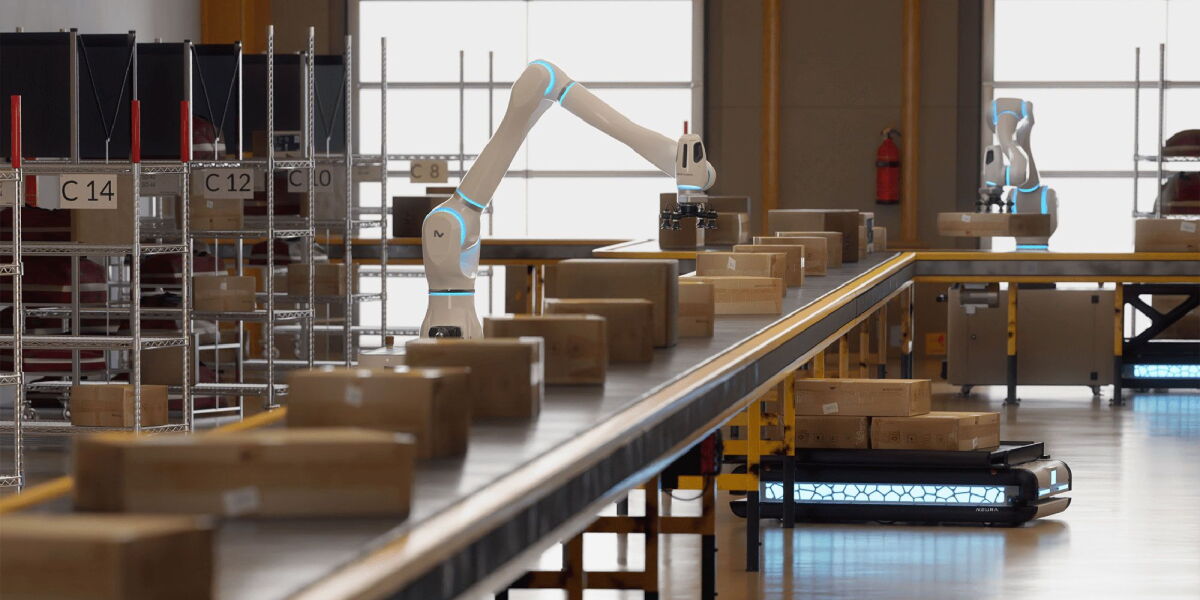
Amazon launched the Physical AI Toolchain on AWS, an open-source stack built with NVIDIA to help manufacturers deploy robots and autonomous machines faster. Targets industrial automation, humanoid robotics, and autonomous mobility — not marketplace sellers.
Amazon is compressing its own fulfillment costs through physical AI, which historically leads to margin pressure on sellers as Amazon's cost advantage widens and competitive bar rises.
Long-term, this accelerates warehouse automation that will reshape Amazon's fulfillment costs and labor model, but the seller impact is 2-5 years out. No action needed today — file this under 'watch for fulfillment SLA changes as robotics scale.'
Operational Impact
This story may require teams to revisit workflows, monitoring, or platform assumptions.
Bottom Line
AWS robotics toolchain is engineer news, not seller news — yet.
Source Lens
Official Platform Update
Direct platform communication. Highest-value for policy, product, and operational changes.
Impact Level
low
AWS robotics toolchain is engineer news, not seller news — yet.
Key Stat / Trigger
1 in 7 startups globally now building physical AI
Focus on the operational implication, not just the headline.
Full Coverage
Key takeaways The Physical AI Toolchain on AWS is an open-source stack for building intelligent machines. Built on AWS using NVIDIA’s physical AI stack and inspired by Amazon’s robotics expertise. Purpose-built for industrial automation, autonomous mobility, and humanoid robotics.
The next wave of AI is moving beyond the screen and into the physical world, onto factory floors, into warehouses, and on roads. Physical AI is one of the fastest-growing frontiers in technology, and the companies building it need infrastructure that can keep up.
Unlike traditional AI, which processes data and generates text on screens, physical AI enables machines to perceive, understand, and act in the real world.
Where conventional machines follow fixed instructions and repeat the same task regardless of what's happening around them, physically intelligent machines sense their environment, reason using cloud-trained AI models, and adapt in real time.
Operational data flows back to continuously retrain and improve those models, so the machines get smarter with every cycle. AWS and NVIDIA expand partnership for next-gen AI infrastructure AWS and NVIDIA will deploy 2 million additional GPUs and deepen collaboration across CPUs, networking, and robotics.
But physical AI is not a single problem with a single solution. The use cases range from machines that work alongside people on production lines to humanoid robots and systems that inspect, move, and manage materials on their own. No two require the same combination of data, models, or hardware.
That's why Amazon built the Physical AI Toolchain on AWS, an open-source solution that brings together architecture guidance, deployment automation, and ready-to-use code. Integrated with the NVIDIA Physical AI stack, it covers the complete physical AI development lifecycle.
“Physical AI is going to touch every industry that moves, builds, or makes things, and our customers are moving fast to capture that opportunity,” said Uwem Ukpong, vice president, AWS Industries. “We built the Physical AI Toolchain on AWS because customers told us that too much of their engineering effort was going to infrastructure instead of innovation.
We want to flip that.” Physical AI: teaching machines to understand and act in the real world The applications span nearly every industry where machines interact with the physical world, and the momentum is building.
According to the recent Global Startup Trends Report on physical AI, one in seven startups globally is now building physical AI, with 72% of builders saying cloud computing is essential to their systems. That activity is part of a broader wave of physical AI development happening across industries, and a growing number of companies are building on AWS.
NEURA Robotics is developing cognitive humanoid robots that can see, hear, and learn from experience, with the goal of bringing millions of intelligent robots to market by 2030. RLWRLD is tackling one of the hardest problems in physical AI–dexterous manipulation–building an 8.
1-billion-parameter foundation model that gives robotic hands the ability to grasp, rotate, and handle objects with human-like precision across factory and service environments. And Config has built a data pipeline capturing more than 200,000 hours of robot action data.
The company uses generative AI to multiply that data into the diverse training scenarios machines need to operate reliably in unpredictable real-world conditions.
4NE1, NEURA Robotics' humanoid robot on automotive assembly line “In Physical AI, speed is everything: how fast you can fine-tune models, deploy them into the real world and scale from individual systems to large fleets,” said David Reger, founder and CEO of NEURA Robotics. “The Physical AI Toolchain on AWS helps us accelerate exactly that cycle.
By combining NEURA’s Physical AI stack with AWS’s experience in large-scale infrastructure and deployment, we can move much faster from learning to real-world deployment and ultimately scale Physical AI globally.”
Manufacturers of industrial equipment can use physical AI to build collaborative robot arms that adapt to new assembly tasks without reprogramming. Companies developing autonomous robots can train them to handle new parts and tasks with increasing precision. Automakers can accelerate development of in-vehicle and in-plant robotics capabilities.
And smart factory operators can deploy systems that monitor, predict, and optimize production in real time. By deploying physical AI within their own operations, using intelligent machines and autonomous systems, manufacturers can increase throughput, reduce downtime, and improve quality on their factory floors.
On top of that, each machine generates operational data that improves the models powering the entire fleet, so the hundredth deployment is dramatically smarter than the first. Some companies will be able to embed that same intelligence into the products they sell, turning fixed-capability hardw
No immediate action: this is infrastructure tooling for robotics engineers, not a seller-facing change — skip unless you manufacture industrial equipment sold on B2B marketplaces.
Monitor Amazon fulfillment capacity announcements over the next 12 months — accelerated robotics deployment could shift FBA storage limits or same-day delivery coverage.
Original Source
This briefing is based on reporting from About Amazon. Use the original post for full primary-source context.
Style
Audience