New parcel surcharge helps Postal Service reach $20B in revenue
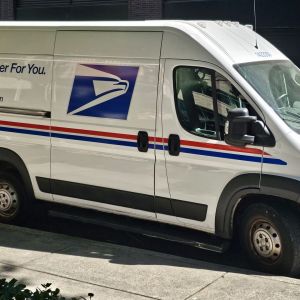
The U.S. Postal Service lost $2.5 billion in the fiscal third quarter, but revenues were up thanks to a new fee on parcel shipments and higher stamp prices. The post New parcel surcharge helps Postal Service reach $20B in revenue appeared first on FreightWaves.
Source Lens
Industry Context
Useful background context, but lower-priority than direct platform, community, or operator intelligence.
Impact Level
medium
Use this briefing to decide whether your team needs an immediate workflow, policy, or reporting change.
Key Stat / Trigger
No single quantitative trigger surfaced in this report.
Focus on the operational implication, not just the headline.
Full Coverage
Postal Service on Friday said a parcel surcharge implemented in April to cover rising fuel and transportation costs and higher stamp prices helped boost overall revenue to nearly $20 billion for the fiscal third quarter as it continues to manage through a cash crisis, with Postmaster General David Steiner criticizing regulators for recently limiting more frequent price hikes aimed at restoring the organization’s financial viability.
The national postal operator reduced its net loss year over year by 18. 2%, or $584 million, to $2. 5 billion. The controllable loss, which excludes mandated obligations outside management’s control, was $1. 04 billion. Operating revenue for the three months ended June 30 was $19. 9 billion, up 6. 1%, compared to the same period last year.
The Postal Service attributed the gains to increases in stamp prices for First-Class and marketing mail and the new parcel fees, which are set to expire on Jan. 17. The increases were partially offset by declining mail and package volumes.
Postmaster General David Steiner also credited the better result to higher operating revenues, network optimization that has improved service while eliminating 4 million work hours, and a decrease in workers’ compensation, even as overall costs increased.
But postal officials acknowledge that Delivering for America, the 10-year strategic plan for modernizing and revitalizing the Postal Service, has not met service or financial targets at the midway point, while noting that service quality has picked up since Steiner took the helm last summer.
The integration of distribution centers, technology and equipment, for example, is occurring without glitches that occurred in the past, he added.
(Why It Matters: If the national mail carrier can’t repair its finances taxpayers might be asked to subsidize operations or face reduced service levels, and since the agency competes against private parcel carriers its business plan is important to follow.)
Despite progress on costs it can control and revenue, the agency is still handcuffed by structural challenges, such as having to invest retirement funds exclusively in U. S. Treasury notes.
Cash-conservation measures, such as deferring payments to employee pension and retirement funds, have given the Postal Service sufficient liquidity to continue operating normally through at least August 2027.
After that, the Postal Service will have to start making hard decisions about what activities to prioritize unless Congress provides some relief, Steiner said. The statement seems to backtrack from testimony to Congress in June, when he said the liquidity cliff had been pushed to 2031.
Steiner reiterated Friday that the quasi-public agency needs legislative and regulatory reforms that give the agency freedom to operate like a private enterprise and shed onerous statutory obligations for managing pension and retirement funds. The mandate for universal mail coverage is a major structural impediment.
Mail volumes have declined more than 50% since 2007 as the number of delivery points continues to grow. Last year, the USPS added 1. 8 million new stops to its route network — adding to delivery costs. The extra workload, combined with lower mail volume, has resulted in a drop in the average number of pieces delivered per stop from 5. 5 in 2007 to 2.
4 pieces in 2025. Steiner called on Congress to provide temporary investments and eliminate unfunded mandates so it can maintain current service levels.
If Congress doesn’t want to help the Postal Service grow then it will have to consider reducing service levels and closing thousands of post offices, as well as raising prices, to break even, the postal chief said.
“The bottom line is that we need to fix the business model that has produced the 17-year-long imbalance in costs and revenue,” Steiner said, later adding, “As we reduce costs and improve revenue, we believe we will become more profitable, and the appropriation could be reduced.”
Steiner said the Postal Regulatory Commission’s decision to limit price increases to once a year cost the Postal Service $700 million in lost revenue. The organization recently filed a request to raise stamp rates in January using a different methodology it says will raise more money.
Steiner has made it a priority to improve revenues, including through more aggressive pricing on letters and bulk mail. “Use of our pricing authority is absolutely necessary to improve our financial sustainability and we need to be given more flexibility if we are expected to cover our costs,” he said.
“Obviously, we would like to both grow volumes and grow revenue, but if we can only do one, we want to do it in a way that maximizes total revenue. That is what all companies do — from airlines to grocery stores, they apply revenue management principles to maximize profitability.
Thus far, applying those basic principles has favored raising prices even though there has been a modest decrease in volumes. “All of the statistics an
Original Source
This briefing is based on reporting from Freightwaves. Use the original post for full primary-source context.
Style
Audience