Dave’s Killer Bread is building a bigger strategy around seasonal products, starting with pumpkin spice bagels
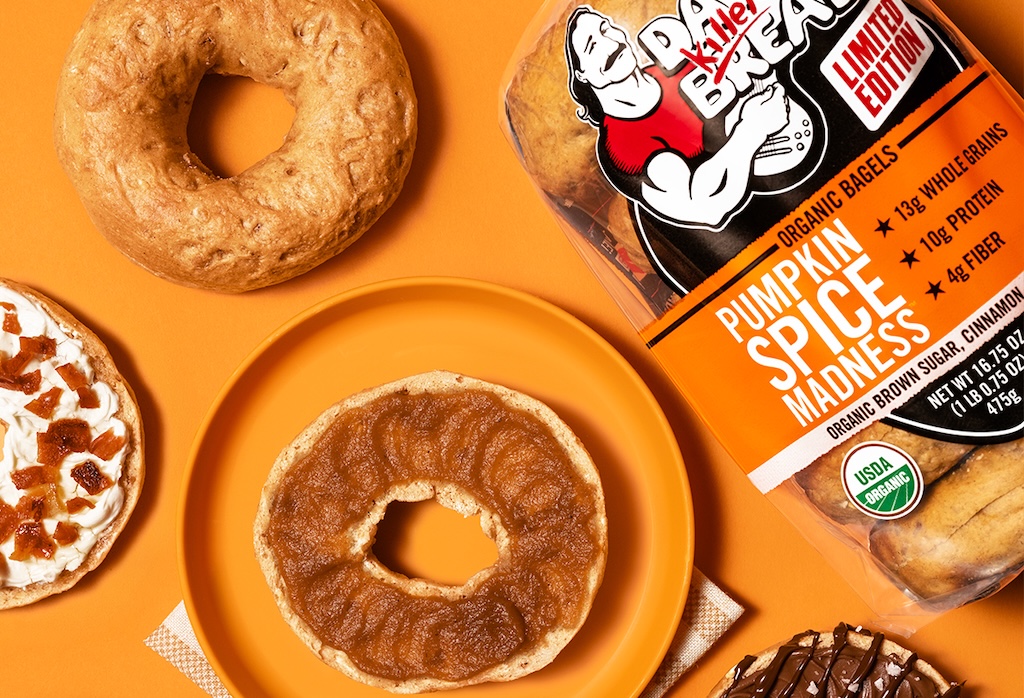
Dave's Killer Bread relaunches pumpkin spice bagels in 15,000 doors at Kroger, Albertsons, HEB, Target, and Walmart through November 2026, anchoring a year-round seasonal LTO rotation strategy. The move signals grocers are actively carving out dedicated seasonal shelf slots even in historically static categories like bread.
This reflects broader retailer pressure to drive foot traffic and basket size through newness, accelerating the shift where shelf space is allocated to brands with programmatic seasonal strategies rather than static SKU assortments — compressing opportunities for smaller brands without R&D pipelines.
Retailers are now demanding year-round seasonal rotations to justify dedicated shelf space — meaning LTO velocity windows are shrinking and brands without a 4-season pipeline will lose that slot. Private label and challenger brands on Walmart and Target shelves should audit their seasonal SKU calendar now or risk losing facings to brands like DKB that have locked in rotational commitments.
Operational Impact
This story may require teams to revisit workflows, monitoring, or platform assumptions.
Bottom Line
Retailers want year-round LTO rotations — brands without a seasonal pipeline lose shelf space.
Source Lens
Industry Context
Useful background context, but lower-priority than direct platform, community, or operator intelligence.
Impact Level
low
Retailers want year-round LTO rotations — brands without a seasonal pipeline lose shelf space.
Key Stat / Trigger
15,000 doors nationwide across Kroger, Albertsons, HEB, Target, and Walmart
Focus on the operational implication, not just the headline.
Full Coverage
CPG Playbook // September 22, 2026 Dave’s Killer Bread is building a bigger strategy around seasonal products, starting with pumpkin spice bagels By Gabriela Barkho Dave's Killer Bread Dave’s Killer Bread is one of the many food brands jumping on the pumpkin spice train this fall.
The brand, known for breads with high whole-grain content, is bringing back its popular “Pumpkin Spice Madness” bagels after discontinuing them seven years ago. But it’s also part of the brand’s quest to build out a broader offering of seasonal items, as retailers increasingly demand them.
This time around, the seasonal bagels will be available nationwide; previously, the pumpkin spice bagels had only been sold regionally before being discontinued in 2017. The pumpkin spice bagels are available now through November in 15,000 doors nationwide, including in Kroger, Albertsons/Safeway, HEB, Target and Walmart.
Cristina Watson, senior director of brand management for Dave’s Killer Bread, said the brand wants to bring more newness to a fairly stagnant category. “Bread is not like coffee creamers or yogurts or cookies or even alcohol, where you see pumpkin spice beer,” she said. “So these flavors help add a little bit of fun to an otherwise pretty boring category.”
The Pumpkin Spice Madness bagels are made with whole grains and flavored with brown sugar, cinnamon and nutmeg. The recipe also boasts 10 grams of protein and four grams of fiber per serving.
When Dave’s Killer Bread initially launched its pumpkin spice bagel, Watson said the brand was still getting its bearings under new management (Dave’s Killer Bread was acquired by Flowers Foods in 2015) and was starting to diversify its product offerings beyond traditional bread recipes.
But the LTO model posed challenges for the company when compared to other categories. In bread, more shelf space is dedicated to year-round core varieties than to, say, candy or coffee creamer, where there is more room for seasonal offerings.
So, if Dave’s Killer Bread wanted to bring back its pumpkin spice bagels, it had to develop a larger plan around what other seasonal products could occupy that shelf space during other parts of the year. “We couldn’t have a space on the shelf dedicated to us for just four months,” Watson said.
That’s what led to Dave’s Killer Bread bringing back the Pumpkin Spice Madness bagels this year, while simultaneously building out a year-round rotational program for retail shelves. “ Our R&D team originally tried probably a dozen different wild and crazy bagel flavors,” Watson said, including peppermint mocha and hot chocolate bagel.
“And the pumpkin spice rose to the top immediately.” Other seasonal flavors now include Summer Berry, which launched in April and ran until the pumpkin spice launched earlier this month. “Then we have another flavor that will come out replacing pumpkin spice, which is a savory flavor,” Watson said.
“It felt like a natural fit to offer our consumers a really delicious flavor to start their day.” Another factor that led Dave’s Killer Bread to bring back the flavor was rising demand for the brand’s bagels. Internal consumer surveys showed that one in three customers preferred bagels as a breakfast food.
“Our bagels have continued to grow year-over-year, partially because they are a product that offers a higher whole-grain count, protein count and fiber count, all that kind of stuff,” Watson said.
Watson said that in bringing back the pumpkin spice bagels, Dave’s Killer Bread “made a couple of formula updates or recipe updates just to kind of ratchet up the kind of fall flavors a little bit more.” “For example, we have brown sugar in it this time around,” said Watson. “So they make your whole pantry smell good.”
Watson said newness and limited editions have become a central component of many grocers’ merchandising strategies, especially in the past five or so years as online grocery shopping has dramatically increased. “Retailers are having to compete more than ever with each other to offer unique products,” she said.
As such, Watson said retail buyers are trying to make sure that consumers “have a really fun experience” in their stores and can find new and exciting things throughout the year. “It is a balance of supporting our LTO items that are the fun new shiny object, along with our everyday items that make up the bulk of our portfolio and sales,” Watson said.
Check your Walmart Supplier Center or Target Partners portal for seasonal reset deadlines — if you're not submitted 16-20 weeks out for spring 2027, you're already behind on shelf placement bids.
Build a 4-season LTO SKU roadmap in the next 30 days; pitch it to buyers as a rotational program, not a one-off, to secure a dedicated shelf position rather than competing for endcap space.
Original Source
This briefing is based on reporting from Modern Retail. Use the original post for full primary-source context.
Style
Audience