China growth straining global auto shipping capacity: Liner CEO
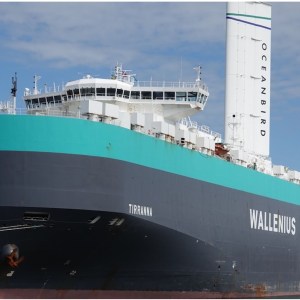
Surging Chinese vehicle exports are continuing to drive a global shortage of pure car and truck carriers, a leading CEO says. The post China growth straining global auto shipping capacity: Liner CEO appeared first on FreightWaves.
Source Lens
Industry Context
Useful background context, but lower-priority than direct platform, community, or operator intelligence.
Impact Level
medium
Use this briefing to decide whether your team needs an immediate workflow, policy, or reporting change.
Key Stat / Trigger
No single quantitative trigger surfaced in this report.
Focus on the operational implication, not just the headline.
Full Coverage
There’s a capacity pinch in the specialized world of ocean-going vehicle shipping. Wallenius Wilhelmsen Chief Executive Lasse Kristoffersen said surging Chinese vehicle exports are sustaining a shortage of specialized car-carrier capacity, even as new pure car and truck carriers (PCTC) enter service.
Speaking during the company’s second-quarter earnings presentation, Kristoffersen said market-leading Wallenius Wilhelmsen’s fleet departing Asia was fully booked and that the company had to prioritize customers because demand exceeded available space.
He explained that the strength of Chinese EV automotive exports reflects improving product competitiveness rather than a temporary effort to clear excess inventory. Chinese vehicle exports exceeded 1 million units in both June and July, implying an annualized pace of more than 12 million vehicles, Kristoffersen said.
That compares with fewer than 1 million Chinese vehicle exports before the Covid-19 pandemic, emphasizing the scale of the country’s emergence as an auto-exporting power. “It used to be a cheap product.
Now it is a preferred product,” Kristoffersen said, describing Chinese-made vehicles as increasingly competitive on technology, functionality, quality, design and price. He said Oslo-based Wallenius Wilhelmsen (OTC: WILWY)) has found no indication that Chinese automakers are simply flooding overseas markets with unsold inventory.
The carrier reviewed vehicle-registration data and activity at its own inland facilities and did not see evidence of mounting stockpiles, he said. A large volume of Chinese vehicle exports is still moving outside the traditional roll-on/roll-off shipping market because car-carrier capacity is unavailable, Kristoffersen said.
He estimated that 2 million to 4 million vehicles annually are being shipped in containers or through other alternatives, with the actual figure probably closer to the high end of that range. That volume represents potential demand for PCTC operators if additional ships become available.
Fleet growth may lag demand The PCTC orderbook stands at roughly 20% to 21% of the existing global fleet, but Kristoffersen said that headline figure overstates the immediate supply response. Shipyard capacity is largely committed through 2029, he said, meaning vessels ordered now generally would not be delivered until 2030 or later.
At the same time, the global fleet faces potential retirements as older vessels approach 30 years of age. Kristoffersen said fleet scrapping could offset deliveries in the latter part of the decade, potentially limiting net capacity growth. The tight market drove a sharp increase in China-linked spot and charter rates during the second quarter.
Kristoffersen said China spot freight rates and time-charter rates increased by about 80% during the quarter and had likely doubled from their first-quarter lows by the time of the earnings call. For Wallenius Wilhelmsen, higher freight rates support revenue, while higher charter rates can raise operating costs.
Kristoffersen said the company has relatively limited near-term exposure to charter-market increases. Wallenius Wilhelmsen reported adjusted earnings before interest, taxes, depreciation and amortization (EBITDA) of $361 million for the second quarter, down 7% from the prior quarter.
The company attributed much of the decline to higher bunker-fuel costs, which it expects to recover over time through bunker-adjustment mechanisms in customer contracts. The company maintained its forecast for about $1.
6 billion in adjusted EBITDA for 2026 and announced a total first-half dividend of $258 million, including a $100 million extraordinary distribution. Kristoffersen also said the company continues to avoid the Strait of Hormuz and has not resumed transits through the Bab el-Mandeb and Red Sea, reflecting ongoing security concerns in the region.
Why it matters: Wallenius Wilhelmsen’s view is that the car-carrier market will remain constrained not only by vessel availability, but by a fundamental shift in global auto trade. Read more articles by Stuart Chirls here. Read more: Zim profit rises on Q2 revenue of $1. 78 billion Green light for new U. S.
port that will handle 2 million containers a year Liners and Red Sea: Damn the Houthis, full speed ahead!
EXCLUSIVE: Americold’s Port Saint John bet stitching DP World and CPKC into one cold chain Customs to fight this growing trade fraud with AI ‘detective border’ The post China growth straining global auto shipping capacity: Liner CEO appeared first on FreightWaves.
Original Source
This briefing is based on reporting from Freightwaves. Use the original post for full primary-source context.
Style
Audience