

Your Insurance Renewal Is Going to Be Worse Than Last Year. Here Is Why — and What You Can Actually Do About It.
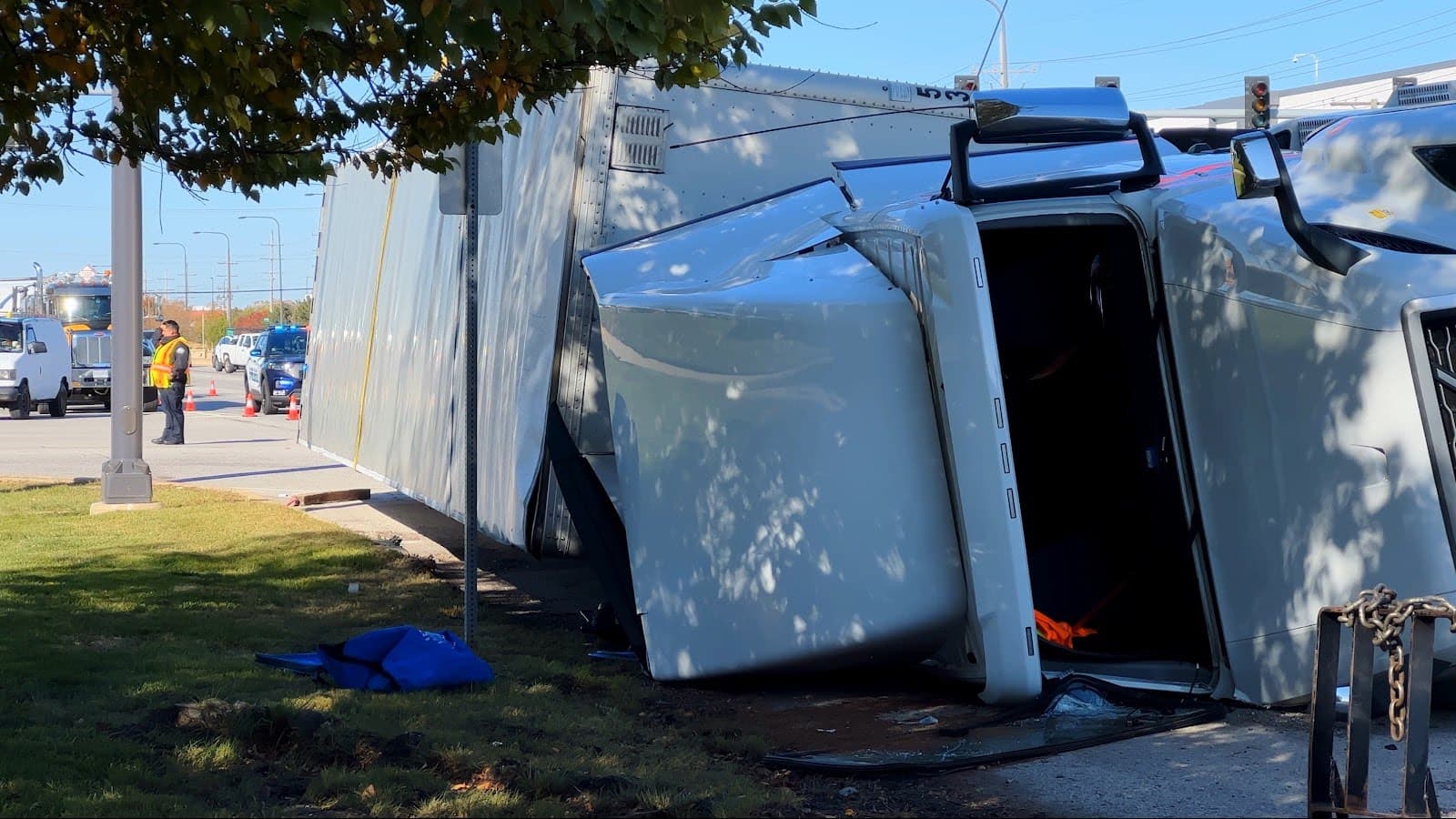
When the insurance renewal comes in higher than last year, most small carriers respond the same way: shop it, push back on the broker, maybe raise the deductible to get the premium down. That has been the playbook for a decade. It is increasingly not working — because the problem is not your specific loss […] The post Your Insurance Renewal Is Going to Be Worse Than Last Year. Here Is Why — and What You Can Actually Do About It. appeared first on FreightWaves.
Source Lens
Industry Context
Useful background context, but lower-priority than direct platform, community, or operator intelligence.
Impact Level
medium
Use this briefing to decide whether your team needs an immediate workflow, policy, or reporting change.
Key Stat / Trigger
No single quantitative trigger surfaced in this report.
Focus on the operational implication, not just the headline.
Full Coverage
When the insurance renewal comes in higher than last year, most small carriers respond the same way: shop it, push back on the broker, maybe raise the deductible to get the premium down. That has been the playbook for a decade. It is increasingly not working — because the problem is not your specific loss history.
It is the industry-wide loss environment that your insurance company is pricing you into regardless of how you operate. Commercial auto liability insurance has been unprofitable for insurers for 14 consecutive years according to Reliance Partners EVP Jackson Alexander. That is not a down cycle.
That is a structural reality that has produced consistent, sustained premium increases across the entire market, for carriers who have had zero claims as well as carriers who have had several.
The math for insurance companies does not work anymore at historical premium levels, and they are correcting that through premium increases, underwriting restrictions, and in some cases, exiting the trucking market entirely. The American Transportation Research Institute’s 2025 Operational Costs of Trucking report put insurance cost at a record $0.
102 per mile in 2024 — a number that followed a 12. 5% spike in 2023 and an additional 3% increase in 2024. For a truck running 120,000 miles per year, that is $12,240 in annual insurance cost per truck. Five trucks. Sixty thousand dollars per year in insurance before a single claim is filed. And the trend line points higher.
What Is Actually Driving the Increases The nuclear verdict numbers are the headline, but understanding what is behind them matters for how you respond operationally. In 2024, there were 135 nuclear verdicts against corporations exceeding $10 million — a 52% increase over 2023 — totaling $31.
3 billion, a 116% increase from the prior year according to Marathon Strategies. The median nuclear verdict climbed to $51 million, up from $44 million in 2023. Trucking is one of the hardest-hit industries in that data set. A St. Louis jury in 2024 delivered a $462 million verdict in a trucking accident case.
A Florida case produced a $125 million verdict against a small carrier — with no fatalities. These verdicts do not come from accidents alone. They come from the combination of accidents and the litigation strategy that plaintiff attorneys have refined specifically for trucking cases.
That strategy works in three phases: establishing that the carrier violated a regulation — any regulation, even a minor one — presenting that violation as evidence of systemic disregard for safety, and then framing the damage award as a punishment the jury needs to deliver to change industry behavior.
Anti-trucking messaging in media and entertainment has built the context that makes juries receptive to that framing. As Lockton’s Matthew Payne noted, “Even if you’re operating perfectly, you’re going to have increasing insurance rates. It’s punishing everybody because the insurance carriers spread the risk across all their insureds.
“ The excess and surplus lines market — where carriers go when they cannot get coverage in the standard market — has contracted sharply. TrueNorth’s Dan Cook reports carriers “offering $1 million primary limits after giving as much as $10 million eight to nine years ago.” Some fleets are discovering they cannot get coverage at any price.
That is not a negotiation outcome. It is a market exit. What Underwriters Are Looking For Right Now The underwriting criteria for preferred market access have tightened to the point where missing any one element can disqualify a carrier from competitive quoting.
Jackson Alexander of Reliance Partners was specific: carriers must have profitable loss history, a preferred driver pool, good CSA scores, quality safety practices in place, and documented use of technology. “Even not hitting one of these marks could completely rule a motor carrier out from being able to get a quote from a preferred market.”
That last item — technology — has moved from a differentiator to a table stake in a remarkably short period. Insurers who historically never factored telematics into underwriting are now offering discounts for carriers who share telematics data and install cameras.
More importantly, insurers who have been in the trucking space for the past 18 months have begun mandating cameras and collision avoidance systems as a condition of coverage. “Fleets that are refusing to do this cannot receive insurance quotes from many insurance companies,” Alexander said.
For a small carrier trying to manage costs, the calculus on camera systems has changed. A forward-facing and driver-facing camera system that costs $800 to $1,500 per truck to install now provides something more valuable than footage — it provides underwriting access.
Carriers with documented camera programs and telematics data are getting into preferred market tiers that carriers without them cannot access. The premium differential between those tiers, at current rates, exceeds t
Original Source
This briefing is based on reporting from Freightwaves. Use the original post for full primary-source context.
Style
Audience