

Trucking Company’s ESOP: How Employee Ownership Drives Low Turnover (35%)
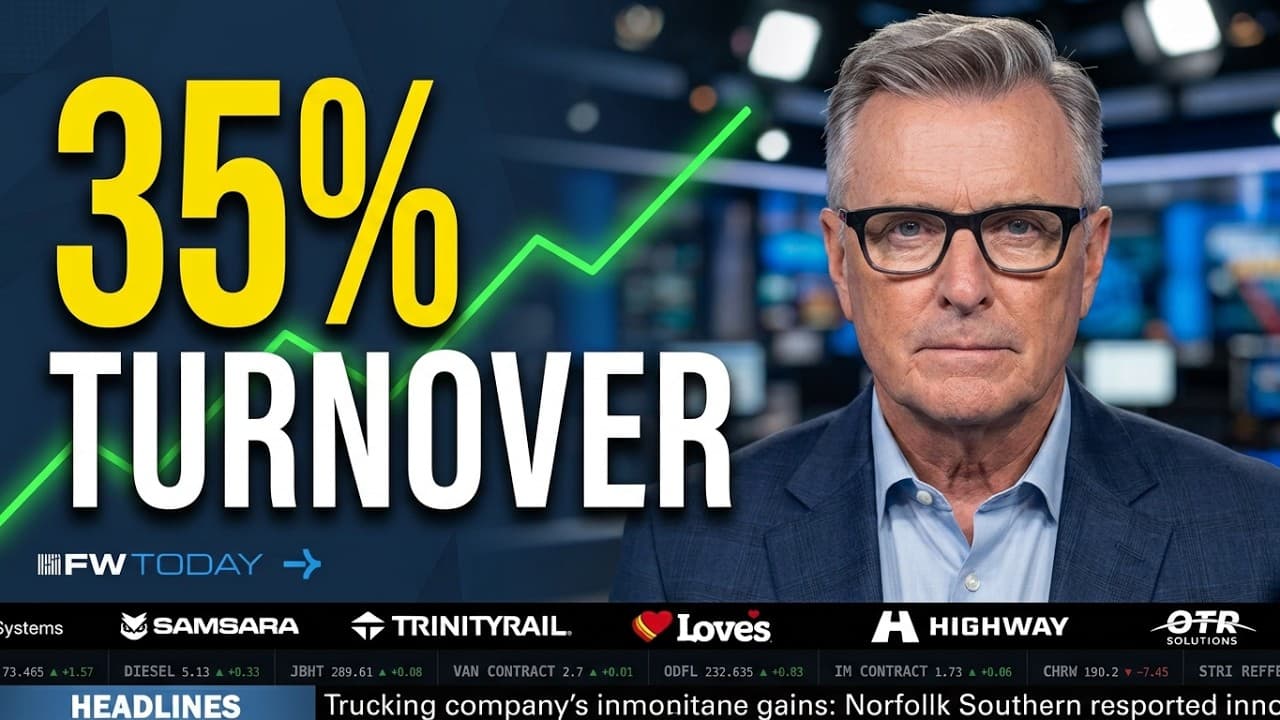
SummaryView Transcript Nussbaum Transportation, a leading 600-truck fleet, made a pivotal decision in 2018: transitioning to an Employee Stock Ownership Plan (ESOP). CEO Brent Nussbaum reveals the motivations behind this move, emphasizing a core philosophy passed down from his father: ‘take care of your people.’ Discover how employee ownership helps retain drivers with industry-low 35% […] The post Trucking Company’s ESOP: How Employee Ownership Drives Low Turnover (35%) appeared first on Freigh
Source Lens
Industry Context
Useful background context, but lower-priority than direct platform, community, or operator intelligence.
Impact Level
medium
Use this briefing to decide whether your team needs an immediate workflow, policy, or reporting change.
Key Stat / Trigger
No single quantitative trigger surfaced in this report.
Focus on the operational implication, not just the headline.
Full Coverage
#fwtv_aDFJARzjqoo. fwtv-tab{display:none}#fwtv_aDFJARzjqoo input[type=radio]{position:absolute;left:-9999px}#fwtv_aDFJARzjqoo.
fwtv-labels label{display:inline-block;padding:10px 18px;cursor:pointer;font-weight:600;border:1px solid #d0d0d0;border-bottom:none;margin-right:4px;border-radius:6px 6px 0 0;background:#f5f5f5}#fwtv_aDFJARzjqoo #fwtv_aDFJARzjqoo_s:checked~. fwtv-labels label[for="fwtv_aDFJARzjqoo_s"],#fwtv_aDFJARzjqoo #fwtv_aDFJARzjqoo_t:checked~.
fwtv-labels label[for="fwtv_aDFJARzjqoo_t"]{background:#0b3d91;color:#fff}#fwtv_aDFJARzjqoo #fwtv_aDFJARzjqoo_s:checked~#fwtv_aDFJARzjqoo_summary{display:block}#fwtv_aDFJARzjqoo #fwtv_aDFJARzjqoo_t:checked~#fwtv_aDFJARzjqoo_transcript{display:block}#fwtv_aDFJARzjqoo. fwtv-panel{border:1px solid #d0d0d0;padding:18px;border-radius:0 6px 6px 6px;line-height:1.
6}#fwtv_aDFJARzjqoo. fwtv-panel p{margin:0 0 12px}#fwtv_aDFJARzjqoo. fwtv-transcript p{margin:0 0 12px}SummaryView TranscriptNussbaum Transportation, a leading 600-truck fleet, made a pivotal decision in 2018: transitioning to an Employee Stock Ownership Plan (ESOP).
CEO Brent Nussbaum reveals the motivations behind this move, emphasizing a core philosophy passed down from his father: ‘take care of your people.’ Discover how employee ownership helps retain drivers with industry-low 35% turnover and builds long-term wealth beyond traditional 401K plans.
Learn about the unique challenges and benefits of this model in the volatile freight market. Nussbaum Transportation, an 80-year-old, 600-truck truckload carrier, runs driver turnover in the 35% to 39% range — a fraction of the industry norm — and CEO Brent Nussbaum credits a 2018 employee stock ownership plan as a central pillar of that performance.
The privately held Illinois company sold 45% of the business to its employees that year, and Nussbaum said a second ESOP sale is planned for the first quarter of next year. The ESOP structure means employees receive 4% to 6% of their annual salary in company shares each year, building wealth beyond a standard 401(k).
The stock is independently valued each spring; Nussbaum said the share price was flat in the most recent valuation after several years of increases. “This last year it was flat, which I was thankful it didn’t go down after this market,” he said.
The company holds quarterly all-hands financial meetings that include drivers, keeping the full workforce informed on operating results. “If I leave my career someday and all of our employees have done well, I get to walk away proud of what we’ve done for them.”
Beyond equity, Nussbaum layers in a certified RED safety-and-performance program that takes a full year to complete, rewarding graduates with a pay raise, a special hat and ring, and a company-wide celebration. Drivers who continue their safe journey can stack additional pay increases through the program in years when across-the-board raises were scarce.
The company also began issuing profit-sharing checks this year, with the first disbursement going out at the time of the interview. Nussbaum described two operational habits he calls part of the carrier’s “secret sauce.”
Each week he personally calls every incoming driver before their start date — a gesture he said consistently surprises recruits who say they have never heard from a CEO. He also reviews a weekly shop report and phones any driver whose truck earns an exceptional cleanliness rating. “I’ll have drivers that’ll say, yep, saw that.
Just waiting for you to call,” Nussbaum said. The carrier also offers a $2,000 early-exit bonus to any driver who decides within the first 90 days — after giving 30 days on the job — that the company is not the right fit, provided the driver returns the truck to a company facility and leaves in good standing.
Nussbaum said the payout is rare because most drivers who clear the 30-day mark stay on. The company’s average driver age has dropped to 49 from 55, a shift Nussbaum said may reduce the subset of drivers who pull back miles after a pay raise.
On the growth front, Nussbaum said dedicated freight carried the company financially through the recent soft market while over-the-road results were negative. The carrier is now scaling in both segments and expects to grow at least double its typical 3% to 5% annual rate this year.
To support that expansion, the sales team was directed to push contract rates higher first — a process Nussbaum acknowledged is creating friction, including a request from a large shipper to meet directly with the CEO and chief sales officer in late August to understand the rate environment firsthand.
Separately, Nussbaum said the company developed an in-house bid-pricing tool called BidRight, originally built for internal use by five company developers. The software consolidates shipper RFP data, normalizes fuel programs, and generates a bid in seconds.
It is now being resold through KSM alongside a product called Freight Math to a group of roughly 100 carriers, with Nussbaum framing broad
Original Source
This briefing is based on reporting from Freightwaves. Use the original post for full primary-source context.
Style
Audience