DeepFabric lands Kenco as It scales supply chain agents
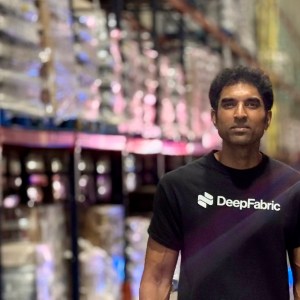
DeepFabric has added Kenco to a customer list spanning CPG, medical distribution, fleet management and retail, with 20 agents planned at the 3PL within 12 months. The post DeepFabric lands Kenco as It scales supply chain agents appeared first on FreightWaves.
Source Lens
Industry Context
Useful background context, but lower-priority than direct platform, community, or operator intelligence.
Impact Level
medium
Use this briefing to decide whether your team needs an immediate workflow, policy, or reporting change.
Key Stat / Trigger
No single quantitative trigger surfaced in this report.
Focus on the operational implication, not just the headline.
Full Coverage
In the enterprise AI agent space, there’s a common problem: a gulf in outcomes between the first agent demo and the invoice that follows a successful implementation. DeepFabric spent three months spanning that gulf with Kenco, moving six agents into live operations across commercial, operations, transportation and client services.
Twenty supply chain agents are now planned across the North American 3PL over the next 12 months. The three-month deployment figure sits against a larger trend in which many AI projects struggle to get off the ground. Recent Gartner research expects more than 40 percent of agentic AI projects to be canceled by the end of 2027.
That can involve escalating costs, unclear business value and inadequate risk controls. Agents that survive the handoff from pilot to production remain an exception, not the norm. The partnership began with an inbound call.
Kenco’s Chief Digital and Information Officer, Pal Narayanan, contacted DeepFabric after tracking the platform’s work with others in the supply chain industry.
“He knew the kind of work we were doing with other 3PLs and other supply chain teams, and he knew the philosophy with which we operated and how we built the platform,” said Kalyan Kommineni, founder and CEO of DeepFabric, in an interview with FreightWaves.
“He felt that we were a good fit for how Kenco was looking at AI and how Kenco deploys new technology into their environments.” Starting with a humble proof of concept Successful AI agent implementations start from humble but manageable beginnings. Start small and move quickly.
“Our goal is to take an agent into production as fast as possible with the minimum possible risks,” Kommineni said. “Before we even think about bringing on someone as a customer, we sign the NDA, we take their data and show how the agent works with their data. That gives them a feel for how it runs in production.”
The proof-of-concept stage exists to find out what breaks before it lands on a live customer account. It’s an important step, given the risks of beta-testing AI agents in live operations rather than in a closed, separate virtual twin. That approach minimizes potential disruptions while the agents are fine-tuned.
“Now I will say agents fail all the time, but we make sure that is happening in a non-production environment,” Kommineni said. Kenco absorbed none of that failure on the way to production. All six agents went live without disrupting service to a single customer, according to Chief Operating Officer David Caines.
Why automating audit work was a massive win The 3PL’s own structure created the opportunity. Kenco operates 141 distribution facilities and 43 million square feet of warehouse space across 33 states and Canada. Every handoff in that network is a document somebody has to check. “There’s a lot of work — manual labor — that happens in audit,” Kommineni said.
“Again, this is not good labor. This is something that operators do not want to do, that they would want to punt off to an AI agent. So we’ve gotten really good at the entire audit piece. And the audit is not one thing. There are different kinds of audits working with different parties.”
In a 3PL, that means the warehouse validating the carrier, the carrier validating the customer and the customer validating the warehouse, each one a separate reconciliation with its own paperwork.
“Every connection between these links is a failure opportunity, and we do everything it takes to make sure that these agents are not failing in production,” Kommineni said. The freight auditor is one of DeepFabric’s three most widely deployed agents, alongside the proposal manager and the inventory manager.
The company reports audit-spend reductions of 45 percent and request-for-proposal response times cut by as much as 30 percent. Setting the goalposts on supply chain agents Benchmarking is where most buyers struggle to find an easy answer. The question of what to measure comes before what to automate.
Kommineni frames it as an effectiveness question over an efficiency question. “As a 3PL, as a company, or as a team within a company, what are you trying to accomplish here?” he said. “Are you trying to do more work with the same people, or are you trying to sometimes even add more people but then do a lot more work?
And then there are sometimes, ‘Hey, are you trying to reduce the labor hours?’ So there are different lenses that customers take. Depending on that, the KPIs are driven.”
The measurement changes with the agent: The proposal manager is scored on how many more bids a team pursues without adding headcount, and an audit agent is scored on manual hours spent per 100 invoices.
“KPIs are agent-dependent, but we help our customers understand what the pre-agent KPIs are, what the baseline is, deploy the agent, understand what it is after the agent is deployed, and then measure the results,” Kommineni said. Without that pre-agent baseline, nothing can be measured effectively. Somewhere in the middle o
Original Source
This briefing is based on reporting from Freightwaves. Use the original post for full primary-source context.
Style
Audience